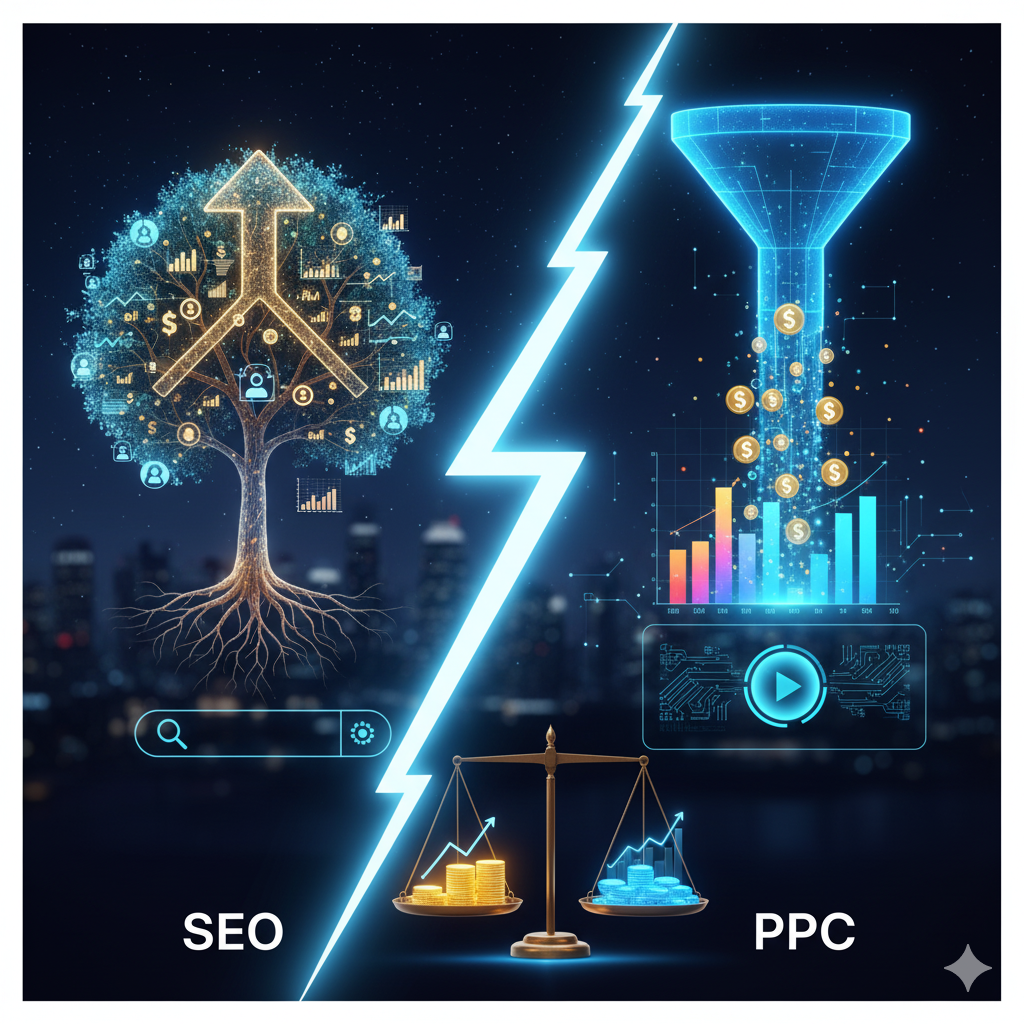

In the digital marketing world, SEO (Search Engine Optimization) and PPC (Pay-Per-Click) are two of the most powerful strategies that businesses use to drive traffic to their websites. But which one provides a higher return on investment (ROI)? The answer isn't always clear-cut, as it largely depends on your business goals, timeline, and budget. In this blog post, we will conduct a detailed ROI comparison between SEO and PPC, exploring the strengths and weaknesses of each strategy to help you make an informed decision.
Understanding the Basics: What is SEO and PPC?
Before we dive into the ROI comparison, let’s first clarify what SEO and PPC are.
- SEO (Search Engine Optimization): SEO is the practice of optimizing your website to rank higher in organic search engine results pages (SERPs). This involves on-page optimization (like improving keyword targeting and content), off-page optimization (like backlink building), and technical SEO (ensuring the site’s speed, mobile-friendliness, and structure are up to standard). SEO is a long-term strategy aimed at generating consistent, organic traffic over time.
- PPC (Pay-Per-Click): PPC is a form of paid advertising where advertisers pay a fee each time someone clicks on their ad. Platforms like Google Ads, Bing Ads, and social media sites like Facebook and LinkedIn offer PPC campaigns. With PPC, you get immediate visibility in the search results or social media feeds, but it requires ongoing investment to maintain visibility.
The ROI of SEO: Why It’s Worth the Wait
SEO can be a slow-burn strategy, but its ROI potential is impressive in the long run. The main reasons for its high ROI include:
1. Organic Traffic is Free (After Initial Investment)
Once your website achieves high rankings in the SERPs, the traffic you receive is free. Unlike PPC, where you continually pay for every click, SEO can bring in traffic at no cost (aside from the resources and effort spent on optimization). Over time, this can result in significant savings.
2. Sustainable and Long-Term Results
The beauty of SEO is its sustainability. Unlike PPC, which stops bringing in traffic as soon as you stop paying, SEO’s impact tends to last. Once your website ranks for high-volume keywords, it can continue to generate traffic and leads for months or even years without needing constant funding.
3. Higher Trust and Credibility
Users generally trust organic results more than paid ads. They tend to click on organic listings because they perceive them as more credible and authoritative. This can result in better engagement, higher conversion rates, and, ultimately, a better ROI.
4. Targeting Your Audience Effectively
SEO allows you to target users who are actively searching for the products or services you offer. This targeted approach ensures that the traffic you attract is relevant, which increases the likelihood of conversions.
SEO ROI Example:
A well-optimized website ranking for high-volume, relevant keywords can generate hundreds of leads per month without ongoing advertising spend. The ROI from SEO grows exponentially over time as your rankings improve and you maintain top positions for competitive keywords.
Need Help With Your Marketing or Website?
Not getting enough leads or sales? Get a free consultation and discover how to improve your website and marketing.
- Find out what may be stopping visitors from contacting you
- Discover where your website or marketing could perform better
- Get clear recommendations to improve leads, calls, and conversions
The ROI of PPC: Instant Results, but High Ongoing Costs
PPC campaigns, on the other hand, provide instant visibility in the search engine results or on social media platforms. While PPC can drive immediate traffic to your site, it’s essential to weigh the ROI considering the ongoing cost of paid campaigns. Here's why PPC offers both short-term benefits and long-term challenges:
1. Immediate Traffic and Results
One of the most significant advantages of PPC is the ability to see results right away. As soon as you launch your ads, your website starts receiving traffic, and you can monitor the performance in real-time. This makes PPC ideal for time-sensitive campaigns, like product launches or promotions.
2. Precise Audience Targeting
With PPC, you can target very specific demographics, locations, devices, and even user behaviors. This allows for hyper-targeted campaigns, where you only pay for clicks from users who are most likely to convert. Effective targeting can lead to a high ROI in the short term.
3. Scalability
If your campaign is performing well, you can easily scale it by increasing your budget. Unlike SEO, where the ranking process is gradual and requires ongoing content and optimization, PPC allows you to quickly adjust to changes in your business goals or market conditions.
4. Brand Visibility
PPC ads increase your visibility, even if you’re not ranking organically for certain keywords. Your brand can appear at the top of search results, which is especially helpful for new businesses or highly competitive industries.
PPC ROI Example:
If you're running a targeted PPC campaign for a specific product, you can measure the ROI quickly. For instance, if you spend $500 on Google Ads and generate $2,000 in revenue from the clicks, your ROI is 300%. However, the ROI can fluctuate based on competition, keyword costs, and ad performance.
SEO vs PPC: Key Differences in ROI
To make the comparison clearer, let’s break down some key factors that directly impact ROI in both SEO and PPC.
1. Cost Structure: SEO vs PPC
- SEO: The upfront costs are higher because you may need to hire an SEO agency or invest in tools. However, once your site ranks, the costs are minimal (apart from ongoing maintenance).
- PPC: Requires ongoing payment for every click, meaning the costs can quickly add up. High-cost keywords (especially in competitive industries) can lead to significant expenses.
2. Time to See Results
- SEO: It can take months to see the full effects of SEO. Building authority, generating backlinks, and ranking for competitive keywords is a long-term game.
- PPC: You can see immediate results as soon as you launch a campaign. However, this visibility stops as soon as you stop funding your ads.
3. Long-Term Value
- SEO: Once you’ve achieved top rankings, the value of SEO grows over time. You don’t need to keep paying for traffic, which increases the long-term ROI.
- PPC: While PPC can bring in immediate results, once the ads stop, the traffic stops. The long-term ROI is limited unless you continue investing.
4. Scalability
- SEO: Scaling SEO can take time and effort. You need to constantly create high-quality content, improve technical aspects of the site, and build backlinks.
- PPC: PPC is highly scalable in the short term. You can adjust your budget or tweak your targeting to quickly scale your campaign.
Which Strategy is Better for Your Business?
Ultimately, the choice between SEO and PPC depends on your business's needs and objectives. Here are some quick guidelines to help you decide:
- Choose SEO if:
- You’re looking for long-term, sustainable results
- You have the patience to wait for organic rankings
- You have a limited budget and want to reduce long-term marketing costs
- You want to build brand trust and credibility over time
- Choose PPC if:
- You need immediate traffic or sales
- You have a specific short-term goal or promotion
- You can afford to invest consistently in ads
- You want to test new products, keywords, or markets quickly
Combining SEO and PPC for Maximum ROI
In many cases, the best approach is not choosing one over the other, but using both SEO and PPC in tandem. You can leverage PPC for immediate traffic and sales while building your SEO efforts for long-term growth. By combining both strategies, you can cover more ground and maximize your ROI across different timeframes.
Conclusion
In the SEO vs PPC ROI debate, both strategies offer significant value depending on your business goals. SEO offers long-term, sustainable ROI with minimal ongoing costs, while PPC provides fast, measurable results that can be scaled quickly. Consider your budget, time frame, and objectives to determine which strategy—or combination of strategies—will work best for your business. Regardless of which path you choose, both SEO and PPC are integral parts of a well-rounded digital marketing strategy.