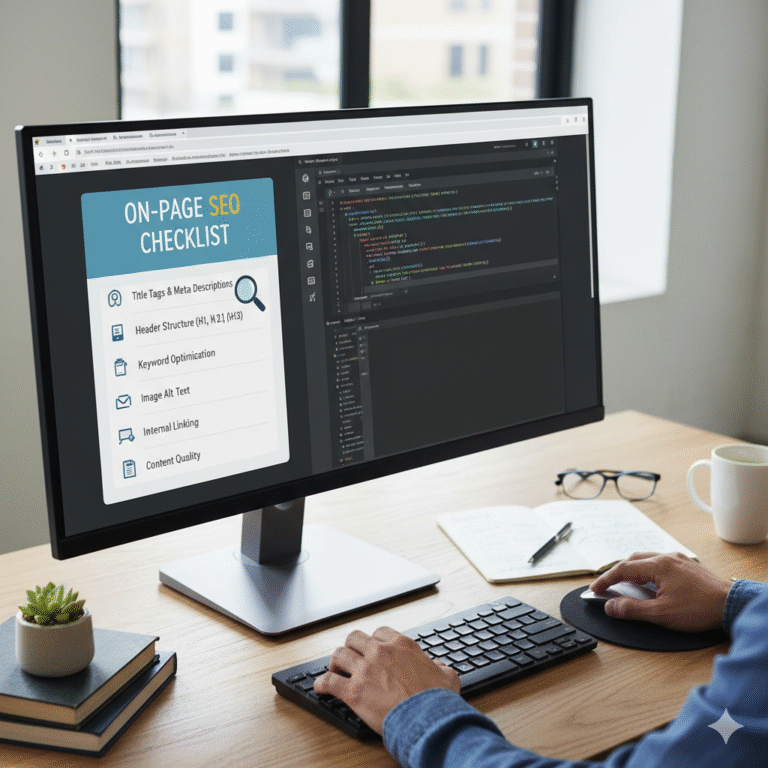


Revamping your website can be exciting—it’s your opportunity to refresh your brand, modernise your user experience (UX), and bring in higher conversions. But if you neglect SEO during the redesign process, you may end up losing traffic, rankings or both. When done right, a redesign becomes a powerful growth driver. Let’s walk through realistic, professional and actionable steps to ensure your redesign boosts your SEO rather than harming it.
1. Start With a Solid SEO Audit and Baseline
Before you touch a wire-frame or pick a new theme, you must know what you’re currently working with:
- Use tools such as Google Analytics, Google Search Console and crawl-tools like Screaming Frog SEO Spider to benchmark performance: organic traffic, bounce rate, conversion goals. growthoperationsfirm.com+2Orbit Media Studios+2
- Inventory your high-performing pages: which URLs generate the most inbound links, the most traffic, high engagement? Keep track of them. etactics.com+1
- Define your redesign goals: Are you targeting improved mobile experience, better site speed, updated brand identity, new content targets? Having SMART goals helps keep you on track. Top SEO+1
By doing this first, you minimise surprises later and set yourself up to measure success realistically.
2. Preserve What Works While Planning for Improvement
When redesigning, your instinct may be to “throw everything out” and start fresh. That’s a danger zone. Instead:
- Identify pages that rank well and have link equity. These should either stay in place, or be improved—not deleted without strategy. seo.ai+1
- If you must change URLs or restructure content, map out your redirects before launch. Use permanent (301) redirects so you preserve link equity and avoid creating 404s. minnetonkadigital.com
- Beware of altering metadata (title tags, meta descriptions) or heading structure (H1, H2) for high-value pages unless you have a good reason—and in that case ensure the changes maintain or improve relevance. Thrive Internet Marketing Agency
This approach helps you keep your SEO foundation intact, even as you modernise the site.
Need Help With Your Marketing or Website?
Not getting enough leads or sales? Get a free consultation and discover how to improve your website and marketing.
- Find out what may be stopping visitors from contacting you
- Discover where your website or marketing could perform better
- Get clear recommendations to improve leads, calls, and conversions
3. Structure Your Site & Navigation With SEO in Mind
A redesign isn’t just about how things look—it’s about how they’re organised for both users and search engines:
- Maintain a clear hierarchy and a clean URL structure. Short, descriptive URLs are better for both SEO and user clarity. seo.ai+1
- Ensure your navigation makes it easy for visitors (and bots) to find key pages within a few clicks from the homepage. Deep buried pages lose value. brandoutadv.com
- Use internal linking thoughtfully: point to your priority pages, make sure they are discoverable via menus, footers, and body content. seo.ai
- Create and submit an updated XML sitemap after launch and ensure your robots.txt file is configured correctly. growthoperationsfirm.com+1
Better architecture equals better crawlability, indexing, and ultimately better rankings.
4. Prioritise Mobile-First Design & Speed
Search engines and users alike demand fast, mobile-friendly websites. Your redesign is the perfect time to optimise:
- Ensure responsive design: layout, fonts, interactions should all scale and work smoothly across phones, tablets and desktops. seo.ai
- Optimise page speed: compress images, leverage caching, minimise CSS/JS, use modern formats (e.g., WebP) where possible. Slow sites increase bounce and kill conversions. growthoperationsfirm.com+1
- Test across devices and browsers before you launch to catch any mobile-specific issues (e.g., navigation too small, elements overlapping). minnetonkadigital.com
In short: design beauty is meaningless if the user exits before your page loads.
5. Content & On-Page SEO: Make it Meaningful and Organised
Your redesign offers a chance to refresh your content—but with purpose:
- Keep the same H1/H2 headings where possible for pages that already rank. Avoid removing them entirely; restructuring headings can confuse search engines. seo.ai+1
- Update meta titles and descriptions to reflect your new design and messaging—but ensure they still capture your target keyword, user intent, and encourage clicks. LeaseMyMarketing
- Incorporate long-tail keywords and variants into your page content naturally—avoid keyword stuffing.
- Add or refresh alt text for images, descriptive links, and ensure you have meaningful CTAs (call-to-actions) instead of vague “click here” links. websitemagazine.com
Good content + good structure = SEO success after redesign.
6. Manage Redirects, Broken Links & Technical Clean-Up
Technical missteps often cause the biggest SEO drops post-redesign. The risks are real—but so are the solutions:
- Build a complete redirect map: list all old URLs and match to new URLs, set up 301 redirects, update internal links accordingly. Avoid redirect chains. minnetonkadigital.com+1
- Audit for broken links, missing pages, erroneous status codes (404s, 500s) and fix them. A single broken link may degrade user experience and crawl efficiency. brandoutadv.com
- Ensure your new site preserves canonical tags, schema markup (where appropriate) and other technical SEO signals. CreativeMinds
- Prior to launch: test your staging site thoroughly (not live) to minimise surprises. CreativeMinds+1
Technical diligence = less traffic decline and smoother transition.
7. Launch Carefully & Monitor Immediately
Even the most meticulous redesign can trigger minor disruptions—monitoring ensures you catch issues early.
- Launch at a time of lower traffic if possible (so you can observe without high risk).
- Use analytics and webmaster tools to watch key metrics: organic traffic, ranking for target keywords, bounce rate, conversion rate. Compare to the baseline you set earlier. Orbit Media Studios+1
- Keep a close eye for increases in 404 errors, drop in page speed, mobile usability issues, or sudden traffic dip.
- Be prepared to react: if you notice problems, revert problematic changes quickly, or roll out fixes. Remember: it may take a few weeks for search engines to fully adjust. Reddit
The launch isn’t the end—it’s the beginning of the next phase of optimisation.
8. Post-Launch: Iterate, Analyse & Optimise
A redesign isn’t “set and forget”. Once your new site is live:
- Review performance at 1 week, 4 weeks, 3 months. Adjust based on data from your site.
- Look for pages that have lost traffic and assess whether the content, URL or links changed. Fix where needed.
- Continue building new content aligned to your redesign and SEO goals: target new long-tail keywords, update older posts, improve internal link structure.
- Use A/B testing for key pages to improve conversion and engagement—increased dwell time, lower bounce signals search engines that your site is useful.
- Keep monitoring backlinks: if you changed URLs, make sure external links are updated or redirect is in place.
9. Avoid Common Mistakes That Can Sabotage Your Redesign
Some redesign missteps repeatedly show up across projects. Avoid these:
- Changing URLs purely for aesthetics without redirect planning → major drop in organic traffic. LeaseMyMarketing+1
- Forgetting mobile optimisation or speed improvements, resulting in poor user experience and higher bounce.
- Removing content that was already earning links/traffic because it “looked old” rather than analysing its actual value.
- Launching live site without QA testing in staging environment → broken links, missing metadata, crawl errors. CreativeMinds
- Neglecting to update sitemap or letting robots.txt block search crawlers accidentally.
- Over-reliance on design over substance: beautiful site but no clear headings, no keyword relevance, no meaningful content.
By avoiding these traps you increase your redesign’s chances of being an SEO win, not a liability.
10. Wrap-Up: Make Your Redesign Work for SEO
A website redesign provides a unique window of opportunity: you’re already changing things, so you might as well ensure every change contributes to better SEO. That means planning, preserving value, optimising content, and launching with care.
Remember:
- Measure before you move.
- Keep what works and only change what adds value.
- Structure your site for humans and search engines.
- Make your site fast + mobile-friendly.
- Don’t ignore technical SEO details.
- Monitor closely post-launch and iterate.
When done well, your redesign becomes more than a new look—it becomes a strategic asset for organic growth, lead generation and long-term ranking success. Put these tips into action and your website redesign will drive better SEO results—not threaten them.