
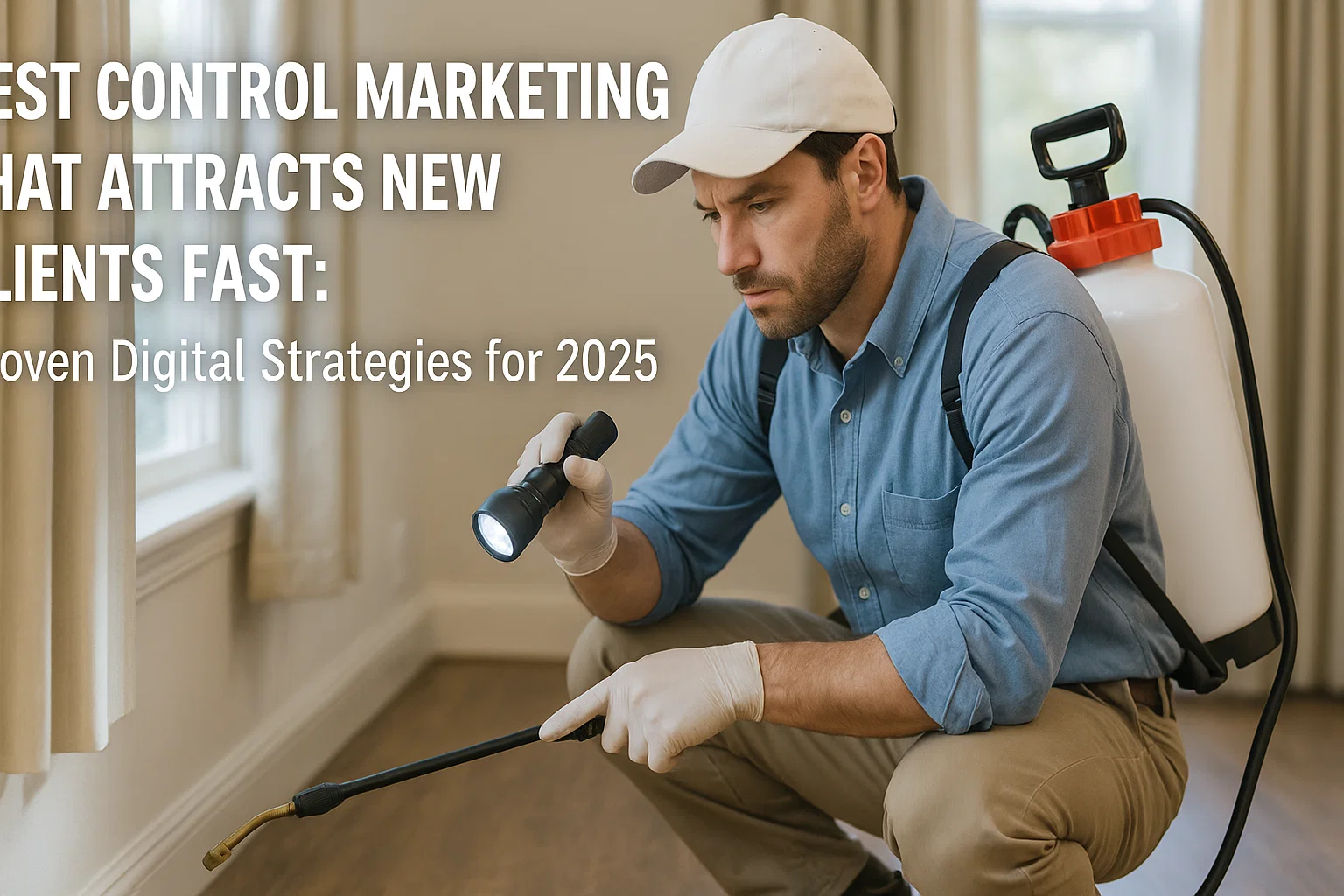

Running a pest control business in 2025 is more competitive than ever. With new companies popping up every month and homeowners constantly searching online for quick solutions, pest control businesses need more than just traditional advertising to grow. If you want to attract new clients fast, you must use smart pest control marketing strategies that put your company ahead of competitors.
This guide will walk you through powerful, proven techniques to increase visibility, generate leads, and build a steady stream of new clients for your pest control services. Whether you run a small local extermination business or a large-scale pest management company, these strategies can help you grow your revenue and reputation.
Why Pest Control Marketing Matters
Many pest control companies rely heavily on word-of-mouth, referrals, and seasonal demand. While these methods bring in some business, they aren’t enough to keep you competitive in today’s digital-first world. Modern homeowners and businesses are searching online for “pest control near me” or “best termite treatment company in [city]” before they ever pick up the phone.
Without strong marketing, your business risks being invisible to potential customers. But with the right digital marketing strategies, you can:
- Attract local leads instantly
- Build trust with homeowners and businesses
- Stand out from local competitors
- Generate repeat business and referrals
- Increase year-round revenue instead of relying on seasonal jobs
Step 1: Build a Strong Pest Control Website
Your website is the heart of your pest control marketing strategy. It should be fast, mobile-friendly, and easy to navigate. Most people searching for pest control services are dealing with an urgent issue, so they need answers quickly.
Key features of a great pest control website:
- Clear call-to-actions (CTA) like “Book an Inspection Now” or “Call for Free Quote.”
- Service pages targeting specific pests (ants, termites, rodents, bed bugs, etc.).
- Local landing pages optimized for different service areas.
- Trust signals such as reviews, certifications, and testimonials.
- Online booking forms and click-to-call buttons for mobile users.
A well-designed website not only attracts clients but also builds credibility for your business.
Need Help With Your Marketing or Website?
Not getting enough leads or sales? Get a free consultation and discover how to improve your website and marketing.
- Find out what may be stopping visitors from contacting you
- Discover where your website or marketing could perform better
- Get clear recommendations to improve leads, calls, and conversions
Step 2: Master Local SEO for Pest Control
Most pest control clients search for services locally, so local SEO is one of the most powerful tools for growth. Optimizing your pest control business for search engines can help you appear at the top of Google when customers search for nearby solutions.
Local SEO strategies for pest control companies:
- Claim and optimize your Google Business Profile (GBP).
- Add accurate business information, service areas, photos, and contact details.
- Encourage customers to leave reviews.
- Use local keywords like:
- “Pest control company in [city]”
- “Best termite treatment near me”
- “Affordable rodent control [location]”
- Create service-based content that answers customer questions (e.g., “How to Know If You Have Termites in Your House”).
- Build local backlinks from directories, local blogs, and partnerships.
Ranking higher in local searches means you’ll get more calls and leads from people in your area.
Step 3: Leverage Paid Advertising
If you want to attract new pest control clients fast, paid advertising is one of the quickest methods.
Google Ads for Pest Control:
- Run pay-per-click (PPC) ads targeting keywords like “pest control near me” or “bed bug exterminator [city].”
- Use location targeting to focus on your service area.
- Test call-only ads that drive direct phone calls from mobile searchers.
Facebook & Instagram Ads:
- Create ads targeting homeowners and property managers in your area.
- Showcase before-and-after pest removal photos.
- Offer promotions like “First-time clients get 10% off.”
Retargeting Ads:
Many people don’t book services the first time they visit your website. Retargeting ads follow them online and remind them to call your company, increasing conversions.
Step 4: Use Social Media to Build Trust
Social media isn’t just for big brands—it’s a powerful tool for local pest control companies. By posting helpful and engaging content, you can build trust and stay top of mind for customers when they need you.
Content ideas for pest control social media:
- Pest prevention tips for homeowners.
- Seasonal reminders (e.g., termite season, mosquito season).
- Behind-the-scenes of your technicians at work.
- Success stories and customer testimonials.
- Quick explainer videos about pest risks.
Building a strong social media presence creates brand awareness and makes potential customers more likely to choose your services.
Step 5: Collect and Showcase Reviews
Online reviews are one of the biggest trust factors for pest control businesses. In fact, most people won’t hire a company without checking reviews first.
How to get more reviews:
- Ask satisfied customers directly after a job.
- Send follow-up emails or texts with a Google review link.
- Offer small incentives like a discount on future services.
Then, showcase those reviews on your website, Google profile, and social media.
Step 6: Email and SMS Marketing
Don’t just rely on one-time customers. Stay in touch with past clients to increase repeat business.
Ideas for pest control email/SMS campaigns:
- Seasonal pest control reminders (spring ants, summer mosquitoes, winter rodents).
- Special promotions and discounts.
- Helpful tips for pest prevention.
- Annual inspection reminders.
This keeps your company top-of-mind year-round and encourages clients to book again.
Step 7: Track and Improve Results
Great pest control marketing isn’t about guessing—it’s about testing, tracking, and improving.
Use tools like:
- Google Analytics – to track website visits and conversions.
- Call tracking software – to see which ads generate phone calls.
- CRM systems – to manage leads and follow-ups.
By analyzing your results, you’ll know which strategies attract the most clients and which ones need improvement.
Conclusion
Growing a pest control business requires more than just great service—it requires smart pest control marketing that attracts new clients fast. By building a strong website, mastering local SEO, running paid ads, leveraging social media, and collecting reviews, you’ll stand out from competitors and create a steady flow of leads.
Remember: customers are searching right now for solutions to their pest problems. The question is—will they find your business or your competitor’s? With the right digital marketing strategies, you can make sure they choose you.