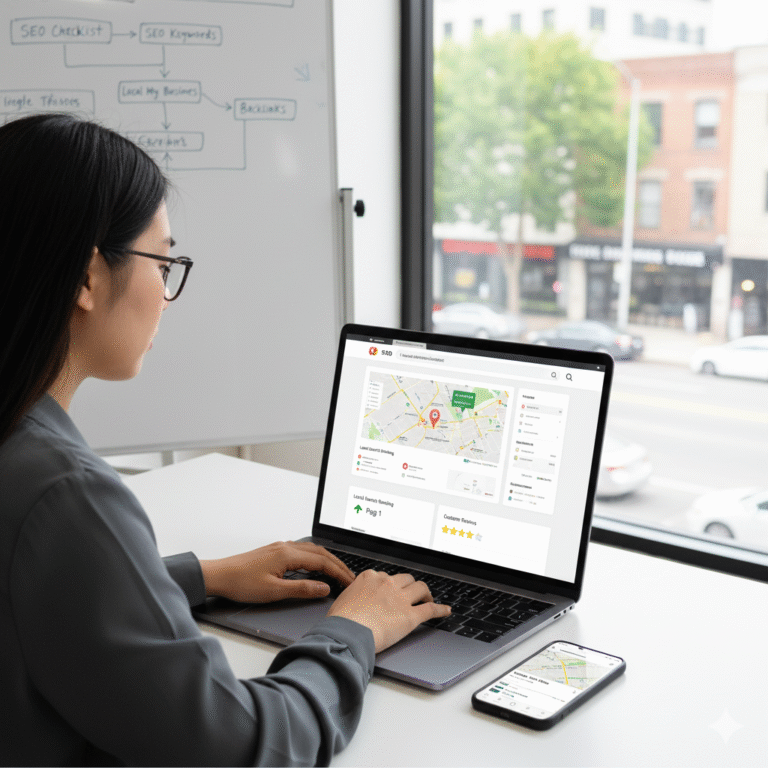
Designing a website that attracts local customers isn’t only about having a clean layout or impressive graphics. Local customers search differently, browse differently, and make purchase decisions based on trust, familiarity, and convenience. Your website needs to reflect all three.
Whether you're a small business, a service provider, or a local shop, your website is often the first interaction customers have with your brand. If it isn’t optimized for local visibility or user-friendly enough to keep visitors engaged, you’re losing potential customers every day.
In this guide, we’ll explore how to design a website that not only drives local traffic but turns those visitors into loyal, paying customers. From layout choices and branding consistency to local SEO and conversion-focused elements, you’ll discover everything needed to build a high-performing local business website.
1. Create a Clear Website Structure That Matches Local Search Intent
Local customers typically visit business websites for three reasons:
- To check business information (hours, services, prices).
- To determine whether you’re close to their location.
- To compare you to other local providers quickly.
Your website structure should reflect these needs.
What to include in your top navigation:
- Home
- About (Who You Are in the Local Community)
- Services or Products
- Service Areas / Locations
- Testimonials / Reviews
- Gallery or Portfolio
- Contact (With a Map)
When your navigation mirrors how local visitors search, it reduces confusion and increases the likelihood they will stay on your site.
2. Use Localized Landing Pages for Each Service or Area
One of the most powerful ways to attract local customers is by creating individual landing pages for each location or service area you serve.
For example, instead of a single “Service Areas” page, create pages like:
- “Plumbing Services in Austin, TX”
- “Emergency Plumber in North Austin”
- “Water Heater Installation in Round Rock”
These pages help your site rank for long-tail local keywords and make customers feel that your business truly serves their neighborhood.
Tips for high-converting local landing pages:
- Add local photos, not generic stock images.
- Include a Google Map embed.
- Mention local streets, neighborhoods, or landmarks.
- Add local reviews or testimonials specific to that area.
- Use location-based headlines and calls-to-action.
Need Help With Your Marketing or Website?
Not getting enough leads or sales? Get a free consultation and discover how to improve your website and marketing.
- Find out what may be stopping visitors from contacting you
- Discover where your website or marketing could perform better
- Get clear recommendations to improve leads, calls, and conversions
3. Highlight Local Trust Signals That Build Credibility
Local customers need reassurance that your business is trustworthy. Adding local trust signals can dramatically increase your conversion rate.
Essential trust-building elements:
- Real customer reviews (Google, Yelp, Facebook)
- Before-and-after photos
- Awards or local recognitions
- Local partnership logos
- Badges (licensed, insured, certified)
- Case studies with local clients
These details help visitors feel confident they are working with a reputable business in their community.
4. Create a Mobile-First Website Design
More than 70% of local searches happen on mobile devices, especially for businesses like restaurants, plumbers, salons, and medical clinics.
Your website must be optimized for mobile devices with:
- Fast load speed
- Easy tap-to-call buttons
- Clickable directions to your location
- Large, readable fonts
- Clean layout with minimal clutter
Google prioritizes mobile-friendly designs, and mobile users prioritize convenience—this combination makes mobile optimization essential.
5. Add Strong Calls-to-Action Tailored to Local Buyers
Local buyers act quickly. They want clarity, not confusion.
Use local, action-driven CTAs, such as:
- “Call Our Austin Office Today”
- “Book a Free Estimate in Houston”
- “Schedule a Same-Day Appointment Near You”
- “Get Directions to Our Dallas Location”
Place CTAs:
- Above the fold
- On every service page
- At the end of blog posts
- In the website footer
- On mobile sticky bars
6. Incorporate Local SEO Into Every Page
Even the best-designed website won’t attract local customers if it isn’t optimized for search.
Key on-page local SEO elements include:
- Your city and state in title tags
- Local keywords in headings and content
- NAP consistency (Name, Address, Phone) across the site
- Schema markup (Local Business Schema)
- A locally optimized meta title and description
- A Google Business Profile embedded map
Local SEO content ideas:
- Blog posts answering city-specific questions
- Local guides related to your industry
- Seasonal posts tied to your region
- Community event coverage
Google prioritizes businesses that contribute useful, locally relevant content.
7. Use Authentic Visuals That Reflect Your Local Community
Photos make a significant difference in how customers perceive your business. Instead of relying on generic stock images, use:
- Photos of your real team
- Photos of your building or office
- Local landmarks
- Before-and-after shots
- Images of your product or service in action
Authenticity helps customers trust your business faster.
8. Include a Strong “About Us” Page Focused on Local Roots
Your “About” page is one of the most visited pages on any local business website. Use it to show that you’re not just a business—you’re part of the community.
Tell your local story:
- How long you’ve served the community
- Your connection to the city
- Your business mission and values
- Photos of your team
- Community involvement or sponsorships
Local customers want to support businesses that support the neighborhood.
9. Make Contact and Location Information Impossible to Miss
Your contact details should be visible across the entire website.
Include your:
- Phone number
- Email address
- Physical address
- Google Map embed
- Hours of operation
Place this information:
- At the top of every page
- In the footer
- On the contact page
- On all local landing pages
The easier it is to contact you, the more local customers you’ll win.
10. Improve Page Speed and User Experience
A slow website loses visitors instantly—especially mobile users.
Improve performance by:
- Compressing images
- Using a fast hosting provider
- Reducing plugins
- Minimizing code
- Implementing caching
- Optimizing videos
A fast website keeps visitors engaged and helps your SEO rankings.
11. Add Social Proof and Integrate Social Media
Include links to your:
- TikTok
- YouTube
Share local content, customer stories, and behind-the-scenes content to create a stronger connection with the community.
12. Track Local Website Performance
Use analytics tools to understand how local customers behave.
Track:
- Search terms from your city
- Areas where visitors come from
- Most-visited pages
- Conversion paths
- Mobile vs. desktop usage
This helps you optimize your design for better local engagement.
Conclusion: Your Website Can Become Your Best Local Sales Tool
Designing a website that attracts local customers isn’t difficult—it just requires strategy. By focusing on local SEO, community-focused content, trust elements, and user-friendly design, you can build a site that converts more local visitors than ever before.
Your website shouldn’t just look attractive—it should actively bring customers to your doorstep.