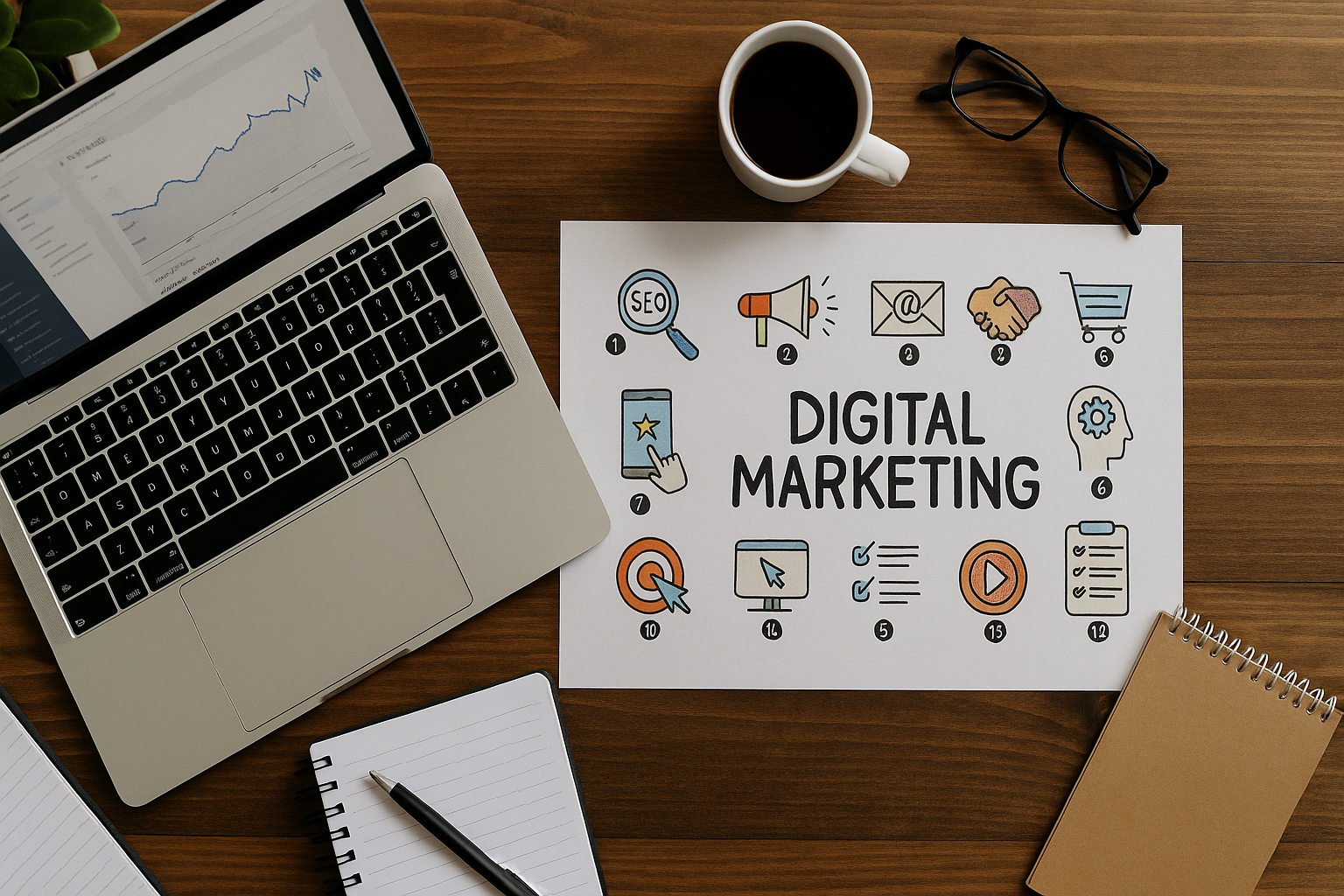

In today’s competitive business world, small businesses often feel overshadowed by large companies with massive budgets. But thanks to digital marketing, the playing field has changed. Small businesses can now use cost-effective strategies to reach customers, build brand trust, and compete directly with big brands. The right mix of digital marketing strategies allows even the smallest company to stand out, attract new leads, and grow steadily in 2025.
This article explores 12 digital marketing strategies that level the playing field for small businesses, showing how you can use smart, affordable, and targeted techniques to achieve big results without breaking your budget.
1. Search Engine Optimization (SEO) for Local Visibility
Search Engine Optimization remains one of the most powerful digital marketing strategies. For small businesses, local SEO is especially important. Optimizing your Google Business Profile, using location-based keywords, and encouraging customer reviews can help you rank higher in local searches.
When customers in your area search for services you provide, appearing on the first page of Google increases your chances of getting clicks and visits. Unlike paid ads, SEO keeps delivering results long-term with consistent effort.
2. Content Marketing with Long-Tail Keywords
Content marketing helps build trust while attracting organic traffic. Publishing blog posts, guides, or case studies that answer customer questions builds authority in your niche. Using long-tail keywords—such as “affordable digital marketing tips for small businesses” instead of just “digital marketing”—helps you attract the right audience who are closer to making a purchase.
Small businesses don’t need to outspend competitors on ads; they can create content that resonates with their audience and brings steady traffic over time.
Need Help With Your Marketing or Website?
Not getting enough leads or sales? Get a free consultation and discover how to improve your website and marketing.
- Find out what may be stopping visitors from contacting you
- Discover where your website or marketing could perform better
- Get clear recommendations to improve leads, calls, and conversions
3. Social Media Marketing for Community Engagement
Social media allows small businesses to connect with their audience directly. Platforms like Facebook, Instagram, TikTok, and LinkedIn help build brand personality and engage with customers. Posting consistently, sharing stories, running polls, and replying to comments creates stronger relationships.
Small businesses can also use social media advertising with highly targeted campaigns, ensuring every dollar spent reaches potential customers most likely to convert.
4. Email Marketing for Customer Retention
Email marketing remains one of the most cost-effective ways to engage with customers. Collecting emails through sign-ups, free resources, or promotions gives you a direct line to your audience.
Sending personalized emails, updates, or exclusive offers helps increase loyalty and repeat purchases. Small businesses that focus on nurturing customer relationships through email often see higher conversion rates compared to social media followers alone.
5. Pay-Per-Click (PPC) Advertising
PPC advertising through platforms like Google Ads or Bing Ads can generate quick results. The best part is that small businesses can control their budget and target very specific audiences. For example, running ads that target people in a 10-mile radius ensures you’re not wasting money on irrelevant clicks.
When combined with smart keyword research, PPC ads can deliver high returns on investment for small businesses.
6. Influencer Collaborations
You don’t need celebrity influencers to benefit from influencer marketing. Partnering with micro-influencers—individuals with 5,000 to 50,000 engaged followers—can help small businesses tap into trusted communities.
Micro-influencers often have higher engagement rates and more authentic relationships with their audiences, making them powerful partners for small businesses looking to gain credibility.
7. Video Marketing on a Budget
Video content is one of the most engaging forms of digital marketing. Thanks to smartphones and free editing tools, small businesses can now create quality videos without large production costs.
Short videos showcasing behind-the-scenes, customer testimonials, or product demonstrations can generate strong engagement on platforms like TikTok, Instagram Reels, and YouTube.
8. Customer Reviews and Testimonials
Online reviews are a key trust factor. Small businesses can build credibility by encouraging satisfied customers to leave reviews on Google, Yelp, or industry-specific platforms. Positive testimonials act as free marketing, helping new customers feel confident in choosing your business.
Offering a small incentive, like a discount on their next purchase, can motivate customers to leave valuable reviews.
9. Chatbots and AI-Powered Customer Support
AI-driven chatbots help small businesses provide 24/7 customer support without needing a full-time team. From answering FAQs to helping customers with orders, chatbots improve user experience and save time.
This technology makes small businesses appear more professional and responsive, competing with larger companies that have full customer service teams.
10. Retargeting Campaigns
Sometimes customers visit your website but don’t make a purchase right away. Retargeting campaigns remind them of your products or services as they browse other websites or social media.
This strategy keeps your business top-of-mind and encourages potential customers to return and complete their purchase. Retargeting is especially powerful for e-commerce businesses.
11. Partnerships and Cross-Promotions
Small businesses can collaborate with other local businesses for cross-promotions. For example, a coffee shop and a bakery could run a joint campaign, promoting each other to their customer base.
Partnerships extend your reach without additional costs and strengthen your brand presence in the community.
12. Data-Driven Marketing Decisions
Finally, one of the most important strategies is tracking and analyzing your results. Using tools like Google Analytics, Meta Ads Manager, or email analytics helps you understand what’s working and what’s not.
By making data-driven decisions, small businesses can refine campaigns, allocate budgets effectively, and continue growing with confidence.
Conclusion
In 2025, small businesses no longer need to be limited by budget or size. With the right digital marketing strategies, any small business can compete with larger corporations, build brand authority, and grow steadily. From SEO and social media to email campaigns and influencer partnerships, these cost-effective methods create real opportunities for success.
The key is consistency, creativity, and focusing on building strong customer relationships. By applying these 12 digital marketing strategies, small businesses can level the playing field and thrive in today’s competitive marketplace.