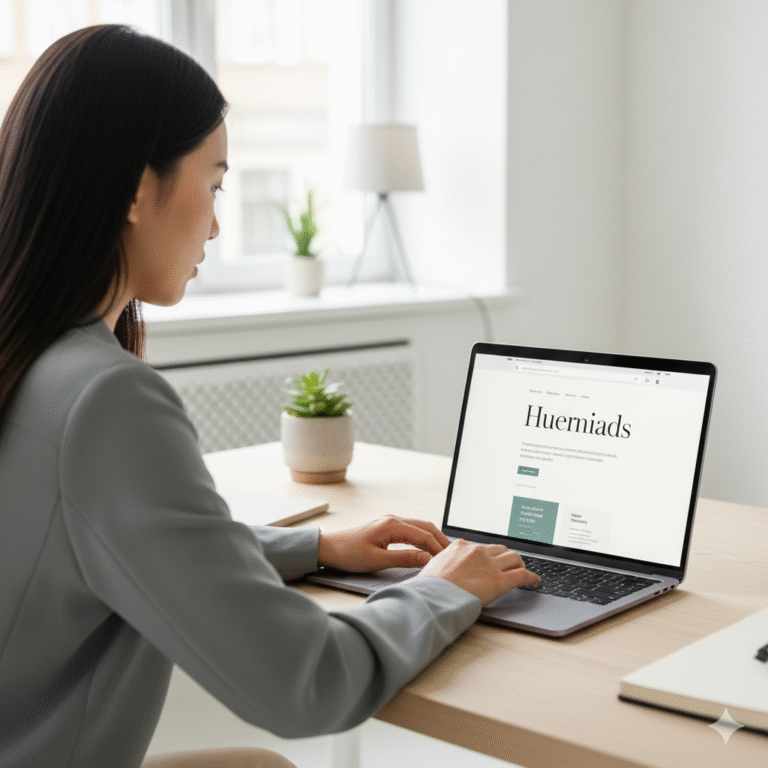


In the digital age, your website is often the first point of contact between your brand and prospective customers. A clean, professional, and intuitive design doesn’t just look good — it feels credible. When visitors land on your site, they instantly form judgments about your reliability, authority, and the likelihood that you’ll deliver on promises. According to research, better usability, attractive design and reliable online services directly increase customer satisfaction, which in turn fosters trust. journals.uot.edu.pk+1
In this post, we’ll examine how web design impacts customer trust, break down the key components of trust-worthy design, and provide practical tactics you can implement today to transform your website into a credibility machine.
1. First Impressions Matter: The Visual Impact of Design
When someone visits your website, your visual design speaks before your text does. Research reveals that nearly half of visiting consumers assess a website’s credibility based largely on the design – things like layout, typography, colour choices, and imagery. liferay.com+1
Here are the main take-aways:
- Aesthetic appeal matters: A visually appealing site signals investment, care, and professionalism.
- Perceived security & structure: When a site looks organized and polished (rather than chaotic), visitors feel more comfortable staying and interacting. For example, one thesis found that design dimensions such as graphic design, structural design and content design significantly influence trust. dalspace.library.dal.ca
- Mobile and responsiveness: With more users browsing on mobile devices, responsive design is no longer optional — it’s a trust indicator in itself.
Poor design, on the other hand, raises suspicion: is this site still maintained? Are they credible? Are they safe? Many users will leave instantly if the design feels outdated or sloppy.
Action Tips
- Audit your homepage: Is the layout clean, modern and aligned with your brand?
- Use consistent brand colours, typography and imagery across pages to reinforce cohesion.
- Ensure your website is mobile-optimised and loads quickly — delays erode trust.
2. Usability & Navigation: Trust through Ease of Use
Beyond looks, how your website works is equally important. If visitors struggle to find what they want, get stuck, or don’t feel confident they’re in the right place, trust starts to erode.
Studies show that navigation design and information architecture significantly impact usability and satisfaction — which then link to loyalty. MDPI+1
Key areas:
- Clear layout: Menus, links and search functions should behave predictably.
- Information design: Content needs to be easy to digest, logically grouped and clearly labelled. One paper found that navigation and information design had stronger effects on usability and satisfaction than purely visual design. MDPI
- Speed and performance: Slow load times or broken links create friction and reduce perceived credibility.
Action Tips
- Test your website on mobile and desktop for navigation clarity — see how easily a new visitor can accomplish common tasks.
- Make sure your site search works, menus are intuitive, and calls-to-action are prominent.
- Regularly check for broken links, outdated pages or slow-loading elements.
Need Help With Your Marketing or Website?
Not getting enough leads or sales? Get a free consultation and discover how to improve your website and marketing.
- Find out what may be stopping visitors from contacting you
- Discover where your website or marketing could perform better
- Get clear recommendations to improve leads, calls, and conversions
3. Content and Messaging: Building Credibility with Words
Design isn’t just about visuals — the words you use, how you present information, and how you communicate your brand promise all factor into trust.
For example, research shows that website design quality combined with e-trust and service quality influences purchase decisions. journal.unika.ac.id+1
What to focus on:
- Clear value proposition: Tell visitors quickly who you are, what you do and why you’re reliable.
- Transparency: Your terms, policies, pricing, and contact info should be easy to find. Unclear or hidden information raises red flags.
- Social proof & credentials: Show testimonials, client logos, certifications or media mentions to boost trust signals.
- Consistent tone: A mismatched brand voice (e.g., ultra casual for a serious service) can undermine trust.
Action Tips
- Include an “About us” page with your story, team, mission and credentials.
- Display trust badges (secure payment, SSL certificates), client testimonials and case studies on key pages.
- Use language that addresses visitor concerns (e.g., “secure checkout”, “30-day refund policy”, “trusted since 2010”).
4. Security, Privacy & Technical Integrity: The Backbone of Trust
No matter how good your design, one major trust breaker is technical failure or perceived insecurity. On the opposite side, making security & privacy visible becomes a trust enhancer.
- Use HTTPS (secure connection) and display the padlock icon — many users check for it instinctively.
- Make your privacy policy, cookie notice and data handling practices accessible.
- Ensure your website is free of errors, broken scripts or outdated components.
As one study put it: a high-quality website signals the vendor’s ability and genuine interest in customers, which increases consumer confidence. atlantis-press.com+1
When visitors believe that your site is safe and up-to-date, the trust foundation goes deeper than visual appeal alone.
Action Tips
- Verify SSL certificate is valid and up-to-date.
- Add a footer link to your privacy policy, terms of service, and contact information.
- Regularly maintain and update your website, including plugins, software and patches.
- Use obvious indicators of trust: secure payment icons, encryption badges, trust seals.
5. Trust as a Moderator: How Design and Trust Interact
An insightful finding: the effect of website design on customer satisfaction — and hence loyalty — is stronger when trust is already high. MDPI+1
Conversely, when trust is low, the usability (ease of use) becomes more important to compensate. In other words, design alone can’t compensate for a lack of baseline trust; but excellent design can amplify the effect when trust is present.
What this means for you:
- For new visitors (low trust stage), focus on usability, transparency and quick wins.
- For returning or loyal visitors (trust building), invest in visual design, brand cohesion, emotional engagement.
- Trust is not built in one click. It’s earned through consistent design, experience, and service.
6. Real-World Implications: Business Value of Trust-Centric Design
Why should you care? Because trust translates into measurable business outcomes:
- More conversions: Users who trust your website are more likely to purchase, subscribe or engage. IISTE
- Better loyalty and retention: A satisfaction-trust loop encourages repeat visits. For example, higher trust leads to higher satisfaction and customer loyalty. RePEc Ideas+1
- Reduced bounce rates: When visitors feel safe and confident, they stay longer and explore further.
- Enhanced brand reputation: A well-designed, trustworthy website gives you a competitive edge — as many users judge business credibility by web design quality. dias.ac.in
7. A Step-by-Step Web Design Audit: Building Trust From the Ground Up
Here’s a concise checklist you can run through to ensure your site builds trust effectively:
- Review homepage and landing pages for visual clarity — professional images, consistent branding, modern layout.
- Test responsiveness and performance on mobile and desktop — ensure fast load times and adaptive layouts.
- Evaluate navigation flows — can new visitors find core information (services, pricing, contact) in under 3 clicks?
- Check for trust signals — SSL padlock, privacy policy, secure payment icons, testimonials, client logos.
- Examine content for clarity and transparency — About page, mission, credentials, clear terminology.
- Validate that your site is technically up to date — no broken pages, outdated modules, missing security updates.
- Monitor metrics — bounce rate, time on page, conversion rate. If users are dropping off early, examine trust friction points.
- Iterate — gather user feedback, A/B test design variations, and monitor how changes affect trust-related metrics (like return visits and conversion rates).
8. Future Trends: What to Expect in Trust-Driven Web Design
Looking ahead, digital users are becoming increasingly discerning. Some emerging considerations:
- Micro-interactions and animation: Subtle cues (hover effects, transitions) that feel smooth and polished can signal a high-quality site and build comfort.
- Personalisation & user journeys: Tailored experiences (without overstepping privacy) can enhance trust by showing you understand user needs.
- Accessibility and inclusion: Websites that prioritise accessibility (readable fonts, alt text, keyboard navigation) signal care and respect for all users, which builds credibility.
- Transparency in data use: As privacy concerns rise, websites that visually show how data is used or protected will gain trust advantage.
- Voice and chat UX: Seamless integrations of chatbots or voice assistants — when done well — can improve trust if they feel intuitive and helpful rather than intrusive.
Conclusion: Turning Design into Trust, and Trust into Business Success
Website design is far more than aesthetics. It’s a strategic tool for building trust, reducing friction, increasing conversions, and strengthening customer relationships. When you combine visual appeal, usability, transparency and consistent messaging — you create an environment where visitors feel confident doing business with you.
If you’re looking to elevate your website’s performance, start with these key pillars:
- First impression & visual credibility
- Usability & seamless navigation
- Content clarity & transparency
- Security & technical integrity
- Trust-amplification through consistent experience
By focusing on these areas, you’ll position your website not just as a digital storefront, but as a credible partner customers feel comfortable engaging with — and returning to.