
In today’s digital age, a website is often the first point of contact between a business and its potential customers. But let’s be honest—no matter how visually stunning your site is, if it’s difficult to navigate or slow to load, users will leave within seconds. This is where user experience (UX) comes in.
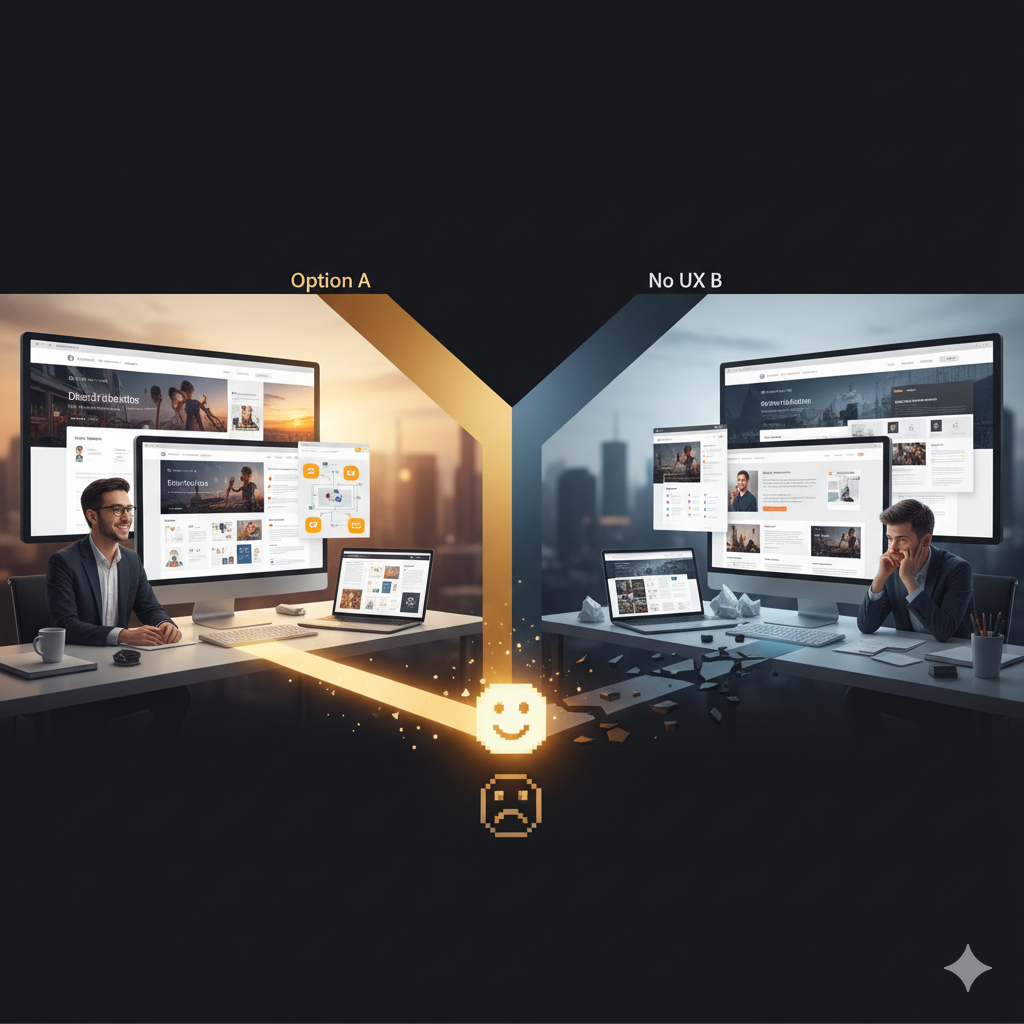
User experience is more than just a buzzword—it’s the soul of modern web design. When UX is prioritized, visitors feel valued, understood, and guided effortlessly toward their goals. On the other hand, when UX is ignored, even the most creative designs can fail to convert.
In this article, we’ll explore why UX should always come first in web design, the tangible benefits it brings to businesses, and how you can build a website that both looks great and performs exceptionally.
1. Understanding the True Meaning of User Experience in Web Design
Before diving into why UX matters, it’s essential to understand what it truly means.
User experience (UX) refers to how a person feels when interacting with a digital product—specifically your website. It encompasses everything from usability and accessibility to visual appeal and emotional connection.
A UX-driven website focuses on:
- Intuitive navigation
- Fast loading speeds
- Responsive design across all devices
- Consistent branding and visuals
- Accessible and inclusive design for all users
When users can easily find what they’re looking for without frustration, they’re more likely to stay longer, engage more deeply, and eventually convert.
2. Why User Experience Should Be the Foundation of Your Web Design Strategy
Many businesses make the mistake of focusing on aesthetics first—choosing colors, fonts, and layouts before considering how users will interact with the site. But design without strategy is like building a house without a blueprint.
Here’s why user experience must come first:
a. First Impressions Matter
According to research, visitors form an opinion about your website within 0.05 seconds. A cluttered layout, confusing navigation, or outdated design can instantly drive users away. A strong UX ensures that the first impression is not only positive but memorable.
b. Improved Engagement and Retention
When your website is easy to use and intuitive, visitors stay longer. They click through more pages, interact with your content, and are more likely to return.
c. Better Conversion Rates
UX design directly impacts conversion. Every button placement, call-to-action, and visual cue influences whether a user takes the next step. A seamless journey can turn casual visitors into loyal customers.
d. Reduced Bounce Rate
A site that loads quickly, provides clear information, and feels effortless to use will naturally reduce bounce rates. The smoother the experience, the more likely users are to explore further.
Need Help With Your Marketing or Website?
Not getting enough leads or sales? Get a free consultation and discover how to improve your website and marketing.
- Find out what may be stopping visitors from contacting you
- Discover where your website or marketing could perform better
- Get clear recommendations to improve leads, calls, and conversions
3. The Connection Between UX and SEO
Here’s the secret that many overlook: user experience and SEO are inseparable.
Search engines like Google reward websites that offer the best user experience. Metrics such as dwell time, bounce rate, mobile usability, and site speed all factor into search rankings.
When you focus on UX, you’re indirectly optimizing for SEO too.
- Fast, responsive pages boost Core Web Vitals.
- Clear navigation improves crawlability.
- Engaging, readable content enhances dwell time.
So, a UX-first design strategy doesn’t just delight visitors—it also helps you rank higher organically.
4. Key Elements of a User-Focused Web Design
Let’s break down the most important UX elements that every web designer should prioritize:
a. Simplified Navigation
Your users shouldn’t have to guess where to go. Keep menus concise and logical. A clean, structured navigation system reduces friction and helps visitors find what they need quickly.
b. Fast Loading Speed
Speed kills—or rather, the lack of it does. Every second of delay can cost you conversions. Compress images, use caching, and optimize code to ensure your site loads in under three seconds.
c. Mobile-Friendly Layout
With over 60% of web traffic coming from mobile devices, a responsive design isn’t optional anymore. Test across multiple screen sizes to make sure every visitor enjoys the same seamless experience.
d. Consistent Branding and Design Language
Consistency builds trust. Use a cohesive color palette, typography, and imagery throughout your website to reinforce brand recognition.
e. Accessibility for All Users
An inclusive website considers users with disabilities. Use alt text, proper color contrast, and keyboard navigation support to create a design that’s accessible to everyone.
5. Emotional Design: Building a Connection Through UX
Beyond functionality, good UX design evokes emotion.
When a user visits your website, they should feel something—confidence, excitement, trust, or comfort. Emotional design bridges the gap between technology and human connection.
Simple touches like personalized greetings, empathetic microcopy, or smooth transitions can make users feel at ease. The goal is to create an experience that not only serves a purpose but leaves a lasting impression.
6. Real-World Examples of UX-First Design Success
Example 1: Airbnb
Airbnb built its success on understanding how users search for accommodation. With clear filters, visual storytelling, and a clean interface, the platform makes finding a place effortless and enjoyable.
Example 2: Apple
Apple’s website is a masterclass in simplicity. Every interaction feels intuitive, guiding users toward products without overwhelming them.
Example 3: Spotify
Spotify’s UX focuses on personalization. Its algorithm, layout, and user controls make music discovery feel natural and delightful.
These companies prove that investing in UX not only enhances customer satisfaction but also drives long-term business growth.
7. The Business Benefits of Prioritizing User Experience
When you design with your users in mind, you’re not just improving usability—you’re building a competitive advantage.
Here’s what UX-focused design delivers:
- Higher customer satisfaction and loyalty
- Increased conversions and sales
- Reduced support and maintenance costs
- Positive word-of-mouth marketing
- Stronger brand credibility
Every dollar spent on UX brings an estimated ROI of 9,900%, according to Forrester Research. That’s proof that UX isn’t a luxury—it’s a necessity.
8. Steps to Create a User-First Web Design
If you’re ready to shift toward UX-centric web design, here’s a roadmap to get started:
- Conduct User Research: Understand who your visitors are, what they need, and how they behave.
- Develop User Personas: Build fictional profiles that represent your ideal users.
- Map the User Journey: Identify friction points and opportunities for improvement.
- Create Wireframes and Prototypes: Test usability early before final design.
- Test, Analyze, and Iterate: Gather feedback, run A/B tests, and continuously refine your design.
UX is not a one-time effort—it’s an ongoing process of learning and optimization.
9. The Future of UX in Web Design
As technology evolves, so does user expectation. The future of UX will be shaped by:
- AI-driven personalization
- Voice and gesture-based navigation
- Augmented reality interfaces
- Data-driven behavioral insights
Designers who adapt early to these trends will stay ahead in creating meaningful, human-centered experiences.
10. Conclusion: Design for People, Not Just Pixels
At its core, web design isn’t just about visuals—it’s about people. A website designed with empathy and understanding can transform how users perceive your brand.
When user experience comes first, design choices become purposeful, navigation feels intuitive, and visitors feel valued. The result? Stronger engagement, higher conversions, and a digital presence that stands the test of time.
So, before you think about colors or code, think about the people who will use your site. Because in the end, a website that’s loved by users will always be favored by search engines—and remembered by hearts.