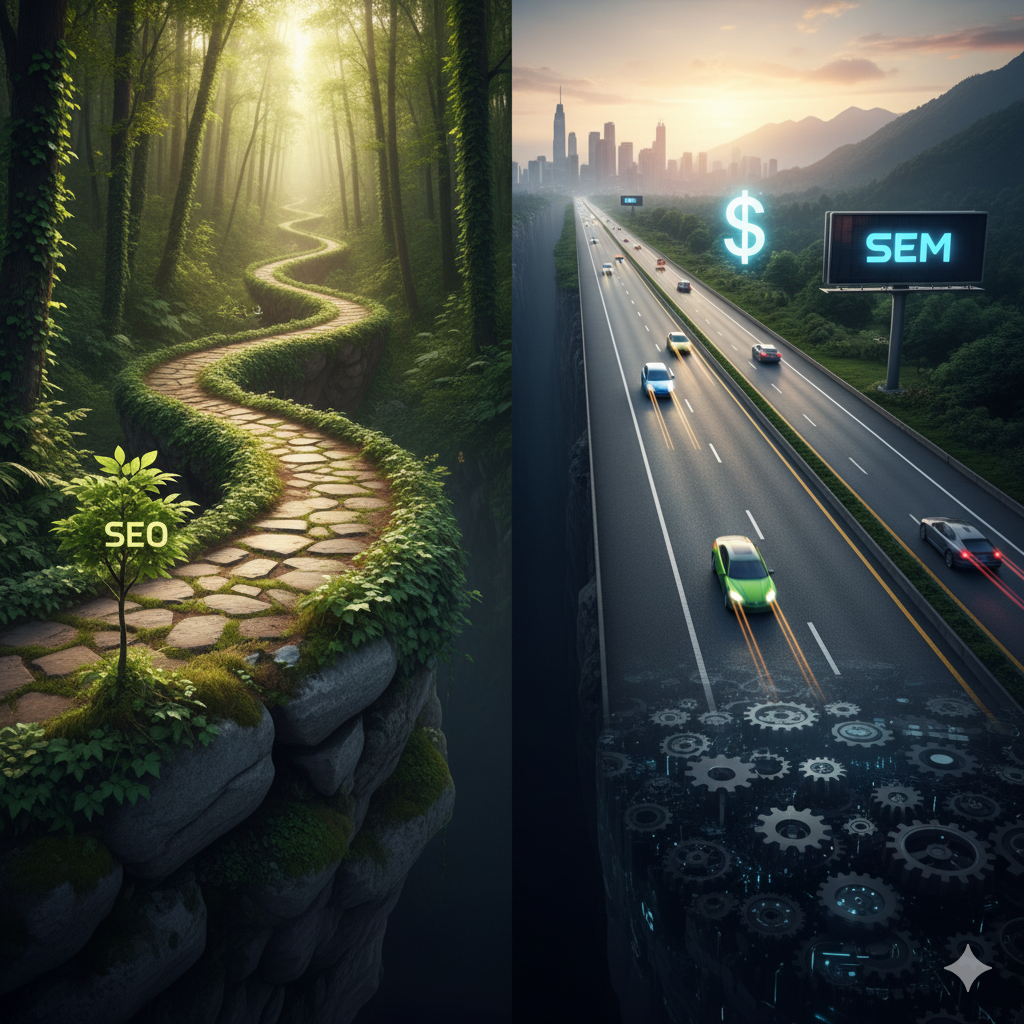

In today’s digital world, businesses compete for attention on search engines like Google every single day. But here’s a common problem: most people confuse SEO (Search Engine Optimization) and SEM (Search Engine Marketing) as if they mean the same thing.
While both are powerful tools for online growth, they work in very different ways. Understanding their differences can save your business time, money, and wasted effort.
Let’s dive deep into what makes SEO and SEM unique — and how you can use both to get the most out of your online marketing strategy.
What Is SEO? (Search Engine Optimization Explained)
SEO stands for Search Engine Optimization — the process of improving your website to rank higher in organic (unpaid) search results on Google and other search engines.
When you search for something like “best coffee shop near me” and see non-sponsored results at the top — that’s SEO in action.
The Goal of SEO
The main goal of SEO is to increase your website’s visibility naturally, without paying for every click. It’s about building trust, authority, and relevance over time.
Core Elements of SEO
- On-Page SEO – Optimizing website content, keywords, headings, and meta tags.
- Off-Page SEO – Building backlinks, citations, and online credibility.
- Technical SEO – Improving site speed, mobile-friendliness, and indexing.
- Local SEO – Focusing on location-based searches, ideal for small businesses.
SEO takes time to show results, but once your pages rank, they can bring in traffic 24/7 without additional cost per click.
What Is SEM? (Search Engine Marketing Defined)
SEM, or Search Engine Marketing, is a broader term that includes paid advertising methods — especially PPC (Pay-Per-Click) ads.
When you search for something on Google and see the results labeled as “Sponsored,” that’s SEM.
The Goal of SEM
SEM aims to drive immediate visibility by placing your website at the top of search results using paid campaigns, mainly through platforms like Google Ads.
Core Elements of SEM
- Keyword Targeting – Choosing the right terms users are searching for.
- Ad Creation – Writing attractive ad copy that makes users click.
- Bidding Strategy – Managing budgets and setting bids per keyword.
- Landing Page Optimization – Making sure users take action once they land on your page.
Unlike SEO, SEM gives instant results — but they stop the moment you stop paying for ads.
Need Help With Your Marketing or Website?
Not getting enough leads or sales? Get a free consultation and discover how to improve your website and marketing.
- Find out what may be stopping visitors from contacting you
- Discover where your website or marketing could perform better
- Get clear recommendations to improve leads, calls, and conversions
The Key Difference Between SEO and SEM
Here’s the easiest way to remember the difference:
👉 SEO = Free traffic earned over time.
👉 SEM = Paid traffic gained instantly.
1. Traffic Source
- SEO brings organic visitors who find your site through natural rankings.
- SEM brings paid visitors through sponsored ads.
2. Cost
- SEO involves time and effort but not direct payment for clicks.
- SEM involves budget allocation since you pay for every click.
3. Timeframe
- SEO is a long-term strategy that grows stronger with time.
- SEM is a short-term boost that delivers quick but temporary results.
4. Results
- SEO takes weeks or months to see real impact.
- SEM gives instant exposure as soon as your campaign goes live.
5. Purpose
- SEO builds credibility and brand trust.
- SEM drives fast leads, sales, or promotions.
Both are powerful — but they serve different roles depending on your business goals.
SEO vs SEM: Which One Is Better for Your Business?
The truth is, neither SEO nor SEM is “better” — they simply serve different purposes.
If your business needs quick visibility, SEM is your best friend.
But if you want sustainable, long-term growth, SEO is the smarter investment.
Choose SEO If:
- You want steady, lasting results.
- You’re focused on content marketing and brand authority.
- You have a smaller budget but can invest time.
Choose SEM If:
- You need traffic and leads immediately.
- You’re running seasonal or time-sensitive promotions.
- You want to test which keywords convert best.
Most successful businesses actually combine both — using SEM for instant traction while SEO builds long-term success in the background.
How SEO and SEM Work Together
Instead of choosing one, why not combine them?
When done right, SEO and SEM can complement each other beautifully.
1. Test Keywords with SEM Before SEO
You can use SEM campaigns to test which keywords bring the most clicks and conversions. Then, focus your SEO efforts on those high-performing keywords.
2. Use SEO Data to Optimize SEM Ads
If your organic traffic performs well on certain topics, you can mirror those keywords in your paid campaigns for better ROI.
3. Build Brand Recognition
Even if users don’t click your ads, seeing your business on both paid and organic listings increases brand trust and awareness.
4. Maximize Clicks
With both organic and paid listings visible, your business dominates the search results — increasing the chance users will click on you instead of your competitors.
The Cost Perspective: SEO vs SEM
When budgeting, it’s important to understand how costs work differently.
SEO Costs
- Initial setup and content creation
- Ongoing optimization and link building
- Long-term investment, but free organic clicks afterward
SEM Costs
- Pay-per-click on each ad
- Ongoing ad management and optimization
- Costly for competitive keywords
In short: SEO requires patience but offers sustainable rewards, while SEM delivers instant results but needs continuous spending.
Common Mistakes Businesses Make
Even experienced marketers sometimes blur the line between SEO and SEM. Here are some common mistakes to avoid:
- Relying only on SEM – Once you stop paying, traffic disappears.
- Ignoring SEO fundamentals – Without SEO, even paid campaigns may underperform.
- Using the same keywords for both – Each strategy should have unique targeting goals.
- Skipping landing page optimization – Poor landing pages waste both SEO and SEM efforts.
Remember, a balanced approach always wins.
How to Build a Winning SEO + SEM Strategy
If you’re serious about growth, combine both strategies strategically.
- Start with SEM for quick visibility.
- Invest in SEO for long-term ranking.
- Analyze performance data monthly.
- Use A/B testing on ads and landing pages.
- Continue creating high-quality, keyword-rich content.
This hybrid approach keeps your brand visible now and for years to come.
The Future of SEO and SEM
Search engines are getting smarter every year.
Google now focuses more on user experience, intent-based searches, and quality content.
What This Means for You:
- SEO will rely more on valuable, human-centered content.
- SEM will demand smarter ad targeting and better landing page quality.
Businesses that understand both strategies — and use them together — will stay ahead of the competition.
Final Thoughts: Why Understanding the Difference Matters
Many businesses waste money because they don’t know the real difference between SEO and SEM. They expect quick results from SEO or long-term growth from SEM — and end up disappointed.
When you understand how each works, you can make smarter decisions, set realistic expectations, and get the best of both worlds.
👉 Use SEM to get seen fast.
👉 Use SEO to stay visible forever.
When combined correctly, SEO and SEM aren’t rivals — they’re partners in your business growth.