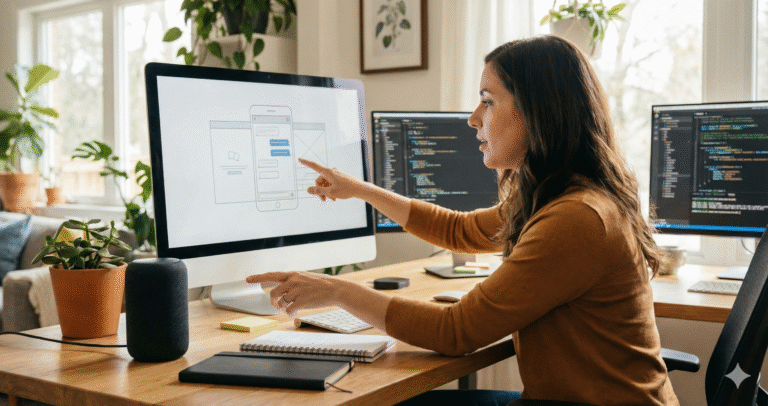

In today’s fast-moving digital landscape, your website isn't just a “nice to have” — it’s one of the most strategic touch points your business has. When faced with the decision of building your site using a pre-made template versus opting for a fully customised design, the choice matters. Below, we unpack why custom web design outperforms templates every time, the key benefits, and how it supports your long-term business goals.
1. Stand Out with Authentic Branding
One of the biggest drawbacks of a template is that many other businesses could be using the exact same layout, structure or visuals. On the other hand, a custom site is built from the ground up to reflect your unique brand identity — colours, typography, imagery, tone of voice, interaction patterns — all tailored to you. blackcatwebsitedesign.com+2Australian Internet Advertising+2
This is crucial because first impressions count. Visitors often use your website design as a proxy for your professionalism and credibility. Digital Silk+1
When your site looks like everyone else's, you lose differentiation. With custom design, you amplify your difference.
2. Better User Experience (UX) & Conversion
Templates are built to cater to broad use-cases. That means they may carry unnecessary code, features you don’t need, or navigation that doesn’t align with your customers. webpulselabs.com+1
By contrast, a custom site is crafted with your target audience in mind: how they behave, what they seek, what stops them from converting. When your website’s structure, content flow, and interactions are optimized for your users, engagement goes up — bounce rate goes down — and conversions are more likely. blackcatwebsitedesign.com+1
3. Optimised Performance & SEO From Day One
Search engines and users alike reward fast-loading, mobile-friendly, cleanly-coded websites. Templates often carry “bloat” — extra scripts or features you don’t need, which slow down performance and may hamper SEO. Digital Silk+1
With custom web design, developers can ensure lean code, well-structured architecture, fast load times and built-in SEO best practices (metadata, structured data, mobile responsiveness). That gives you a head-start in being visible to your audience. Big Pie Creative - Big Pie Creative+1
In short: you’re not just “better looking” — you’re better positioned.
4. Flexibility & Scalability to Grow With You
As your business evolves, your website needs will shift — new products, expanded services, different audience segments, integrations with third-party tools, membership features, mobile apps, etc. Templates often hit a ceiling: you can’t easily adapt them beyond their original structure. Big Pie Creative - Big Pie Creative+1
Custom design is built with future-proofing in mind. Add new modules, adjust layouts, update features: all possible without having to re-start from zero. That flexibility pays dividends as your business scales.
5. Higher Long-Term Value & Cost Efficiency
Yes — the upfront cost for custom design is higher than a template. But when you factor in maintenance, updates, redesigns, plugin dependencies and the risk of “out-growing” your template, the long-term value of custom often exceeds that of a short-term cheap solution. blackcatwebsitedesign.com+1
A properly built custom site will age better, perform better, and require fewer compromises as your business matures.
6. Stronger Security & Quality Control
Because templates are widely used, they attract more automated vulnerabilities and can suffer from outdated code or poorly maintained plugin dependencies. jezweb.com.au+1
With a custom build, you control what goes in, limit unnecessary third-party dependencies, and can apply deeper security controls tailored to your business risk profile.
7. Unique Features & Integrations That Matter
Perhaps you need a niche feature — a booking engine, a custom product configurator, advanced search filters, API integrations, or bespoke analytics dashboards. Templates may force you into work-arounds or “shoe-horning” features. Big Pie Creative - Big Pie Creative
Custom design means you build exactly what you need — making your website a true business asset, not just an online brochure.
Key Considerations Before You Go Custom
While the benefits are compelling, custom web design isn’t without its demands. Here are things to keep in mind:
Budget and timeline: Custom builds take more time and investment. If you need a site right now on a shoestring budget, template may be a stop-gap. But keep in mind the trade-offs. edesignerz.com
Maintenance commitment: A custom site often requires ongoing support (updates, testing, optimization). Make sure you plan for that.
Choose the right partner: A truly custom site means working with skilled designers & developers — not simply customizing a template and calling it “custom.” Some vendors may mis-label. Australian Internet Advertising
Define your requirements clearly: What are your business goals? What functionalities matter? What will you need in three-five years? If you don’t think ahead, even a custom site might under-deliver.
Real-World Example: Template vs Custom in Practice
Imagine two businesses launching a website:
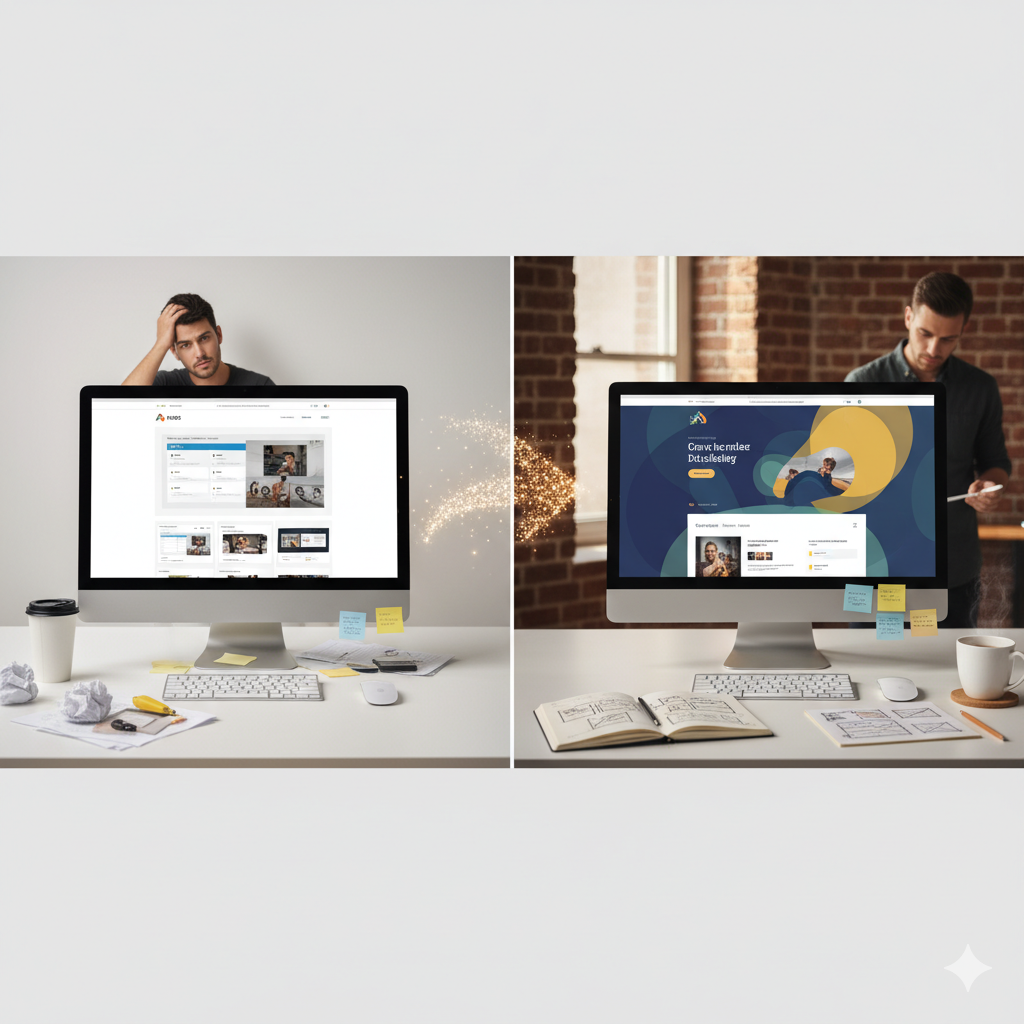
- Business A picks a popular off-the-shelf template, fills in content, adds their logo. It’s live in two weeks, cost is low. Great. But: it looks similar to 10 other sites, navigation doesn’t perfectly match how their customers behave, the page load time is sluggish, and six months later they want a membership feature but the template can’t support it without major workaround.
- Business B invests in a custom build. They start with brand workshops, user journey mapping, wireframes, then front-end dev + testing. The site takes longer and costs more, but when launched it’s fast, intuitive, unique — and when six months later they want to add a subscription portal or integrate with their CRM, it’s a matter of module development, not re-platforming.
In the long run, Business B has a website that serves as a strategic asset; Business A may end up needing a redesign sooner, or bottlenecked by limitations.
Need Help With Your Marketing or Website?
Not getting enough leads or sales? Get a free consultation and discover how to improve your website and marketing.
- Find out what may be stopping visitors from contacting you
- Discover where your website or marketing could perform better
- Get clear recommendations to improve leads, calls, and conversions
When Might a Template Make Sense?
Even though custom wins in many cases, templates aren’t always the wrong choice. Consider them if:
- You’re a small startup with minimal budget and urgency and you just need a “web presence” for now.
- Your business model is simple and unlikely to change much in the short term.
- You’re willing to accept the trade-offs: may look generic, limited scalability, may need a redesign sooner.
Just be aware: if you expect to grow, differentiate, scale — custom puts you in a much stronger position.
Final Thoughts
If you treat your website as a core business tool — not just a “nice digital card” — then investing in a custom web design is a strategic decision. It gives you unique branding, optimized performance, flexible growth, and better long-term returns. Templates may be tempting for speed and cost, but when you’re serious about your digital presence, custom design simply wins.
So, if you’re building or re-building your site — ask not just “How fast can I launch?” or “How cheap can I get it?” — ask “How will this scale? How will this reflect our brand? How will this convert visitors into customers?”
When you answer those questions, the answer often leads you toward custom web design — because in the long run, it beats templates every time.