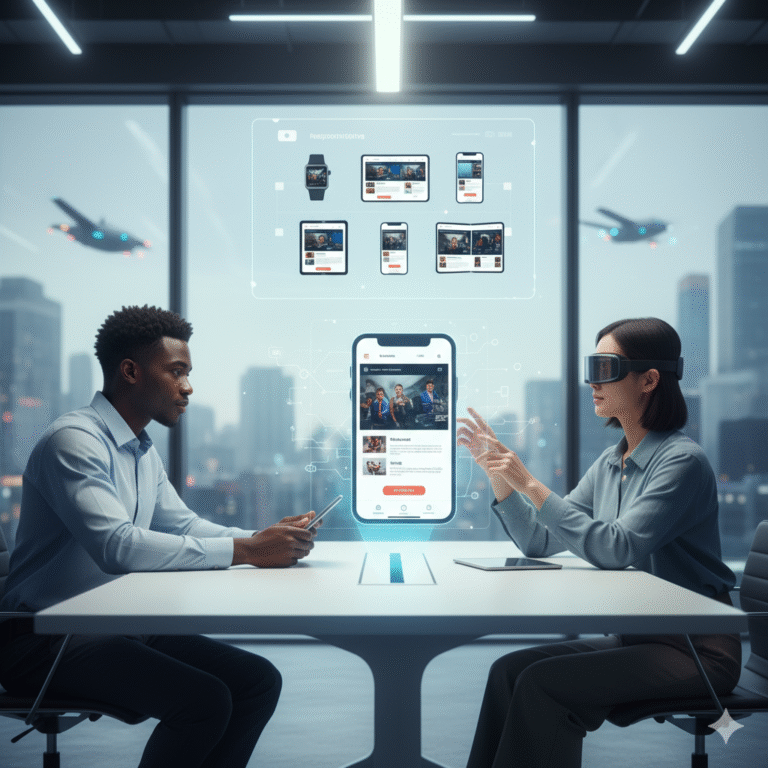


Digital agencies are the lifeblood of modern business, helping brands build an online presence that converts visitors into loyal customers. As we move into 2025, the landscape of digital agency websites is evolving at an unprecedented pace. From cutting-edge design trends to AI-driven personalization and immersive user experiences, agencies need to stay ahead of the curve to remain competitive.
In this blog, we’ll explore what’s next for digital agency websites in 2025, highlighting key trends, technologies, and strategies to create websites that not only attract attention but also drive measurable results.
1. Hyper-Personalized User Experiences
Personalization is no longer a luxury—it’s an expectation. By 2025, digital agency websites will leverage advanced AI and machine learning to deliver content tailored to individual users. Personalized recommendations, dynamic landing pages, and behavior-based content will make websites feel more intuitive and engaging.
Why it matters: Personalization increases user engagement, reduces bounce rates, and boosts conversion rates.
2. AI-Powered Design and Content Generation
AI tools like GPT-5 are revolutionizing how agencies create content and design websites. From automated copywriting to dynamic design suggestions, AI helps agencies launch websites faster without compromising quality.
Key applications:
- AI-generated blog content and landing pages
- Predictive analytics for user behavior
- AI-assisted UX/UI design
Need Help With Your Marketing or Website?
Not getting enough leads or sales? Get a free consultation and discover how to improve your website and marketing.
- Find out what may be stopping visitors from contacting you
- Discover where your website or marketing could perform better
- Get clear recommendations to improve leads, calls, and conversions
3. Immersive Web Experiences with AR and VR
Augmented Reality (AR) and Virtual Reality (VR) are no longer confined to gaming. By 2025, digital agency websites will use AR/VR to offer immersive product demos, virtual portfolios, and interactive brand experiences.
Example: A design agency could let potential clients “walk through” their portfolio in 3D environments.
4. Mobile-First and Progressive Web Apps (PWAs)
With mobile traffic dominating the web, agencies must prioritize mobile-first design. Progressive Web Apps (PWAs) bridge the gap between websites and apps, offering offline functionality, faster loading, and app-like experiences without requiring downloads.
5. Voice Search Optimization
Voice search is transforming SEO. Digital agency websites must be optimized for conversational queries, long-tail keywords, and voice-activated commands to stay relevant in 2025.
Tip: Use natural language in content and implement structured data to improve voice search rankings.
6. Sustainability and Green Web Design
Sustainable websites are gaining importance. Fast-loading, energy-efficient websites not only reduce carbon footprint but also improve SEO rankings. Agencies that adopt green web design practices will appeal to eco-conscious clients.
Techniques include:
- Optimized images and videos
- Minimalistic designs
- Efficient server infrastructure
7. Micro-Interactions and Motion UI
Small animations, hover effects, and micro-interactions can make a website feel alive. In 2025, subtle motion UI will guide users, enhance storytelling, and improve conversion by creating more engaging interfaces.
8. Advanced Analytics and Data-Driven Decisions
Digital agencies will increasingly rely on AI-powered analytics tools to track user behavior, conversion rates, and engagement metrics in real-time. Data-driven insights will shape website design, content strategy, and marketing campaigns.
9. Headless CMS for Flexibility and Speed
Headless Content Management Systems (CMS) separate the backend from the frontend, offering flexibility to deliver content across multiple platforms. This approach improves site performance, scalability, and allows for omnichannel experiences.
10. Cybersecurity and Privacy Compliance
As regulations like GDPR and CCPA evolve, digital agency websites must prioritize user data security and privacy. In 2025, robust security measures, encryption, and transparent privacy policies will be non-negotiable.
11. Integrating AI Chatbots and Virtual Assistants
AI-driven chatbots are becoming more sophisticated. Agencies can use chatbots for instant support, lead generation, and personalized interactions, improving user satisfaction and reducing response times.
12. Minimalist and Immersive Design Trends
Simplicity meets functionality. Clean, minimalist design combined with immersive visuals will dominate agency websites in 2025. Less clutter leads to better usability and faster loading times.
13. Video-First Approach
Video content continues to outperform text in engagement. Agencies are using video backgrounds, animated explainers, and live streaming to convey brand stories effectively.
14. Enhanced Client Onboarding Experiences
Websites will serve as portals for client onboarding. Secure dashboards, progress tracking, and interactive project management tools will improve client communication and satisfaction.
15. Voice and AI-Driven Search Features
AI-driven search functions allow users to quickly find services, portfolios, or case studies. These features improve navigation and user experience while keeping visitors engaged.
16. Blockchain for Transparency
Blockchain technology could bring transparency to project tracking, contracts, and transactions for agencies and clients, ensuring trust and security in online operations.
17. Integration with Marketing Automation Tools
Seamless integration with CRMs, email marketing, and social media automation platforms will enable agencies to manage campaigns directly from their websites.
18. Accessibility as a Core Standard
Web accessibility will no longer be optional. Ensuring that websites are usable for people with disabilities is crucial for legal compliance and brand reputation.
19. Interactive Portfolios and Case Studies
Agency portfolios will become more interactive, featuring live demos, before-and-after project visualizations, and client testimonials with dynamic storytelling.
20. Future-Proof Hosting and Performance Optimization
With new web technologies, websites must load quickly, scale efficiently, and withstand traffic spikes. Cloud hosting, edge computing, and global CDN networks will be standard practices.
Conclusion
The digital agency landscape in 2025 is about blending creativity, technology, and user-centered strategies. Agencies that embrace AI, immersive experiences, mobile-first design, and data-driven insights will lead the market. Websites are no longer just digital business cards—they are intelligent, engaging platforms that reflect the agency’s expertise and vision.
By staying ahead of trends and investing in next-gen technology, digital agencies can deliver websites that not only impress but convert, creating lasting value for clients and their audiences.