
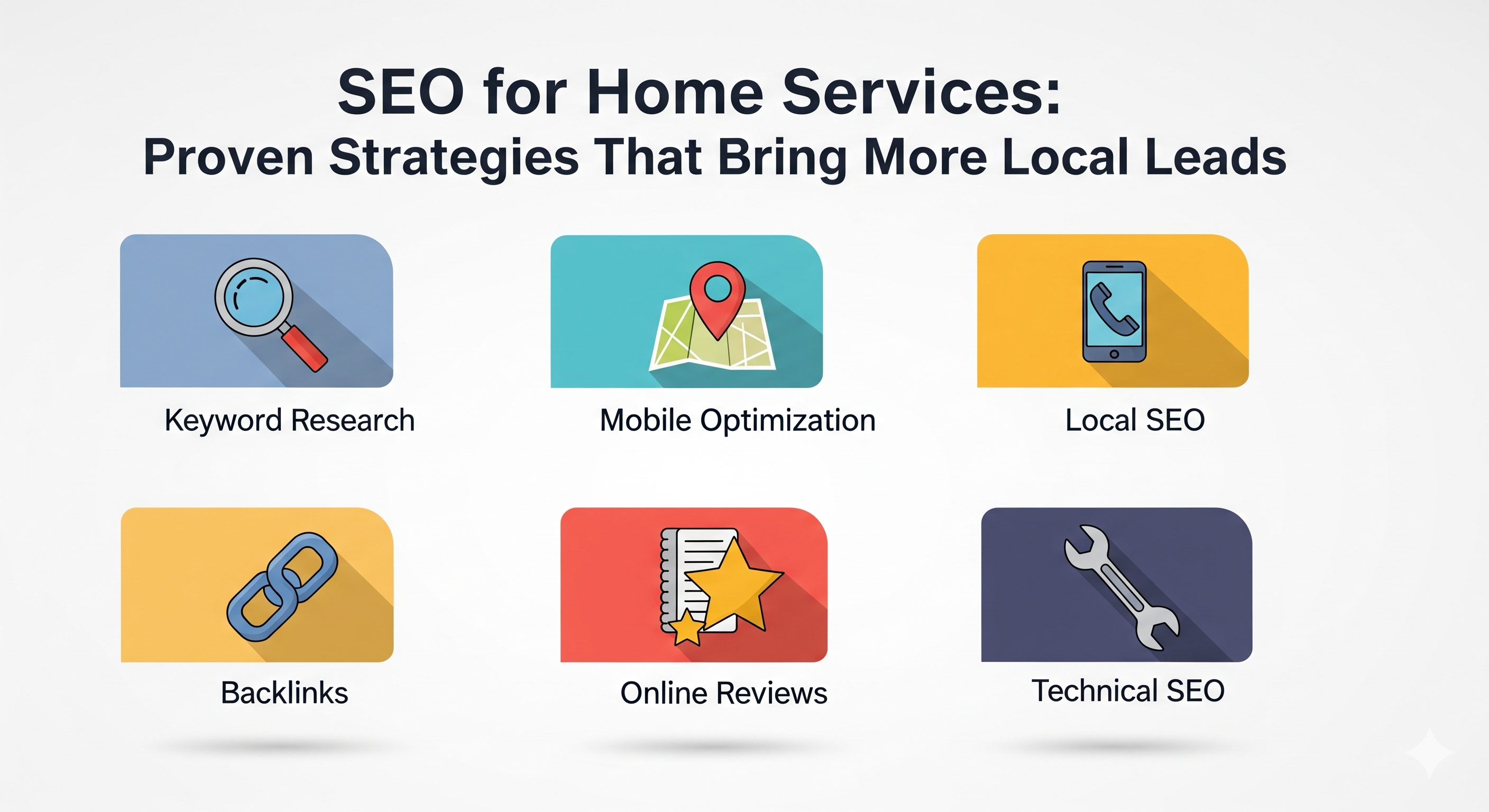

In today’s highly competitive digital landscape, home services businesses face a unique challenge. The industry is growing fast, and so is the demand for online visibility. Whether you're a plumber, electrician, landscaper, or any other type of home service provider, SEO (Search Engine Optimization) can significantly impact your ability to attract new local customers and boost your business growth.
In this blog post, we'll cover the most effective SEO strategies for home services businesses. From local search optimization to content creation, these techniques are designed to increase your website's ranking and attract high-quality leads.
1. Understanding the Importance of SEO for Home Services
SEO is essential for home services businesses because it helps you get found online by your ideal customers. When people search for services like plumbing, electrical work, or lawn care, they are typically looking for reliable, nearby businesses. Without proper SEO, your business might not appear on the first page of search results, making it much harder for potential clients to find you.
By optimizing your website and online presence, you can improve your search engine rankings and increase the chances of being seen by more local prospects. SEO isn't just about keywords; it involves a comprehensive approach to your website, content, and local presence to create an outstanding online experience.
2. Local SEO: The Heart of Your Home Services Business
For home services, local SEO is critical. You want to rank in local search results when someone in your service area searches for a provider. Here’s how to effectively optimize for local search:
A. Claim and Optimize Your Google My Business Profile
One of the easiest and most effective ways to boost your local SEO is by claiming and optimizing your Google My Business (GMB) profile. This free tool allows you to appear in local searches and Google Maps, making it easier for customers to find your business.
- Add accurate business information: Ensure your name, address, phone number (NAP), and hours of operation are consistent across the web.
- Optimize for keywords: Include relevant keywords in your business description and services to help Google understand your offerings.
- Collect reviews: Encourage satisfied customers to leave positive reviews. Reviews not only boost your reputation but also enhance your visibility on Google.
B. Local Citations and Listings
Apart from GMB, you should also ensure your business is listed on local directories such as Yelp, Angie's List, and Yellow Pages. These local citations help build your online authority and improve local search rankings.
- Consistency is key: Ensure your NAP details are consistent across all directories.
- Use local keywords: Integrate location-specific keywords into your business listings to improve search relevance.
Need Help With Your Marketing or Website?
Not getting enough leads or sales? Get a free consultation and discover how to improve your website and marketing.
- Find out what may be stopping visitors from contacting you
- Discover where your website or marketing could perform better
- Get clear recommendations to improve leads, calls, and conversions
3. Keyword Research: Targeting High-Intent Local Searches
Effective keyword research is one of the pillars of SEO success. When selecting keywords, it's crucial to target high-intent search phrases that your local audience is actively looking for. Here are some steps to ensure you're targeting the right keywords:
- Use tools like Google Keyword Planner to find popular and relevant keywords for your business. Focus on long-tail keywords, such as “affordable plumbing services in [city]” or “emergency HVAC repair near me.”
- Analyze competitors’ keywords: Identify what keywords your local competitors are ranking for and consider targeting those terms.
- Focus on location-specific terms: For example, if you offer services in Atlanta, use keywords like "best Atlanta electricians" or "Atlanta plumbing services."
4. Optimize Your Website for Local Search
Once you’ve researched and selected your target keywords, it's time to optimize your website for better search rankings. A well-optimized website will not only attract more local leads but also improve user experience.
A. Localized Content
Create content that speaks directly to your local audience. Highlight the services you offer in specific cities or neighborhoods, and make sure to integrate location-based keywords naturally into your content.
- Service pages: Create individual pages for each service you provide and tailor them to specific locations. For example, if you’re a plumber serving multiple areas, create separate pages for each city you cover.
- Location-based blog posts: Write blog posts that focus on common problems or solutions specific to the areas you serve. This could include “Top Plumbing Issues in [City]” or “Why HVAC Maintenance Is Crucial for [Local Area].”
B. Mobile Optimization
More than half of searches for local services are done on mobile devices. Ensure your website is mobile-friendly by using responsive design and fast-loading pages. Google also considers mobile optimization a ranking factor, so this step is essential for both user experience and SEO.
C. Optimize Site Speed
Page speed directly impacts your rankings and user satisfaction. Slow-loading websites not only frustrate users but also get penalized by Google. Use tools like Google PageSpeed Insights to identify areas where you can improve.
5. Build High-Quality Backlinks to Your Home Services Website
Backlinks—links from other websites to yours—are a crucial ranking factor for SEO. They help search engines view your website as an authority in your niche.
- Reach out to local bloggers or influencers: Offer to collaborate with local influencers who might mention your services in their posts or articles.
- Guest posts: Write valuable, informative articles for other local businesses or home services blogs, and include a backlink to your site.
- Local sponsorships and partnerships: Participate in or sponsor local events or charities and ensure your business gets listed on their websites.
6. The Power of Social Media in Local SEO
While social media doesn’t directly impact your SEO rankings, it plays a vital role in building brand awareness and attracting local leads. Engage with your community on platforms like Facebook, Instagram, and Twitter. Share updates about your services, post client testimonials, and engage with your followers to build trust.
- Share local content: Promote local community events or share success stories from your satisfied customers.
- Use local hashtags: Use location-specific hashtags to increase your visibility among local audiences.
7. Monitor and Adjust Your SEO Strategy
SEO is an ongoing process. Regularly monitor your performance to ensure your strategies are working. Use tools like Google Analytics, Google Search Console, and SEMrush to track your traffic, keywords, and rankings.
- Review your website analytics: Analyze which pages and keywords are performing well and which ones need more work.
- Adjust your content: If you’re not ranking for certain keywords, consider revising your content to better align with what users are searching for.
8. Conclusion: Stay Committed to SEO for Long-Term Success
SEO for home services is a long-term investment. By following the strategies outlined above, you can boost your local visibility, attract more leads, and grow your business. SEO may take time to show results, but the payoff is well worth it in the form of consistent traffic and increased conversions.
Staying consistent with your SEO efforts, monitoring your performance, and adjusting strategies as needed will ensure your business continues to thrive in a competitive marketplace.