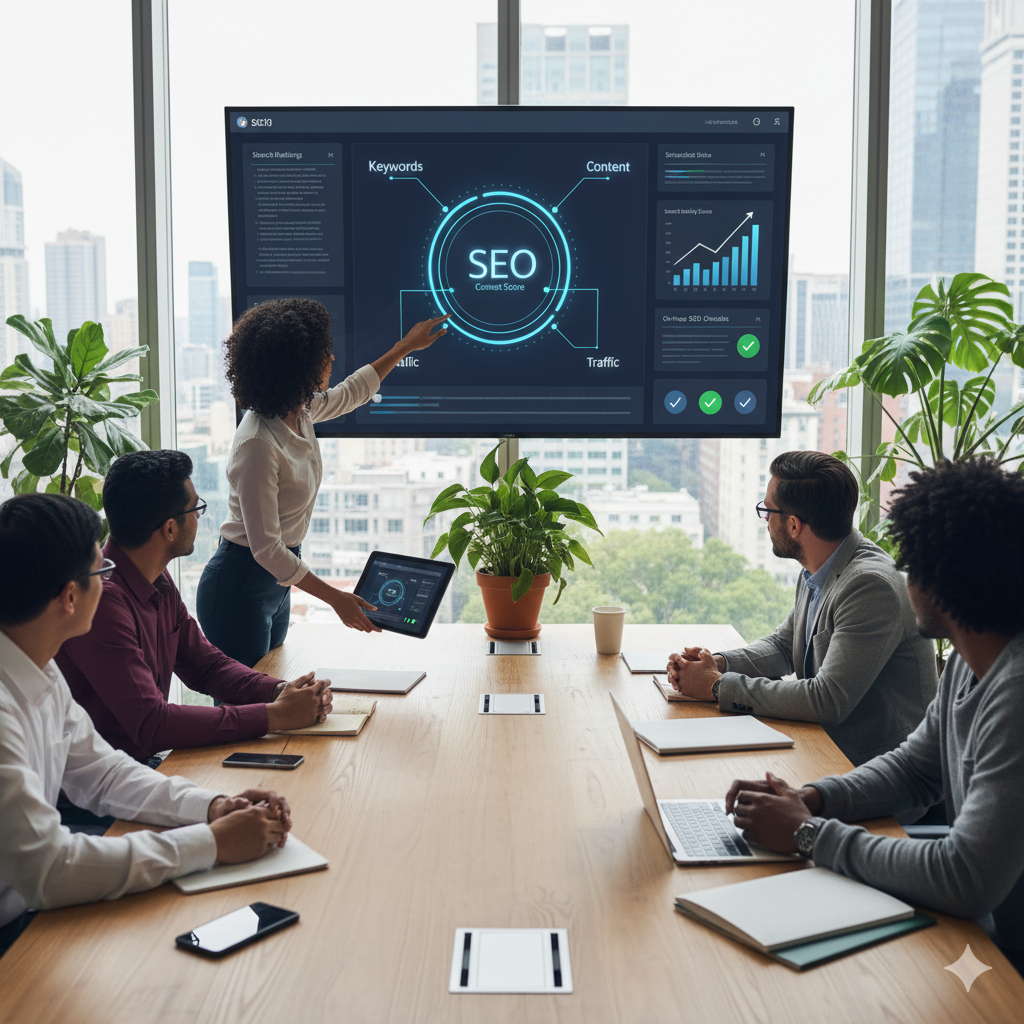

In the competitive landscape of digital services, web design agencies face a dual challenge: they must rank for the right keywords and craft copy that converts prospects into clients. When you combine the power of search-engine optimisation (SEO) with persuasive copywriting, you unlock a major growth lever for your agency. Below you’ll find a realistic, professional and actionable guide—tailored for web design firms—to help you master SEO-copywriting and move beyond generic blogs.
Why Web Design Agencies Need to Invest in SEO Copywriting
Many web design agencies assume their “design skills” speak for themselves—but the truth is: when potential clients search for “website redesign services”, “responsive web design agency” or “e-commerce site build for small business”, your content must show up and be convincing.
- SEO ensures your agency gets seen at the right time (when a prospect types a query).
- Copywriting ensures once they land on your page, they stay, believe you can solve their problem, and take action (eg: schedule a call).
- Without either piece, you lose: either you’re invisible or you’re visible but unconvincing.
1. Start With Your Audience and Their Intent
Before thinking about keywords, you must understand who your ideal client is and why they are searching. Are they:
- A small business owner seeking a cost-effective site revamp?
- A marketing manager at a mid-sized company needing an agency partner for ongoing design + optimisation?
- An e-commerce founder looking for a mobile-first redesign to boost conversions?
Once you’ve mapped their profile, ask: What query would they type in? What problem are they trying to solve?
This aligns with search intent—and as SEO experts emphasise, content that answers the user’s intent is far more likely to perform. Shopify+2Go Fish Digital+2
Use this insight to shape your headings, keyword selection and tone. Speak directly to their pain points: “My website loads slowly on mobile”, “I’m losing sales because my checkout is broken”, etc.
Need Help With Your Marketing or Website?
Not getting enough leads or sales? Get a free consultation and discover how to improve your website and marketing.
- Find out what may be stopping visitors from contacting you
- Discover where your website or marketing could perform better
- Get clear recommendations to improve leads, calls, and conversions
2. Conduct Keyword Research — Focus on Long-Tail and Conversion-Driven Terms
For a web design agency, generic keywords like “web design” are extremely competitive and vague. Instead, target long-tail keywords—more specific phrases that signal higher intent and lower competition. Some examples for your niche:
- “responsive web design agency for startups”
- “small business ecommerce website redesign Philippines”
- “WordPress site migration web design services”
The benefits:
- Better match for what a decision-maker actually types.
- More qualified traffic—users closer to hiring you, not just browsing.
- Often less competition, so easier to rank. Upwork+1
Once you have your list, group them into themes (eg: “redesign”, “mobile optimisation”, “ecommerce build”) and assign to pages/posts.
3. Craft Headlines and Meta Tags That Grab Attention and Rank
Your page’s title tag (meta title) and meta description are your first impression in search results. They must:
- Include your primary long-tail keyword (but still read naturally).
- Communicate a clear benefit (“Boost conversions”, “Mobile-first redesign”, “Affordable for SMEs”).
- Be compelling enough to generate clicks (higher click-through = positive signal). Search Engine Journal+1
Similarly, your on-page H1 headline should reflect the same promise. For example:
“Mobile-First Web Design Agency for Philippines Startups – Boost Your Conversions”
The meta description might read:
“Looking for a web design agency that delivers mobile-first, high-conversion websites? Our Philippine-based team specialises in startup-friendly, responsive designs. Get a free audit today.”
4. Structure Your Content for Scannability & Search Engines
People visiting agency websites often scan rather than read every word. And search engines reward pages that keep users engaged. Structure your copy accordingly:
- Use H2s and H3s to break up major sections (eg: “Why mobile matters”, “Our process”, “Results we deliver”). owdt.com+1
- Keep paragraphs short (2-4 sentences) and use bullet points or numbered lists where helpful.
- Highlight key phrases (bolding important benefits) to make them jump out.
- Use internal links to other relevant pages (case studies, services, blog posts) and credible outbound links when appropriate. Search Engine Journal+1
By doing this, you improve readability, dwell time and signalling to Google that your content is well-structured and user-friendly.
5. Write for Humans First — Then Optimize for Search Engines
While keywords and structure matter, your content must be written for people. If it reads like it was generated by a machine, your bounce rate may suffer—and that hurts SEO. Reddit+1
Some tips:
- Use active voice (“We deliver”, “You’ll benefit”) rather than passive. seoquantum.com+1
- Use conversational, clear language. Avoid industry jargon unless you’re certain your audience understands. Webflow
- Tell a story or paint a scenario (“Imagine your site loads in 2 seconds and your bounce rate drops by 30 %”) to connect emotionally.
- End each piece with a clear Call to Action: “Book a free consultation”, “Download our web design checklist”, etc. This drives conversions. SEOBoost -
6. Leverage Authority, Trust & E-A-T for Better Rankings
For any agency, credibility is key. When prospects—or Google—see your brand as trustworthy, you win. The concept of E-A-T (Expertise, Authoritativeness, Trustworthiness) is more important than ever. BloggingPro
Ways to strengthen your credibility:
- Publish case studies with real numbers (“Reduced load time from 6 s to 2.3 s for client X”).
- Include testimonials from happy clients.
- Show certifications, awards or industry affiliations.
- Write content that genuinely helps (rather than pure self-promo). High-value content builds trust with both visitors and search engines.
7. Optimize Visuals, Alt Texts and Page Speed
Since you’re a web design agency, you likely understand the visual side—but don’t neglect SEO for visuals. Good visuals improve engagement; optimized visuals boost your SEO. Search Engine Journal+1
Checklist for visuals:
- Use high-quality images or graphics that illustrate the service.
- Use descriptive file names (e.g., “ecommerce-site-design-agency-philippines.jpg”) and include the keyword when appropriate.
- Write alt text that describes the image and includes relevant keywords naturally.
- Ensure images are compressed for fast loading and mobile friendly. Site speed affects SEO and conversions.
8. Build Strategic Links and Internal Pathways
SEO isn’t just about content—link structure matters. For your agency site:
- Internal linking: link your service pages to blog posts, case studies, FAQs. This keeps users engaged and helps Google understand your page hierarchy. Go Fish Digital
- External linking: cite reputable sources when you mention data or trends (for example, “Sites with mobile-first design saw 20 % higher conversion rates”). This adds authority.
- Encourage backlinks: share blog posts, guest-post on industry sites, partner with complementary service providers. Authority links drive traffic and ranking.
9. Monitor, Test and Update Your Copy Regularly
SEO and copywriting are not “set-and-forget”. Algorithms change, and so do user behaviours. js-interactive.com+1
Steps to keep it fresh:
- Use Google Analytics and Search Console to monitor which keywords your pages rank for, how much traffic they get, bounce rates, dwell time.
- A/B test headlines, CTAs, or layout if you’re seeing high traffic but low conversion.
- Update content periodically with new statistics, refreshed case studies or industry trends to keep it relevant (and signal freshness to search engines).
- Repurpose strong content into other formats (video, infographic) to attract more engagement and shares.
10. Measure Results and Showcase Agency Value
Since you’re selling design services, clients will want proof you deliver. Align your SEO copywriting with metrics you can show:
- Increase in organic traffic from targeted long-tail keywords.
- Higher click-through rate from search results (thanks to compelling meta titles/descriptions).
- Improved conversion rate (eg: number of enquiries, quote requests) from the page copy.
- Reduced bounce rate and longer session durations (indicating users find the content valuable).
By tying your writing efforts to measurable outcomes, you both attract more clients and demonstrate your agency’s professionalism.
11. Tailor Content for Web Design Agency-Specific Topics
Here are topic ideas your agency could use (with built-in long-tail keyword potential):
- “Why responsive web design matters for mobile-first audiences in 2025”
- “How a redesign improved site speed and conversions: our case study for a retail startup”
- “E-commerce web design services for small businesses in the Philippines”
- “Website maintenance & optimisation packages for agencies: a complete guide”
- “How to choose the right web design agency for your SaaS business”
Each of these can be optimised around long-tail keywords, written for your target audience, and structured to convert.
12. Checklist: Quick SEO Copywriting Review for Agency Pages
Before you publish any page or blog post, run through this checklist:
- Does the headline (H1) include a target long-tail keyword and a compelling benefit?
- Are H2s/H3s used to break up sections and target secondary keywords?
- Is the intro compelling and aligned with the searcher’s intent?
- Is keyword usage natural (1-2 % keyword density is a good guideline) and not forced? Shopify
- Are paragraphs short, copy scannable, and lists/bullets used where appropriate?
- Are images optimised (file name, alt text, compression) and relevant to the content?
- Are internal and external links appropriate and helpful?
- Is there a clear CTA that ties to your agency service offering?
- Is the meta title + meta description unique, keyword-rich and compelling?
- Have you scheduled a review for this content (6-12 months) to refresh or update it?
Final Thoughts
For a web design agency, mastering SEO copywriting isn’t optional—it’s a core differentiator. When you show up in search and your content clearly convinces visitors that you understand their problem and can deliver the solution, you win.
By following the steps above—audience-first intent mapping, long-tail keyword focus, human-centred copy, structured formatting, visual optimisation, link strategy and regular performance review—you’ll build content that not only drives traffic, but converts it.
If you’d like help building a keyword list, auditing your current agency pages for SEO copywriting gaps, or crafting a content plan tailored to web design service offerings, I’d be happy to assist.