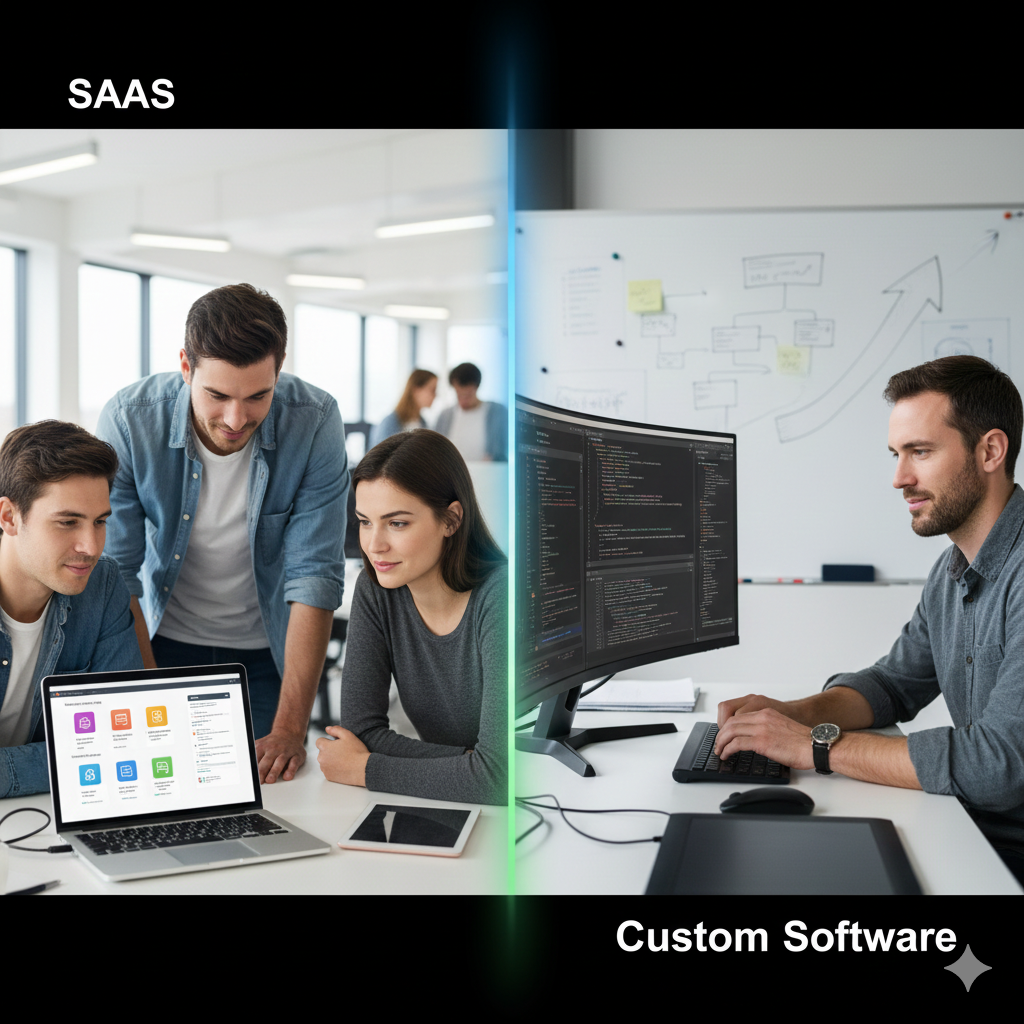

As businesses grow, the tools they use need to grow with them. That’s where the SaaS vs. custom software debate becomes a major strategic decision. Both solutions can streamline operations, enhance productivity, and support long-term expansion—but they do it in very different ways.
Choosing the right one isn’t just a matter of pricing or features. It’s about scalability, flexibility, security, and how well each solution will support your business years into the future. Whether you’re launching a startup, expanding into new markets, or upgrading legacy systems, this guide will help you find the option that aligns with your growth strategy.
What Is SaaS and Why Is It Popular for Scaling?
Software-as-a-Service (SaaS) is cloud-based software hosted and maintained by a third-party provider. You access it through a web browser or app, pay a subscription fee, and enjoy continuous updates without managing hardware or infrastructure.
Why Businesses Choose SaaS:
- Low upfront cost—no major development or hardware expenses
- Fast deployment—can be up and running in hours
- Automatic updates and maintenance handled by the vendor
- Pay-as-you-grow pricing
- Built-in integrations with popular tools and platforms
SaaS platforms are particularly appealing to companies that want immediate functionality without dealing with a lengthy development cycle.
What Is Custom Software and When Does It Make Sense?
Custom software is tailored specifically to your business’s workflows, processes, and technical requirements. You work with developers or a software agency to design, build, and maintain the solution.
Why Companies Invest in Custom Software:
- Total control over features, design, and user experience
- Built for unique workflows that off-the-shelf tools can’t support
- Scalable architecture designed around long-term needs
- Better data ownership and security
- Competitive advantage through proprietary systems
Custom solutions require more time and budget upfront, but the payoff can be significant for organizations with specialized or evolving demands.
Need Help With Your Marketing or Website?
Not getting enough leads or sales? Get a free consultation and discover how to improve your website and marketing.
- Find out what may be stopping visitors from contacting you
- Discover where your website or marketing could perform better
- Get clear recommendations to improve leads, calls, and conversions
SaaS vs. Custom Software: A Breakdown of Scalability Factors
Below is an in-depth look at how each option measures up when it comes to supporting business growth.
1. Scalability and Growth Potential
SaaS Scalability
SaaS tools are inherently scalable because they run on cloud infrastructure designed for millions of users. You can easily upgrade your plan as your team grows.
However, scalability may be limited by vendor constraints. You’ll need to adapt to their roadmap rather than the other way around.
Custom Software Scalability
Custom-built solutions can be architected to scale indefinitely—as long as you continue investing in development and server resources. You have full ownership of the infrastructure and can expand it at your own pace.
Winner:
Custom Software for long-term scalability
SaaS for quick, short-term scaling
2. Cost: Initial vs. Long-Term Investment
SaaS Cost Structure
SaaS pricing is subscription-based, often per month and per user. This makes it cost-effective in the beginning but can become expensive as your team grows.
Custom Software Cost Structure
Custom development requires a significantly larger upfront investment. However, long-term costs can be lower because you eliminate recurring subscription fees and have full control over scaling.
Winner:
SaaS for short-term affordability
Custom for long-term financial predictability
3. Flexibility and Customization
SaaS Flexibility
SaaS platforms offer limited customization—mostly within what the vendor allows. You’re working within a predefined system.
Custom Software Flexibility
You can build exactly what your business needs. Whether it’s a specific workflow, integration, or user interface, everything is tailored.
Winner:
Custom Software, hands down.
4. Integration and Compatibility
SaaS Integrations
Modern SaaS platforms support dozens or hundreds of integrations—CRM, accounting, analytics, automation tools, and more.
Custom Software Integration
You can integrate with anything, including internal legacy systems, custom APIs, or niche databases.
Winner:
Tie—depends on your ecosystem.
SaaS for mainstream integrations; custom for complex enterprise ecosystems.
5. Deployment Speed and Time-to-Value
SaaS Deployment
SaaS is accessible immediately after signup. A great choice for teams that need functionality today.
Custom Software Deployment
Custom solutions require months of design, development, testing, and deployment.
Winner:
SaaS—no contest.
6. Security and Compliance
SaaS Security
Reputable SaaS providers invest heavily in security and compliance certifications. However, you rely entirely on their policies and infrastructure.
Custom Software Security
You have full control over security protocols, hosting, data handling, and compliance standards. This is essential for industries like fintech, healthcare, and government.
Winner:
Custom Software for highly regulated industries
SaaS for general business use
7. Total Ownership and Data Control
SaaS Ownership
SaaS vendors control the platform, codebase, and ecosystem. Your access is tied to your subscription.
Custom Software Ownership
You own the code, the infrastructure, the data, and the future direction of the product.
Winner:
Custom Software
SaaS vs. Custom Software: Which One Helps You Scale Faster?
The short answer:
It depends on your growth stage, budget, and long-term needs.
Choose SaaS If:
- You need a solution right away
- You prefer low upfront costs
- Your workflows are standard or easily adaptable
- You don’t need extreme customization
- You want automatic updates and minimal management
Choose Custom Software If:
- Your processes are unique or complex
- You want full control over product evolution
- You expect rapid, long-term growth
- You need advanced security or data ownership
- You want a competitive edge in your market
Real-World Scenario Examples
A Startup Scaling to 20 Employees
SaaS is perfect for rapid onboarding and cost management.
A Mid-Size Company Expanding Globally
Custom software offers better long-term control and scalability.
A Niche Industry Business With Unique Workflows
Custom development wins because SaaS can’t match specialized needs.
A Fully Remote Company Needing Collaboration Tools
SaaS solutions (Slack, Notion, HubSpot) are ideal.
Final Verdict: A Hybrid Approach May Be Best
Many businesses now use a hybrid model, combining the speed of SaaS with the power of custom software.
Example:
You might use SaaS for CRM and communication, but build a custom platform for operations, manufacturing, logistics, or customer portals.
This approach offers:
- Rapid deployment
- Predictable costs
- Tailored functionality
- Full scalability
A hybrid strategy gives you the best of both worlds.