
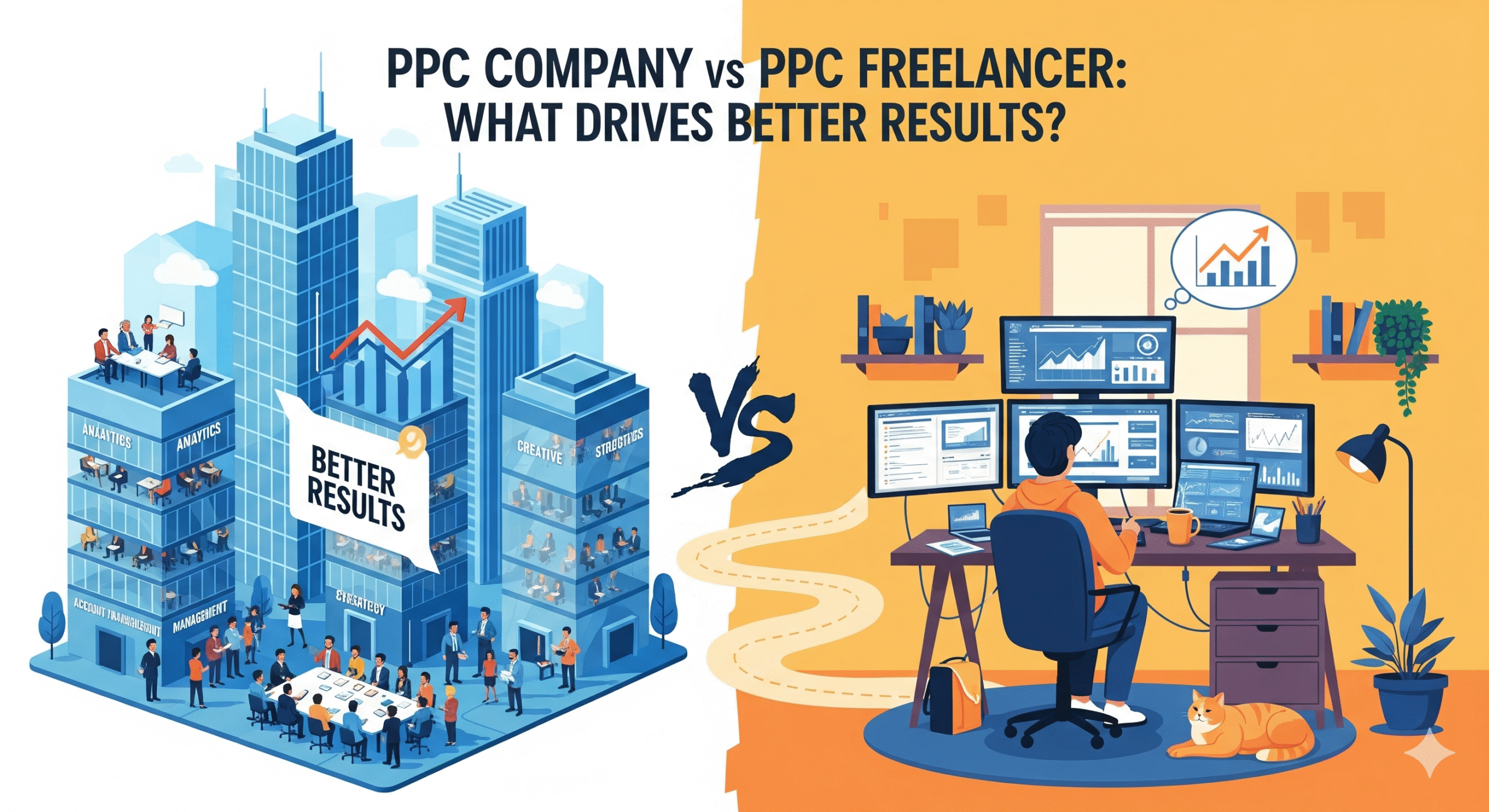

1. Understanding the Realities: Agency and Freelancer Dynamics
When it comes to pay-per-click (PPC) marketing, choosing between an agency (PPC company) and a freelancer is a decision that hinges on several practical factors—not just budget. Real businesses today juggle expectations of nimbleness, data-driven strategy, cost transparency, and measurable return on investment (ROI). In an increasingly competitive digital landscape, that means understanding not just what each option offers, but how they operate in real-time, what attention to detail they bring, and ultimately how they perform.
Need Help With Your Marketing or Website?
Not getting enough leads or sales? Get a free consultation and discover how to improve your website and marketing.
- Find out what may be stopping visitors from contacting you
- Discover where your website or marketing could perform better
- Get clear recommendations to improve leads, calls, and conversions
Let’s unpack the differences in a realistic, human-centered way—no jargon-laden fluff, just crisp insights you can act on.
2. Depth of Expertise: Comprehensive Team vs Solo Specialist
PPC Company (Agency):
An agency typically brings a team of specialists—strategists, data analysts, account managers, creative designers—working in concert. Each person zeroes in on their area of expertise: campaign structure, ad copywriting, landing‑page optimization, A/B testing, advanced analytics. That structured collaboration often leads to deep insights and continuous optimization, driving higher conversion rates.
PPC Freelancer:
You get a single expert. Maybe they’re a seasoned former-agency campaign manager or a niche specialist with 7+ years’ solo experience. The power here lies in direct communication, personal accountability, and a laser‑focused approach. But one person can only juggle so many responsibilities—strategy, execution, reporting—and that may limit scale or the breadth of services.
Which do you need? For large-scale campaigns or multi-channel complexity, a company has the horsepower. For focused campaigns aiming to test ideas quickly, a freelancer’s agility could shine.
3. Cost Structure and Transparency
Agency Pricing:
Agencies often charge a monthly retainer plus a percentage of ad spend. You get packaged services like campaign launches, strategic auditing, analytics dashboards, and ongoing optimization. The cost may feel higher—but you’re buying institutional memory, tools, and support structure.
Freelancer Pricing:
Freelancers may offer more flexible billing—hourly rates, flat project fees, or lower percentage-based charges. If your ad budget is modest or you only need specific tasks (e.g., keyword research or landing page tweaks), a freelancer may offer better value. However, if the freelancer lacks infrastructure or broader skills, you may end up paying extra to fill in gaps.
4. Speed and Communication
Agency Workflow:
Most agencies follow defined processes, reviews, and approvals. That can mean a small lag in feedback loops—but it's also a sign of quality checks. Expect official onboarding, documented proposals, regular status calls, and structured reports.
Freelancer Agility:
Freelancers often move fast. You’ll get faster responses, fewer layers of communication, and more flexibility to pivot. Without an “internal sign‑off” process, you may enjoy real-time adjustments and fast-turnaround edits. But that sometimes comes at the cost of less formal documentation or missed strategic checkpoints.
5. Tools, Tech & Resources
Agency Advantages:
Agencies invest in tools—premium keyword trackers, bid management systems, heat maps, dashboards—that won’t fit into a freelancer’s budget. Those tools enable data sophistication, automation, and scaling. You also benefit from trends spotted across multiple clients and rapid access to platforms.
Freelancer Constraints:
A freelancer may rely on basic or open‑source tools, limiting advanced capabilities like predictive bid automation or deep competitive analysis. If you’re managing a lean campaign with clear goals, this may be fine. For campaigns that must scale or track complex conversions, you might run up against limitations.
6. Accountability, Reporting & Transparency
Agency Approaches:
Expect monthly or biweekly reports, ROI dashboards, insights on key metrics (CPC, CPA, CTR, Quality Score), and structured recommendations. Accountability is built in—agencies aim to preserve your trust across a portfolio of clients. If results drop, you’ll likely have a formal review mechanism.
Freelancer Approach:
Some freelancers excel at transparent, custom reporting—perhaps a shared Google Data Studio report or a weekly email. Others may need a nudge to deliver formal performance reviews. It’s crucial to establish reporting expectations upfront—how often, what metrics, how deep the insight.
7. Real-World Scenarios: When Each Option Excels
| Your Situation | Why a PPC Agency Might Fit | Why a Freelancer Could Be Better |
|---|---|---|
| Multi-region e-commerce brand | Needs scale, reports, and team collaboration | – |
| Lean startup testing new keywords or channels | – | Fast iteration, low cost, flexible approach |
| Complex budget allocation across channels | Agency tools and analytics shine | Single-person focus may slow broad strategy |
| Strong brand with small campaign goals | Agency might feel overkill & costly | Freelancer offers tailored and efficient support |
| Long-term partnership and ongoing optimization | Agency builds long-term institutional knowledge | Freelancer may move on more quickly if outgrow scope |
8. The Human Factor: Culture, Fit & Trust
Beyond budget and scale, you need a human connection. Some clients thrive on the “big‑agency polish”—consistent messaging, standardized delivery, professionalism. Others prefer the clarity and ownership of a freelancer they can ping directly on Slack.
Talk candidly before hiring:
- How do they handle unexpected drops in performance?
- How do they stay updated on platform changes (e.g., Google Ads updates)?
- What successes have they driven for clients in your industry?
Those conversations help you decide: informal and nimble—or built, scaled, and structured for long-term growth?
9. Hybrid Approaches: Best of Both Worlds
A growing trend: blending both. You might hire a freelancer for setup, strategy, or campaign overhaul, then hand over execution to an agency. Or use an agency for heavy lifting, and bring in a freelancer for creative ad copy refreshes or niche keyword plays.
This mix lets you control cost, access expertise on demand, and still keep continuity across your campaigns. But coordination matters—make sure roles, responsibilities, and communication channels are crystal clear.
10. Making the Decision: Ask Yourself These Questions
- What’s your budget today—and what could it scale to?
Instead of thinking “$500/month,” consider what ROI would justify spending more later. - How complex is your campaign strategy?
Multi-platform, multi-product, multi-country equals a case for agency. - Do you value speed or structure more right now?
For fast testing, freelancer. For polished process, agency. - Who owns your account—not just the campaigns?
A freelancer brings personal ownership; agencies have backups if someone leaves. - What’s your exit strategy?
If needs shift, how easy is it to pause, pivot, or scale?
11. Final Takeaways: Matching Value to Needs
- PPC Company (Agency) is ideal if you need scale, advanced tools, multi‑channel expertise, consistent reporting, and structured support. Best for growing brands or those with sophisticated ad strategies.
- PPC Freelancer shines when you want agility, lower overhead, personal communication, and tailored execution—especially helpful for focused goals, pivots, or early experimentation.
Your choice isn’t just about price—it’s about finding a partner whose process, pace, and priorities align with your own business rhythm.
Conclusion
Whether you go with a PPC company or a freelancer, clarity of expectations, communication, and alignment with your goals will determine your success. If you want help outlining an RFP, sample questions for interviews, or campaign performance benchmarks—let’s dive in!