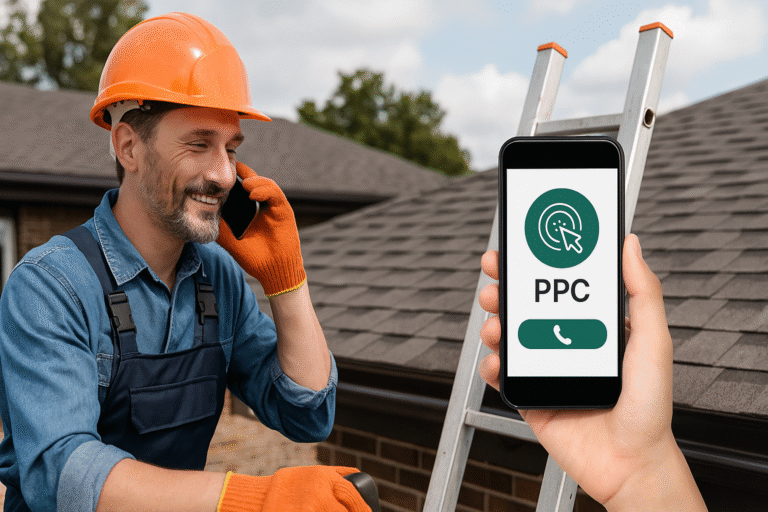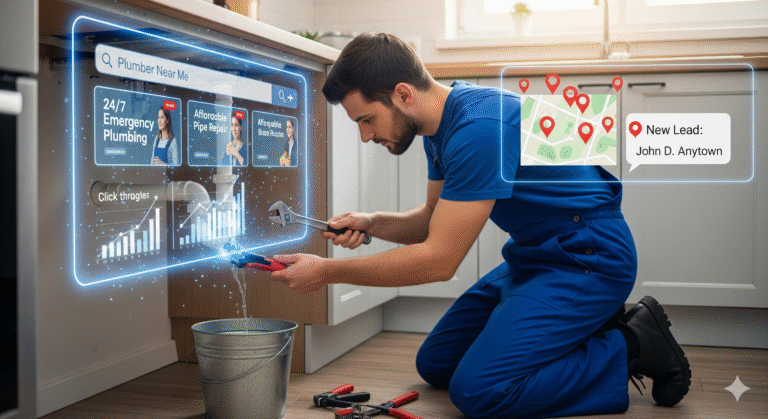
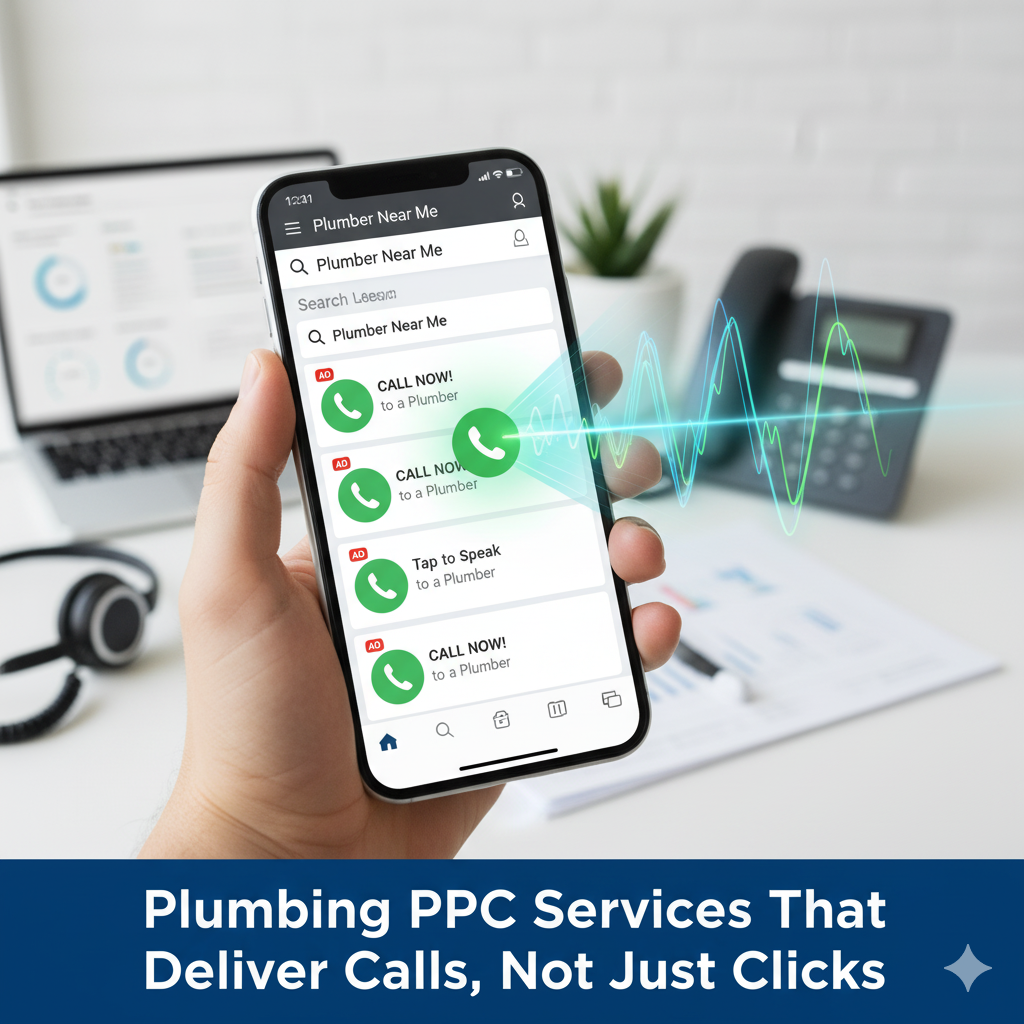

Every plumbing business wants more leads. More than that, you want qualified, local phone calls—someone in real need of your services, not just a user browsing your ad and clicking away. That’s where properly optimized Plumbing PPC (Pay‑Per‑Click) services come into play. This blog dives deep into proven tactics and strategies to ensure your PPC campaigns generate calls, not just clicks, boosting both revenue and credibility.
Table of Contents
- Why Clicks Alone Aren’t Enough in Plumbing Advertising
- Setting Clear Goals: What Is a Call Worth to You?
- Choosing the Right PPC Platform for Plumbing Businesses
- Long‑Tail Keyword Strategies to Capture Real Call Volume
- Local Targeting & Ad Scheduling: Be There When It Matters Most
- Ad Copy & Call‑to‑Action That Prompts a Phone’s Ring
- Call Extensions, Call‑Only Ads & Click‑to‑Call Features
- Landing Page Optimization: From Ad to Phone Pickup
- Budget Allocation: Quality vs. Quantity
- Tracking Calls: Metrics That Tell the True Story
- Quality Assessment: Filtering Out Bad Calls
- Case Study Example: From Clicks‑Heavy to Calls‑Heavy Success
- Common Mistakes in Plumbing PPC & How to Avoid Them
- How to Scale Campaigns Without Diluting Call Quality
- Final Thoughts: Moving From Clicks to Conversations
1. Why Clicks Alone Aren’t Enough in Plumbing Advertising
Clicks are easy to measure. The problem? A click doesn’t guarantee a lead. Even when someone clicks on your ad, they may not convert—or worse, they bounce right away. For plumbing businesses:
- Many clicks are from competitors or window‑shoppers.
- Users may be looking for free advice, not service calls.
- Click fraud or accidental clicks waste ad spend.
What you really need are phone calls that signal real intent: “My sink is backed up. I need someone now.” That difference separates mediocre campaigns from profitable ones.
Need Help With Your Marketing or Website?
Not getting enough leads or sales? Get a free consultation and discover how to improve your website and marketing.
- Find out what may be stopping visitors from contacting you
- Discover where your website or marketing could perform better
- Get clear recommendations to improve leads, calls, and conversions
2. Setting Clear Goals: What Is a Call Worth to You?
To optimize for calls, you must understand:
- Value per call: How much revenue or profit one average service call brings.
- Cost per acquisition (CPA): How much you will spend (on ad costs, labor, follow‑ups) to acquire that call.
- Call conversion rate: What percentage of calls turn into paying customers.
When you define these numbers, you can set realistic budgets and bid strategies. For example, if a call is worth $150 net profit, spending $25 to get one is acceptable; spending $100 is not.
3. Choosing the Right PPC Platform for Plumbing Businesses
Different platforms offer different benefits. You’ll likely focus on:
- Google Ads – search, call‑only campaigns, local service ads.
- Bing Ads (Microsoft Advertising) – often lower cost per click; demographics may differ.
- Social Media Platforms (Facebook, Instagram, Nextdoor) – great for brand awareness or emergency service promos; less direct for immediate calls but useful.
- Local Service Ads – Google’s solution for home service businesses; pay per lead.
Your choice depends on budget, target service area, and how urgent the plumbing issues are in your area (e.g. burst pipes vs. general maintenance).
4. Long‑Tail Keyword Strategies to Capture Real Call Volume
Long‑tail keywords are essential for capturing users with high intent. These are more specific search phrases like:
- “emergency plumber near me open now”
- “fix gas leak plumber in [City Name]”
- “24 hour plumbing repair for broken pipe”
- “toilet clog service same day [Zip Code]”
These keywords often have lower competition, higher relevance, and more likely to lead to phone calls. Use negative keywords to filter out irrelevant traffic (DIY, tutorials, etc.).
Keyword Grouping Example
| Group | Keywords |
|---|---|
| Emergency Plumbing | “emergency plumber open now”, “after hours plumber for burst pipe” |
| Fixture Repair | “leaky faucet repair plumber near me”, “shower faucet replacement service” |
| Sewer & Drain | “clogged drain service same day”, “sewer line replacement cost near me” |
| Local Zip/Neighborhood | “plumber [Zip Code]”, “plumber serving [Neighborhood/City]” |
5. Local Targeting & Ad Scheduling: Be There When It Matters Most
A user is more likely to call in emergencies—late night, early morning, or weekends. Your ads must be visible and compelling during these hours.
- Use geo‑targeting: limit to service areas, cities, zip codes.
- Schedule ads for times when calls are most likely (evenings, weekends).
- Bid adjustments: boost bids during peak call times or in high‑value areas.
This reduces wasted spend and ensures your plumbing business shows up when people really need you.
6. Ad Copy & Call‑to‑Action That Prompts a Phone’s Ring
Your ad copy needs to do more than mention “plumber.” It must speak urgency and clarity. Use:
- Urgent phrases: “24/7”, “Emergency”, “Same‑day”, “Now.”
- Local references: “[City] plumbing”, “in [Neighborhood]”, “near me.”
- Specific services: “gas leak repair”, “burst pipe”, “drain cleaning”.
- Strong Call to Action (CTA): “Call now for fast service,” “Speak with a plumber now,” “Click to call.”
Also, include phone numbers prominently. If ad platform allows call extensions, use them.
7. Call Extensions, Call‑Only Ads & Click‑to‑Call Features
These tools help reduce friction and make it as easy as possible for customers to call.
- Call Extensions: Show your phone number in search ads so users see it upfront.
- Call‑Only Ads (Google Ads): Ads designed so that clicking the ad initiates a phone call rather than a website visit.
- Click‑to‑Call on Mobile Display & Social Ads: For mobile users, clicking should directly dial.
These features often lead to higher conversion rates because they align with a user’s intent: to call you now.
8. Landing Page Optimization: From Ad to Phone Pickup
Even if they click or call, the journey matters. For ad clicks that lead to landing pages:
- Minimal distractions: phone number “above the fold”, prominent call button.
- Clear messaging: matching what’s in your ad (emergency, service types, coverage area).
- Trust elements: reviews, licenses, maybe photos of your team or trucks.
- Fast load times: mobile‑friendly, lightweight.
The easier it is for the visitor to see your phone number and decision‑triggers (price, service guarantee), the higher chance they’ll call.
9. Budget Allocation: Quality vs. Quantity
Many plumbing companies blow out budget chasing clicks and high traffic. Instead, reallocate:
- Higher budget for keywords and times that produce calls.
- Lower or pause for keywords or hours that mostly produce low‑quality clicks.
- Use bid adjustments for mobile vs desktop: mobile is often better for calls.
Also, monitor spend on call‑only campaigns separately for more precise control.
10. Tracking Calls: Metrics That Tell the True Story
To know whether your PPC delivers calls, you must track:
- Callback tracking: use dynamic number insertion (DNI) so every visitor sees a unique phone number.
- Call tracking tools: services like CallRail, DialogTech, etc., to record source of call, duration, etc.
- Analytics integration: link calls data with Google Ads or Bing for conversion tracking.
Important metrics:
| Metric | Why It Matters |
|---|---|
| Call volume | Shows total leads being generated. |
| Call duration / quality | Helps filter out spam / short unrated calls. |
| Cost per call | Determines profitability. |
| Call‑to‑customer conversion rate | Ultimately what drives revenue. |
11. Quality Assessment: Filtering Out Bad Calls
Not all calls are created equal. Some calls are prank, wrong numbers, or people just seeking advice. To improve quality:
- Use screening questions or IVR (“press 1 for emergency”).
- Train answering staff to follow a script to assess need.
- Collect basic info (location, urgency) early in the call.
- Use call recordings or reviews to audit call quality and adjust targeting or ad copies.
12. Case Study Example: From Clicks‑Heavy to Calls‑Heavy Success
Background:
A mid‑sized plumbing company in Phoenix was spending $5,000/month on Google Ads. They were getting ~1,200 clicks/month but only ~20 calls.
Steps Taken:
- Shifted focus to long‑tail keywords like “emergency water heater repair Phoenix,” “gas line leak plumber Scottsdale.”
- Added call‑only campaigns and call extensions.
- Adjusted ad schedule to 5 pm‑10 pm and weekends (times when emergencies spike).
- Optimized landing page with a big “Call Now” button and phone displayed at top.
- Implemented call tracking and quality monitoring.
Results (after 3 months):
- Calls increased from ~20 to ~75 per month.
- Cost per call dropped from $250 to $80.
- Conversion from call to paying customer was ~40%.
- Overall ROI increased by ~200%.
This shows that with focused strategy, calls—not just clicks—become achievable.
13. Common Mistakes in Plumbing PPC & How to Avoid Them
| Mistake | What Happens | How to Avoid |
|---|---|---|
| Bidding on broad keywords | Gets clicks but low intent (DIY, informational) | Use phrase/exact match + negative keywords |
| Running ads 24/7 without knowing call patterns | Wasted budget during low‑call times | Use ad scheduling and bid modifiers |
| Poor landing pages (cluttered, slow, no phone) | Users click but don’t convert or call | Simplify design, prioritize mobile, display phone prominently |
| Not tracking calls correctly | No idea which ads/campaigns generate real leads | Use call tracking and integrate with Ad platforms |
| Ignoring local factors | Ads may appear in regions you don’t serve or show up at wrong times | Use geo targeting, local ad content, address service area in copy |
14. How to Scale Campaigns Without Diluting Call Quality
Once you have campaigns that work, scaling is the next frontier. But scaling can dilute quality if you're not careful.
- Expand slowly: add new service‑areas only after replicating what works in a core area.
- Maintain the same best‑performing keywords and ad styles.
- Keep “call quality filters” in place: manual call review, use of screening tools.
- Increase budget more in high‑ROI hours and keywords, not uniformly.
- Test new ad creative or messaging in small budgets before full rollout.
15. Final Thoughts: Moving From Clicks to Conversations
The difference between just clicks and real, paying customers is what separates successful plumbing PPC services from mediocrity. By focusing on:
- the right long‑tail keywords,
- geo‑targeted & time‑sensitive ads,
- persuasive ad copy and CCAs (calls to action),
- call tracking and real evaluation of leads,
you turn ad spend into actual conversations—and that leads to revenue.
Bonus: Quick Checklist to Ensure Your Plumbing PPC Brings Calls
- Define the value of one service call.
- Research and build long‑tail, high‑intent keywords.
- Set up call‑only ads + call extensions.
- Tight local targeting (city/zip/neighborhood).
- Ad scheduling for peak hours (evenings, weekends).
- Mobile‑friendly landing pages with clear phone CTA.
- Call tracking integration.
- Mechanism for assessing call quality.
- Monitor cost per call vs. revenue per call.
- Scale gradually, keeping quality consistent.