
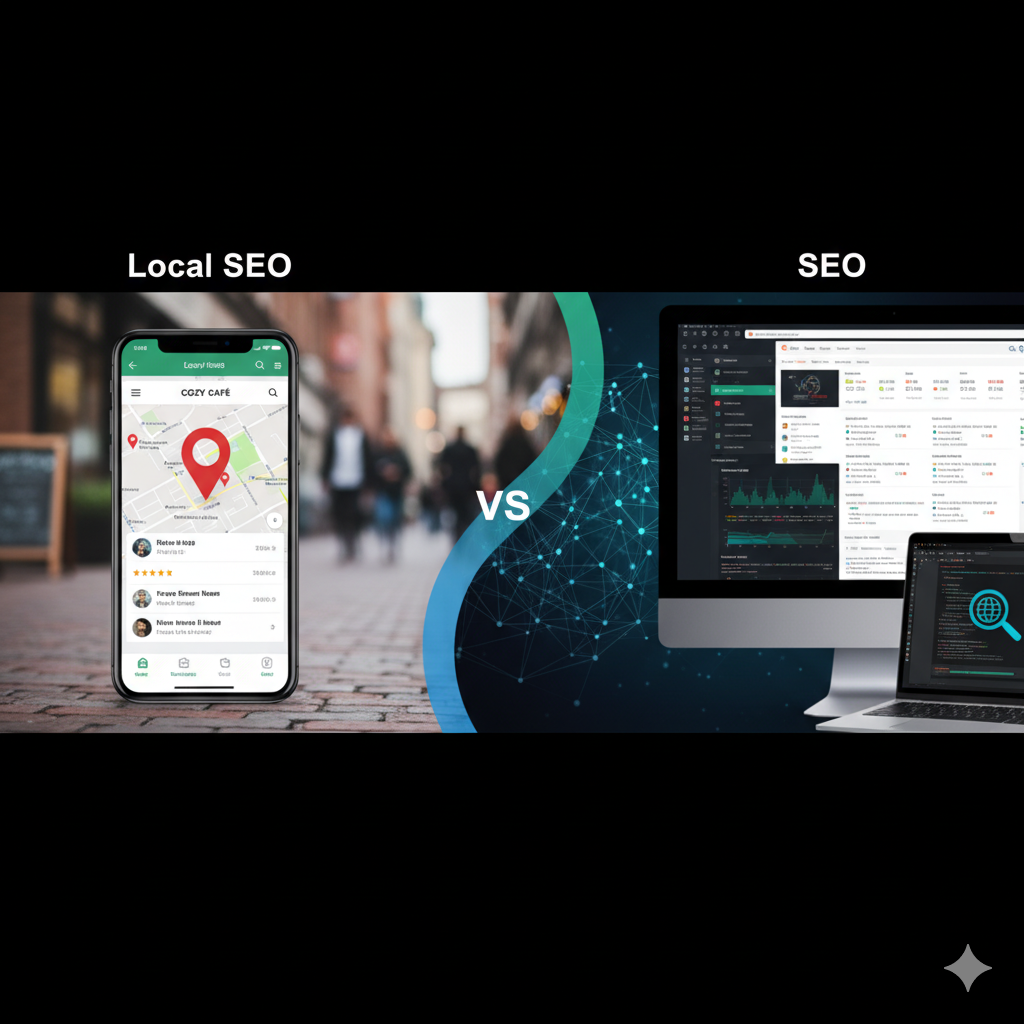

In today’s digital world, optimizing your website to appear on search engines is essential for business success. However, businesses often get confused between Local SEO and Traditional SEO (often just referred to as SEO). While both strategies aim to improve your website’s visibility, they cater to different audiences and require different tactics.
Need Help With Your Marketing or Website?
Not getting enough leads or sales? Get a free consultation and discover how to improve your website and marketing.
- Find out what may be stopping visitors from contacting you
- Discover where your website or marketing could perform better
- Get clear recommendations to improve leads, calls, and conversions
If you’re a business owner looking to grow your digital presence, it’s important to understand these differences. In this post, we’ll break down Local SEO vs SEO, explore the key distinctions between them, and help you figure out which approach is best for your business goals.
What is SEO? A Quick Overview
SEO, or Search Engine Optimization, is the practice of optimizing your website to improve its visibility on search engines like Google, Bing, and Yahoo. SEO is a broad and comprehensive approach that involves various strategies to improve your website's ranking for relevant search terms. This is crucial for reaching a wider audience and generating organic traffic.
Traditional SEO focuses on making a website rank higher on search engine results pages (SERPs) for specific keywords, regardless of geographical location. It’s most effective for businesses that want to gain a national or global reach.
Key components of SEO include:
- On-page SEO (optimizing website content)
- Off-page SEO (building backlinks)
- Technical SEO (ensuring website structure is search-engine friendly)
- Content creation (developing high-quality, engaging content)
SEO is typically used by businesses aiming to capture a broad audience, including those targeting national or international markets.
What is Local SEO? A Quick Overview
Local SEO is a subset of SEO that focuses specifically on optimizing your online presence to attract local customers. This is particularly important for businesses that have a physical location or serve a specific geographic area.
For instance, if you own a pizza restaurant in Chicago, local SEO would help your business appear in local search results like "best pizza near me" or "pizza delivery in Chicago."
Local SEO includes tactics that help businesses show up in Google’s Local Pack (the map and business listing that appears at the top of the search results) and other localized search results.
Key components of Local SEO include:
- Google My Business (GMB) optimization (claiming and updating your GMB listing)
- Local citations (getting listed in local directories)
- Local backlinks (building links from local websites)
- Location-based keyword optimization (targeting keywords specific to your area)
- Customer reviews and ratings (especially on Google and other local review platforms)
For businesses that rely on foot traffic or serve a particular community, Local SEO is critical for driving local visibility.
Key Differences Between Local SEO and SEO
1. Geographical Focus
- SEO: Targets a global or national audience. The goal is to rank for keywords that are relevant to your business on a larger scale.
- Local SEO: Targets a local audience. The primary goal is to optimize your online presence for specific geographic locations.
2. Google’s Algorithm Focus
- SEO: Uses general ranking factors like keyword relevance, backlinks, and content quality. The algorithm is less concerned with your location.
- Local SEO: Google’s local algorithm considers factors like proximity, relevance, and prominence. This means Google will display your business to people in your specific area who are searching for products or services you offer.
3. Search Results Appearance
- SEO: Results are displayed as organic listings, which appear in the standard search results without any maps or local elements.
- Local SEO: Results often include Google’s Local Pack (map results) and a list of local businesses, allowing users to see nearby options for their query.
4. Optimization Tactics
- SEO: Focuses on keyword research, content creation, backlinks, and technical SEO strategies to improve a site’s organic ranking.
- Local SEO: Requires more focus on local citations, Google My Business optimization, and encouraging customer reviews for better local ranking.
5. Content Strategy
- SEO: Content strategies are broad and target a wide range of search queries. Businesses might use blog posts, guides, videos, and other content to rank for keywords with global appeal.
- Local SEO: Content must be tailored to local search intents. Localized blog posts, location-based landing pages, and customer reviews are common tactics.
6. Keyword Strategy
- SEO: Focuses on national or international keywords with a broad reach, such as "best marketing agency" or "web design services."
- Local SEO: Targets location-specific keywords, such as "best marketing agency in New York" or "web design services in Chicago."
Why Is Local SEO Important for Small Businesses?
For small businesses, especially those that rely on foot traffic, Local SEO can make or break your success. Here are a few reasons why:
- Increased Visibility: Local SEO helps you stand out in local searches. If you’re in a competitive market, showing up in the Local Pack is essential for visibility.
- Targeted Traffic: Local SEO attracts potential customers who are specifically looking for services in your area, increasing the chances of converting searchers into customers.
- Customer Trust: Google reviews and local listings provide social proof. Positive reviews can help build trust and credibility, increasing your chances of being chosen over competitors.
When Should You Focus on Local SEO vs SEO?
To decide between Local SEO and traditional SEO, ask yourself the following questions:
- Does your business have a physical location?
If yes, Local SEO should be a top priority. - Are you targeting a local audience or a global/national market?
For businesses that serve a specific city or region, Local SEO is essential. If you’re targeting a broader market, traditional SEO might be more beneficial. - What kind of services do you offer?
Businesses offering services that people typically search for based on location (like restaurants, clinics, and repair services) should prioritize Local SEO. - Do you want to increase foot traffic or online sales?
If you’re a brick-and-mortar business looking to attract local customers, Local SEO is critical. For online-only businesses, traditional SEO can help you reach customers anywhere.
Final Thoughts: Local SEO vs SEO
Both Local SEO and traditional SEO are essential components of a comprehensive digital marketing strategy. Understanding the key differences will help you choose the right approach for your business. If you're targeting local customers, Local SEO is a must. However, if you’re looking to expand your reach nationally or internationally, then a broader SEO strategy is required.
By tailoring your SEO efforts to meet the specific needs of your business and audience, you’ll ensure that you’re investing your resources wisely and effectively increasing your digital visibility.