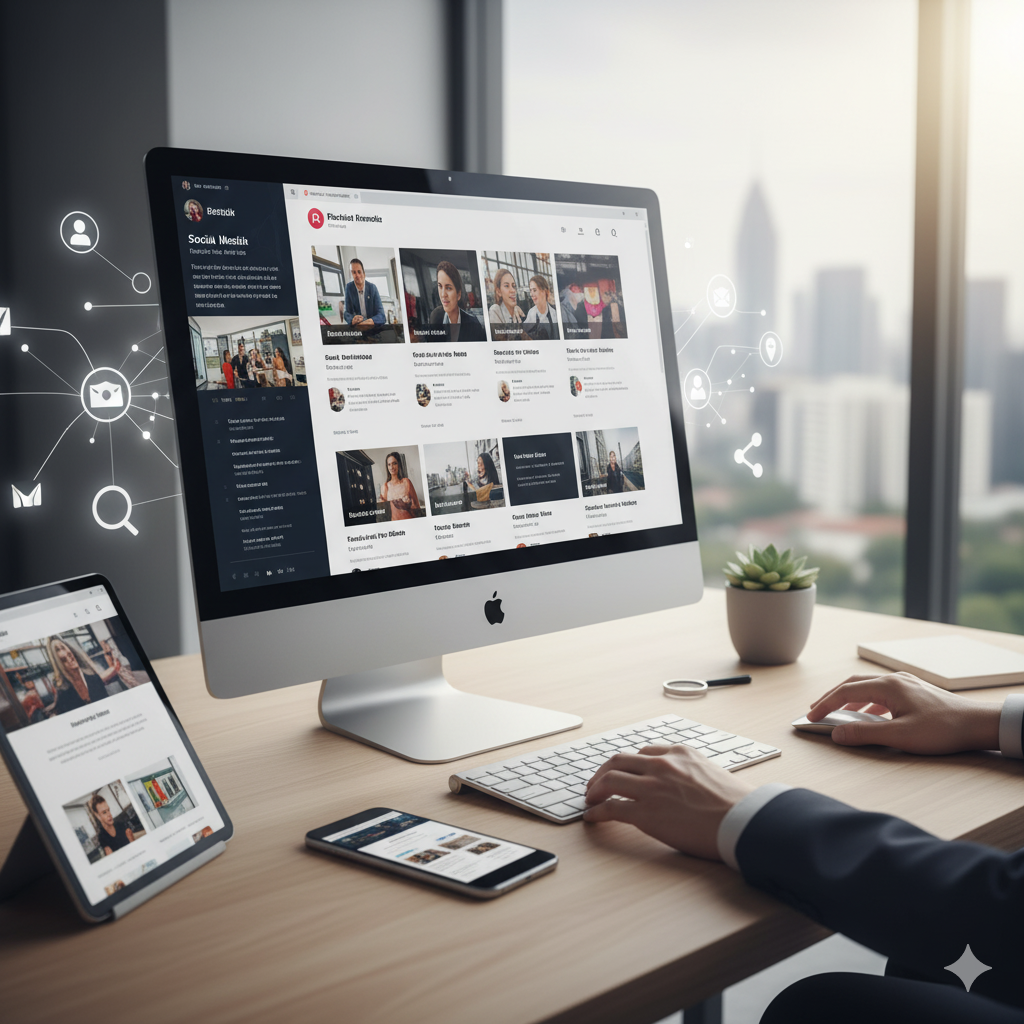

In today’s digital-first world, social media marketing and web design are not separate entities—they are deeply interconnected. While businesses often invest heavily in social media campaigns, they sometimes overlook a critical factor: the impact of their website’s design on marketing performance. A website is often the first point of conversion after a social media click, and a poor design can severely reduce engagement and ROI.
In this article, we’ll explore how web design influences social media marketing, why it matters, and actionable strategies to create a seamless integration between your social platforms and website.
1. The Connection Between Web Design and Social Media Marketing
Social media is a powerful tool to attract traffic, but a website is where conversions happen. If your website is outdated, slow, or difficult to navigate, users may bounce immediately, rendering your social media campaigns less effective. Modern web design ensures your website complements your social media presence, reinforces your brand, and encourages user interaction.
Key Points:
- Social media drives traffic to websites.
- A well-designed website keeps users engaged.
- Poor design can lower trust and conversion rates.
2. Enhancing Brand Consistency Across Platforms
Your social media profiles reflect your brand’s personality, and your website should echo the same look and feel. Consistency in colors, fonts, and tone creates a cohesive experience that strengthens brand recognition and trust.
Tips:
- Use similar branding elements on your website as your social profiles.
- Ensure tone and messaging match across platforms.
- Optimize images for a uniform visual identity.
Need Help With Your Marketing or Website?
Not getting enough leads or sales? Get a free consultation and discover how to improve your website and marketing.
- Find out what may be stopping visitors from contacting you
- Discover where your website or marketing could perform better
- Get clear recommendations to improve leads, calls, and conversions
3. Mobile-First Web Design Boosts Social Media Engagement
With more than 70% of social media users accessing platforms via mobile devices, mobile-first design is crucial. A responsive website ensures that visitors from social media have a seamless experience, reducing bounce rates and encouraging conversions.
Actionable Tips:
- Use responsive templates optimized for smartphones and tablets.
- Reduce page load times to prevent drop-offs.
- Simplify navigation for mobile users.
4. Website Speed Directly Affects Social Traffic
Slow-loading websites frustrate users, especially those coming from social media, where attention spans are short. Optimized web design, including compressed images and clean coding, ensures faster load times and improved user retention.
Pro Tips:
- Use caching and Content Delivery Networks (CDNs).
- Optimize images without compromising quality.
- Minimize unnecessary scripts that slow down the site.
5. Social Proof and Website Design
Integrating social proof, such as testimonials, reviews, or social media feeds, into your website builds credibility. Visitors arriving from social channels are more likely to trust your brand when they see positive feedback or active social engagement on your site.
How to Implement:
- Add social media feeds or widgets.
- Display client testimonials prominently.
- Highlight media mentions or case studies.
6. Clear Call-to-Actions for Social Media Traffic
Every social media post should lead users to a clear action on your website. Whether it’s signing up for a newsletter, purchasing a product, or downloading a guide, your web design should prioritize visible and compelling CTAs.
Design Strategies:
- Place CTAs above the fold for immediate visibility.
- Use contrasting colors to draw attention.
- Keep forms simple to reduce friction.
7. Optimizing Landing Pages for Social Media Campaigns
Social media campaigns often drive traffic to specific landing pages. Tailored web design for each campaign ensures the messaging aligns with the social content and maximizes conversion potential.
Tips:
- Match social media ad visuals with landing page design.
- Focus on a single objective per landing page.
- Use A/B testing to improve performance.
8. Integrating Analytics to Measure Impact
A well-designed website includes integrated analytics tools to track social media traffic and user behavior. This data helps marketers refine strategies, improve design elements, and enhance engagement.
Analytics Strategies:
- Use Google Analytics and heatmaps to monitor traffic flow.
- Track conversions and click-through rates from social media sources.
- Adjust web design based on user behavior insights.
9. Visual Hierarchy and Readability for Better Engagement
Social media users often skim content quickly. A website with a clear visual hierarchy, readable fonts, and engaging visuals keeps users interested long enough to convert.
Design Recommendations:
- Use headings, bullet points, and white space strategically.
- Ensure fonts are legible on all devices.
- Incorporate eye-catching visuals to break text monotony.
10. SEO-Friendly Web Design Enhances Social Media Visibility
While social media signals don’t directly impact SEO, a well-designed, optimized website improves organic search rankings. Higher visibility in search engines complements social media marketing efforts by driving more traffic.
SEO Design Practices:
- Optimize page load speed and mobile experience.
- Include meta tags and structured data.
- Maintain a logical URL structure and internal linking.
11. Creating a Seamless User Journey from Social Media to Website
A strong user journey ensures that the visitor’s experience from social media click to website interaction is smooth and intuitive. This includes minimizing friction points, using familiar branding, and directing users toward relevant content.
Tips for Seamless Experience:
- Match social media copy with landing page content.
- Reduce unnecessary redirects.
- Guide users with clear pathways and CTA buttons.
12. Enhancing Engagement with Interactive Elements
Interactive elements like quizzes, polls, and videos can increase engagement for users coming from social media. Thoughtful web design that incorporates these elements encourages users to stay longer and engage more.
Ideas:
- Add interactive calculators or tools related to your products.
- Embed social sharing buttons for user participation.
- Use scroll animations to highlight key messages.
13. The Psychological Impact of Colors and Layouts
Colors and layouts influence user perception and decision-making. Websites that use color psychology effectively can reinforce the emotions and messages portrayed on social media campaigns, creating a more persuasive user experience.
Example:
- Red for urgency in sales promotions.
- Blue for trust and reliability.
- Minimalist layouts for professionalism and clarity.
14. Social Media-Driven Content Strategies
Your website content should reflect what works on social media. If certain topics or formats generate high engagement on social platforms, consider adapting them for website content to maintain consistency and interest.
Tips:
- Repurpose popular social posts into blog articles.
- Incorporate multimedia content like infographics or videos.
- Highlight trending topics to attract similar traffic.
15. Accessibility and Inclusivity in Web Design
Accessible websites provide a better experience for all users, including those with disabilities. Social media traffic may include diverse audiences, making inclusivity an important factor in web design.
Accessibility Strategies:
- Include alt text for images and media.
- Ensure keyboard navigation is possible.
- Maintain high color contrast for readability.
16. Building Trust Through Professional Design
A polished, professional website reassures visitors that your brand is credible. Social media campaigns may spark interest, but a trustworthy website converts curiosity into action.
Professional Design Practices:
- Use high-quality images and graphics.
- Keep layout consistent and clutter-free.
- Avoid broken links and outdated information.
17. Leveraging Micro-Interactions to Engage Users
Micro-interactions—subtle animations, hover effects, and button feedback—enhance user experience and make social media referrals more memorable.
Examples:
- Animated CTA buttons.
- Hover animations for product previews.
- Confirmation messages after form submission.
18. Personalization for Social Media Traffic
Personalized experiences can significantly increase conversion rates. Web design that adapts based on social media source, user behavior, or demographics creates a tailored journey.
How to Personalize:
- Display custom landing pages for different ad campaigns.
- Suggest products based on user interests.
- Use location-based content for local audiences.
19. Integrating Social Sharing Options
Encourage visitors to share your content directly from your website. Well-designed social sharing buttons improve content reach and generate organic social media traffic.
Design Tips:
- Place sharing buttons in visible, non-intrusive locations.
- Use visually appealing icons.
- Highlight incentives for sharing, like discounts or rewards.
20. Continuous Optimization for Maximum Impact
Web design and social media marketing are dynamic. Continuous testing, optimization, and updates ensure your website supports evolving social media strategies and maximizes engagement.
Key Steps:
- Regularly update website content and design.
- Monitor analytics to identify areas for improvement.
- Adapt to new trends in social media marketing and UX design.
Conclusion
Web design is not just about aesthetics; it’s a critical component of social media marketing. A well-designed website strengthens brand consistency, improves user experience, and converts social media traffic into loyal customers. By integrating design best practices with social media strategies, businesses can maximize ROI, engagement, and long-term growth.