
1. Why Your Roofing Website Must Appeal to Both People and Google
Your roofing website isn’t just a digital brochure—it’s a powerful tool for building trust and generating leads. A site that’s visually appealing, easy to use, fast, and seo-optimized gains two important advantages:
- Google rewards a great user experience with better rankings.
- A polished, trustworthy website converts more visitors into clients.
In the roofing industry, consumers often decide quickly—so first impressions and streamlined interactions are everything.
2. Start with a Clean, Trustworthy Design
Visual Hierarchy That Speaks to Roofers’ Clients
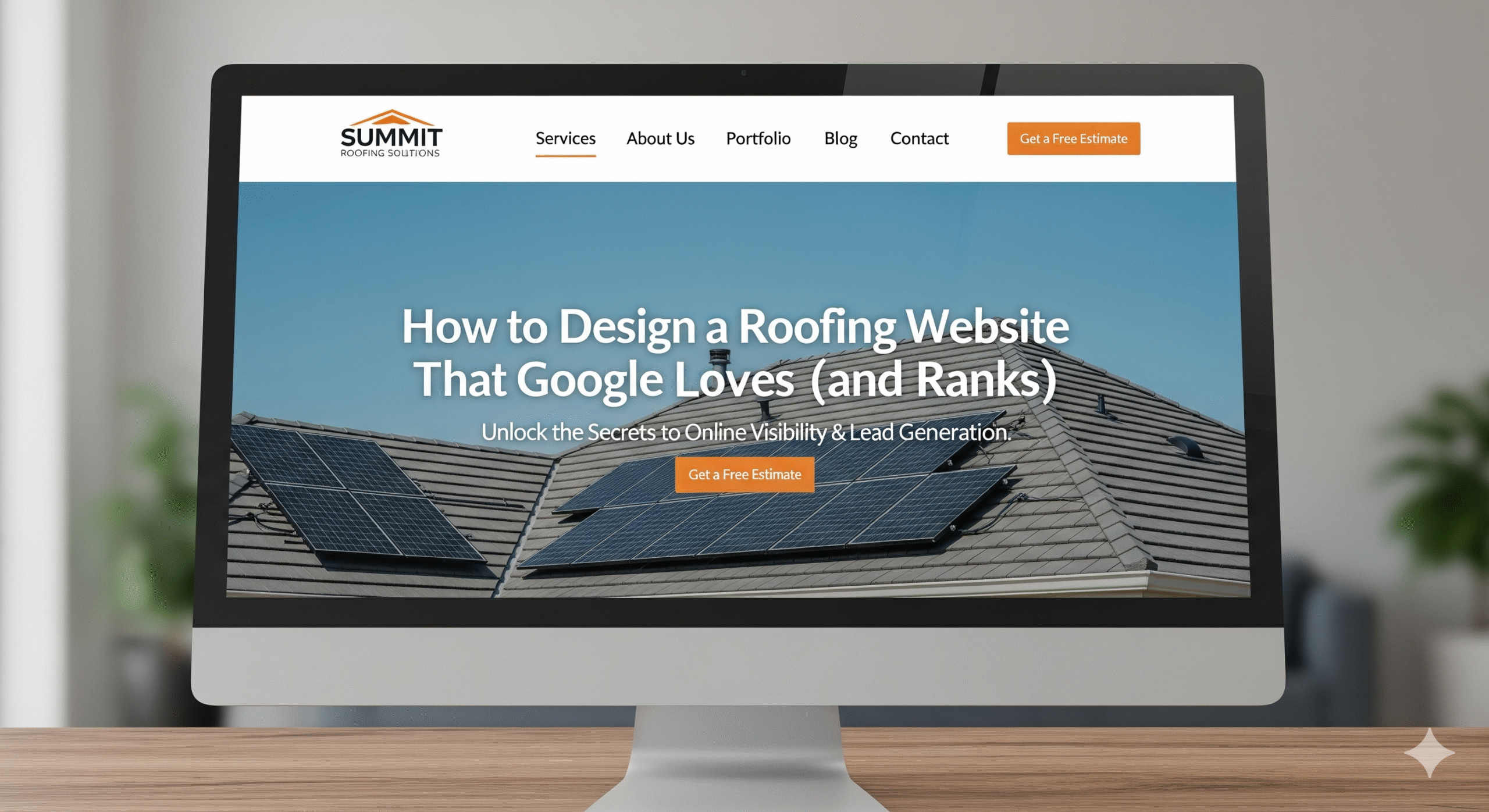
Clean layout: large hero image showing real roofing projects—think a satisfied homeowner standing by a sleek, newly roofed house.
Anchors like “Free Estimate,” “Our Services,” and client testimonials stand out—instantly leading visitors where they want to go.
Professional Branding and Consistency
Use your brand’s colors (e.g., blue tones for trust, earthy tones for reliability) consistently. Fonts: clear sans-serif for headlines (like Open Sans or Lato), and a serif or clean sans-serif for body text.
Tip: subtly incorporate roofing motifs—shadowing or linework that echoes shingles—for visual flair without clutter.
3. Mobile‑First Experience – Because Google Now Is Mobile‑First
More than half of search traffic comes from mobile. Roofing clients often browse on the go—and they expect fast, clean experiences.
Ensure:
- Responsive design that adapts fluidly to phones and tablets.
- Touch-friendly buttons—“Schedule Inspection” CTA easy to tap.
- Collapsible menus: “hamburger” style or sticky top navigation for smooth, one-thumb browsing.
4. Speed Matters – Optimize the Loading Experience
Google flags slow sites. Clients leave before a slow roof image even loads.
- Compress images (webp or optimized JPEG).
- Use lazy loading for gallery photos of completed roofing jobs.
- Minimize scripts and employ browser caching.
- If budget allows, host on a fast, reliable host with SSL (HTTPS)—trusted and fast.
5. SEO Foundations: Architecture Meets Keywords
Structured Navigation
Organize pages like:
- Home
- About Us
- Services (Roof Repair, Roof Replacement, New Roof Installation, Emergency Roofing)
- Service Areas (list cities/neighborhoods)
- Gallery
- Testimonials / Reviews
- Blog / Resources
- Contact / Request Estimate
This hierarchy helps users and search bots understand your content—and supports internal linking structure for SEO.
Long‑Tail Keyword Mapping
Match pages to specific long-tail keywords. For example:
- Services page: “roof repair company in [City]”
- Service Areas: “[Neighborhood] roofing contractor”
- Blog post: “how often should I replace my roof in [Region]”
Map content intentionally so each page targets its own keyword cluster—avoiding overlap to reduce internal competition.
6. Content That Builds Authority (and Google Trust)
Hero Section + Benefits
Quick snapshot: “Serving Davao & Nearby Areas—Roof Repairs, Replacements & Inspections by Licensed Pros.”
Below, three benefit bullets—“Locally Licensed & Insured,” “Free Same-Day Estimate,” “5‑Year Workmanship Warranty.”
Educational Blog Content
Write blog posts like:
- “How to Spot a Roofing Leak Before Inspection”
- “What to Expect During Roof Replacement in the Rainy Season”
- “Roofing Materials Best Suited for Tropical Climates”
These not only help with ranking long-tail queries but also position you as a helpful authority.
FAQs for Featured Snippets
Add a well-formatted FAQ section: “How long does a typical roofing job take?”, “Do I need a permit for roof replacement?”, “What roofing materials require least maintenance?”
Format with schema markup (JSON‑LD) so Google can highlight these as featured snippets.
7. On‑Page SEO: Title Tags, Headers, and Image Alt Text
Title Tags & Headings
Ensure each page has:
- A unique, descriptive title tag (e.g., “Roof Leak Repair in Davao – Same‑Day Service | MyRoofingCo”)
- Heading structure: H1 on page, H2 subheadings, maybe H3 under those to break content up.
Image Alt Text
If your gallery shows “roof repair before and after Davao,” alt text could be: “Before and after roof repair on residential home in Davao City by MyRoofingCo.”
Google pays attention—and alt text improves accessibility.
8. Local SEO: Because Roofers Are Local by Nature
Google Business Profile
Set up and optimize your Google Business Profile. Use accurate name, address (consistent across citations), phone. Collect reviews—it’s critical.
Use posts like “Our crew just finished a full tile roof in Lanang—see the finish!” They improve visibility in map pack.
Local Schema Markup
Add LocalBusiness schema to your site’s footer:
{
  "@context": "https://schema.org",
  "@type": "RoofingContractor",
  "name": "MyRoofingCo",
  "address": {
    "@type": "PostalAddress",
    "streetAddress": "123 Rizal St",
    "addressLocality": "Davao City",
    "addressRegion": "Davao Region",
    "postalCode": "8000",
    "addressCountry": "PH"
  },
  "telephone": "+63‑912‑345‑6789",
  "url": "https://www.myroofingco.ph"
}
This helps Google confidently associate your site with local queries.
9. Conversion‑Focused Design: Lead Generation That Feels Natural
Above‑the‑Fold CTA
Place a bright, contrasting button: “Get a Free Roofing Estimate →” in the header alongside phone number, “Call Now”.
Trust Signals
Show badges: “Licensed • Insured • 5‑Year Warranty”; include real client testimonials with names, photos, if possible.
Forms That Convert
Use simple forms:
- Name
- Address
- Phone or email
- “What service do you need?” dropdown
Progressively enhance: after someone submits, send an automated “Thanks! We’ll be in touch within 2 hours”—then follow up promptly.
10. Technical SEO: Foundation Under the Hood
XML Sitemap & Robots.txt
Generate and submit an up‑to‑date sitemap to Google Search Console. Make sure robots.txt doesn’t block essential pages (like CSS or JS).
Structured Data
Beyond LocalBusiness, consider:
- Review schema for your testimonials
- FAQPage schema for FAQs
- ImageObject schema for your roofing gallery
This lets Google surface your content more attractively in SERPs.
Clean URLs
Use short, readable URLs, e.g.:
- /services/roof-repair-davao
- /blog/how-to-spot-roof-leaks
- /about-us
Avoid long strings of codes or irrelevant keywords.
11. Site Performance & Monitoring
Use tools like:
- Google PageSpeed Insights: address issues like render-blocking CSS or large images.
- Google Search Console: monitor crawl errors, rich result statuses, search impressions, and click-through data.
- Analytics: track page visits, time on page, bounce rates—refine content and page design based on real user engagement.
Set a goal: turn 2–5% of site visitors into leads.
12. Ongoing Strategy: Keep the Website Growing
Regular Blog Posts
Publish 1–2 posts per month on roofing topics—seasonal maintenance tips, what to do after storms, roofing material comparisons. These attract organic traffic and demonstrate your expertise.
Link Building & Local Partnerships
- Sponsor or partner with local home‑improvement blogs or community sites.
- Share completed projects in online directories or local news spots (with links).
- Ask happy clients—especially businesses—to link to your site if they post project case studies.
Monitor Competitors
Check the websites of other roofers in Davao or neighboring cities:
- What services or content are they highlighting?
- What keywords do they seem to rank for?
Then improve and differentiate your own content and site experience.
Putting It All Together: Realistic Example Flow
Home Page Snapshot:
- Hero image of a clean, newly roofed house.
- Headline: “Davao’s Trusted Roof Repair & Replacement Experts.”
- Subheadline: “Free Estimates • Licensed & Insured • 5‑Year Warranty.”
- Strong CTA: “Request Estimate” or a prominent phone link.
- Three columns below: “Roof Repair”, “Roof Replacement”, “Storm Damage Repair” with mini‑blurbs and “Learn More” buttons.
- “Why Choose Us?” section—short bullets, trust badges, client reviews.
- Footer: service area links, contact info, brief about, social icons.
Blog Page Snapshot:
- Sidebar or featured section: “Top Roofing Resources for Homeowners in Davao”
- Individual blog posts with optimized titles, intros referencing local conditions (“typhoon season”), engaging photos of projects or before/after shots.
- FAQ section at bottom of each post—answers concise, local context.
TL;DR Summary Checklist
- Design: Clean, trustworthy look with branded visuals and intuitive layout.
- Mobile-first & fast: Responsive, quick-loading site is a must.
- SEO architecture: Logical pages, keyword mapping, structured navigation.
- Content authority: Educational blog posts, FAQs, local insight.
- On-page SEO: Titles, headers, alt texts, schema.
- Local SEO: Google Business Profile, LocalBusiness schema, local keywords.
- Conversion: Prominent CTAs, trust signals, simple forms, follow-up.
- Technical SEO: Sitemap, robots.txt, clean URLs, performance.
- Ongoing optimization: Blogging, links, analytics, competitors.