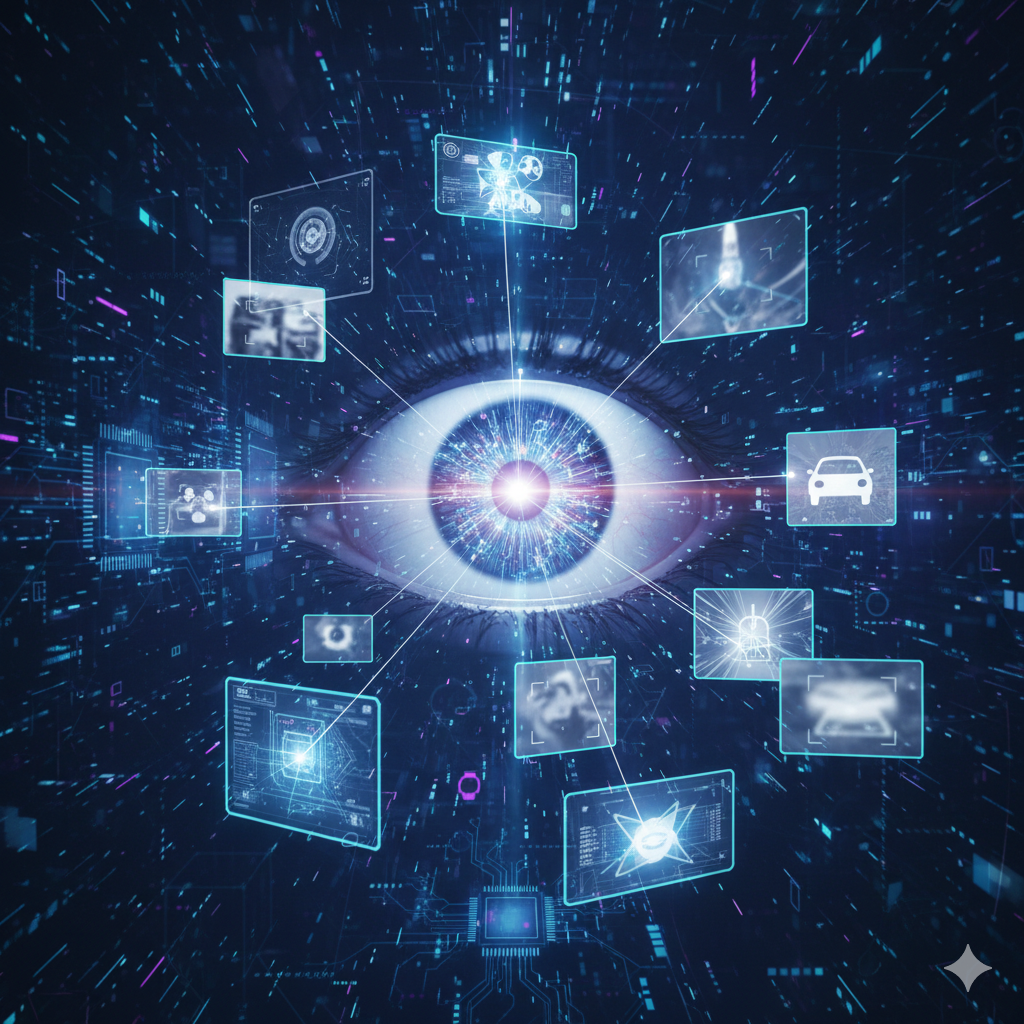

In today’s rapidly evolving digital landscape, images are no longer just visual elements—they are data-rich assets. From facial recognition on smartphones to medical image analysis and autonomous vehicles, image recognition powered by artificial intelligence (AI) has become a cornerstone of modern technology.
Artificial Intelligence has revolutionized how machines interpret visual information. Unlike traditional rule-based image processing, AI-driven image recognition systems learn, adapt, and improve over time, offering unmatched accuracy and scalability. This advancement is transforming industries, enhancing user experiences, and redefining how businesses interact with visual data.
This article explores how AI enhances image recognition features, the technologies behind it, real-world applications, benefits, challenges, and what the future holds for AI-powered visual intelligence.
Understanding Image Recognition: A Foundational Overview
What Is Image Recognition Technology?
Image recognition is a subset of computer vision that enables machines to identify objects, patterns, people, places, or actions within digital images or videos. It involves analyzing pixel data and extracting meaningful information to make decisions or predictions.
Traditional image recognition relied heavily on manual tagging and predefined rules. However, these methods struggled with variations in lighting, angles, scale, and image quality.
Why Traditional Image Recognition Had Limitations
Before AI integration, image recognition systems faced several challenges:
- High error rates
- Poor adaptability to new data
- Inability to understand context
- Extensive manual intervention
AI solved these problems by introducing learning-based models capable of handling complex visual patterns.
The Role of Artificial Intelligence in Modern Image Recognition
How AI Improves Image Recognition Accuracy
AI enhances image recognition by leveraging machine learning (ML) and deep learning algorithms that analyze massive datasets. These systems learn from examples rather than relying on fixed instructions.
Key improvements include:
- Better object detection and classification
- Improved pattern recognition
- Real-time processing capabilities
- Reduced false positives and negatives
Deep Learning and Neural Networks: The Core Drivers
At the heart of AI-powered image recognition are Convolutional Neural Networks (CNNs). These neural networks mimic the human visual cortex by:
- Detecting edges and textures
- Recognizing shapes and objects
- Understanding spatial relationships
CNNs continuously refine their predictions, making image recognition systems smarter with every new dataset.
Need Help With Your Marketing or Website?
Not getting enough leads or sales? Get a free consultation and discover how to improve your website and marketing.
- Find out what may be stopping visitors from contacting you
- Discover where your website or marketing could perform better
- Get clear recommendations to improve leads, calls, and conversions
How AI Enhances Image Recognition Features in Real-World Applications
AI-Powered Facial Recognition Systems
Facial recognition is one of the most visible applications of AI-enhanced image recognition. AI algorithms analyze facial landmarks, expressions, and unique features to identify or verify individuals.
Applications include:
- Smartphone authentication
- Airport security and surveillance
- Banking and fintech identity verification
- Law enforcement investigations
AI improves facial recognition by adapting to aging, lighting changes, and facial expressions.
Medical Imaging and Healthcare Diagnostics
AI-driven image recognition has transformed healthcare by enabling faster and more accurate diagnosis.
Key benefits include:
- Early disease detection through X-rays, MRIs, and CT scans
- Automated tumor and anomaly detection
- Reduced diagnostic errors
- Faster patient treatment decisions
AI models can analyze thousands of medical images in seconds, outperforming traditional methods and assisting healthcare professionals.
AI Image Recognition in Autonomous Vehicles
Self-driving cars rely heavily on AI-enhanced image recognition to navigate safely.
These systems help vehicles:
- Identify pedestrians, traffic signs, and road markings
- Detect obstacles and hazards in real time
- Adapt to weather and lighting conditions
- Make split-second driving decisions
Without AI-powered image recognition, autonomous driving would not be possible.
Retail and E-Commerce Visual Intelligence
Retailers use AI image recognition to improve customer experiences and operational efficiency.
Examples include:
- Visual search engines allowing customers to search by image
- Automated inventory management
- Shelf monitoring and stock optimization
- Personalized product recommendations
AI helps retailers understand consumer behavior through visual data, increasing conversions and customer satisfaction.
Advanced AI Technologies That Enhance Image Recognition
Machine Learning Algorithms and Training Models
Machine learning allows image recognition systems to improve continuously by learning from new data. Supervised, unsupervised, and reinforcement learning techniques enable models to adapt to different use cases.
Computer Vision and Context Awareness
AI-powered computer vision goes beyond recognizing objects—it understands context. For example, AI can differentiate between:
- A person running for exercise vs. running from danger
- A product image vs. a counterfeit version
This contextual understanding makes AI image recognition more intelligent and reliable.
Edge AI and Real-Time Image Processing
Edge AI processes images directly on devices rather than relying on cloud servers. This enhances:
- Speed and latency
- Data privacy and security
- Real-time decision-making
Edge-based image recognition is widely used in surveillance cameras, smartphones, and IoT devices.
Benefits of AI-Enhanced Image Recognition Features
Improved Accuracy and Consistency
AI eliminates human bias and fatigue, delivering consistent results across large datasets.
Scalability Across Industries
From healthcare to agriculture and finance, AI image recognition scales easily across sectors.
Cost Efficiency and Automation
By automating visual analysis, businesses reduce labor costs and improve productivity.
Enhanced User Experience
AI-powered visual features provide faster, smarter, and more intuitive user interactions.
Challenges and Ethical Considerations in AI Image Recognition
Data Privacy and Security Concerns
AI systems rely on vast amounts of visual data, raising concerns about data misuse and surveillance.
Bias in Training Data
If AI models are trained on biased datasets, image recognition outcomes may be unfair or inaccurate.
Transparency and Accountability
Understanding how AI makes visual decisions remains a challenge, especially in critical applications like healthcare and law enforcement.
Best Practices for Implementing AI Image Recognition Solutions
Use High-Quality and Diverse Training Data
Diverse datasets improve accuracy and reduce bias.
Regular Model Updates and Audits
Continuous monitoring ensures reliable performance over time.
Focus on Ethical AI Development
Implement privacy safeguards and compliance standards to build trust.
The Future of AI-Driven Image Recognition Technology
Integration with Augmented and Virtual Reality
AI-powered image recognition will enhance AR and VR experiences by enabling real-time object interaction.
Smarter Surveillance and Smart Cities
AI will play a key role in traffic management, public safety, and urban planning.
Increased Human-AI Collaboration
Rather than replacing humans, AI will act as a powerful visual assistant, improving decision-making and creativity.
Conclusion: Why AI-Enhanced Image Recognition Is a Game Changer
AI has fundamentally transformed image recognition from a basic visual tool into an intelligent, adaptive system capable of understanding the world visually. By combining deep learning, computer vision, and real-time processing, AI enhances image recognition features across industries and applications.
As technology continues to evolve, AI-powered image recognition will become even more accurate, ethical, and impactful—shaping the future of digital interaction and visual intelligence.