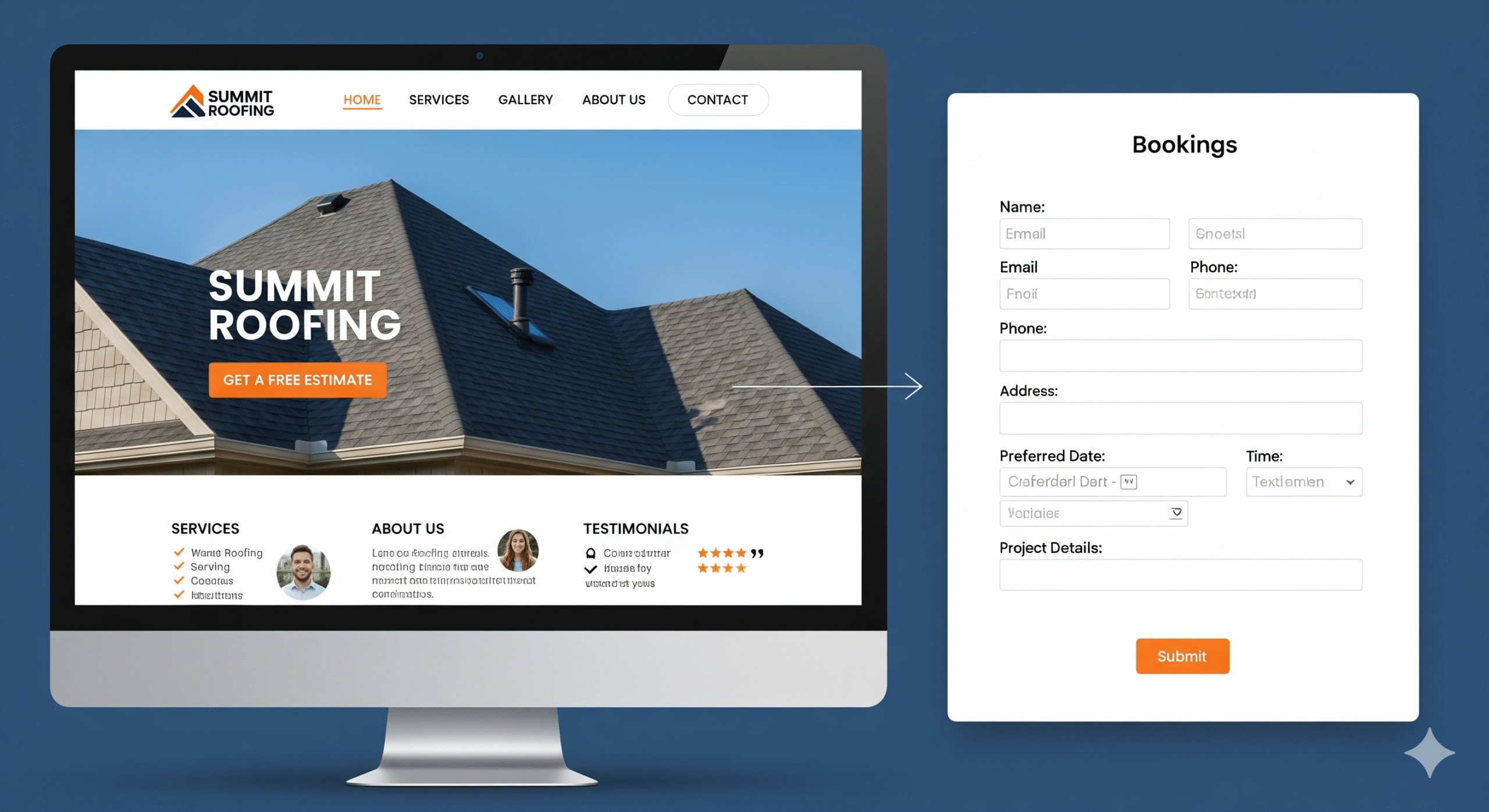

In the highly competitive roofing industry, your website is more than just an online brochure — it’s a powerful tool to attract potential clients, establish trust, and convert visitors into booked customers. As a roofer, having a website that is strategically designed to guide visitors from the homepage all the way to booking your services is crucial to growing your business.
In this comprehensive guide, we’ll walk you through the best practices for roofing website layout — from crafting an eye-catching homepage to optimizing your booking system. Whether you’re building your first website or revamping an existing one, these tips will help you create a professional, user-friendly, and highly effective online presence.
Why Website Layout Matters for Roofers: First Impressions and User Experience
Before diving into specific layout tips, it’s important to understand why the structure and flow of your roofing website matter so much.
First Impressions Count: Your homepage is often the first interaction a potential client has with your business. A clean, modern, and professional design instantly builds credibility.
User Experience (UX) Drives Conversions: Visitors need to find information quickly and easily. Confusing navigation or cluttered pages lead to frustration and lost leads.
SEO and Visibility: A well-organized website supports search engine optimization (SEO), helping your business appear higher in search results when people look for roofing services.
A thoughtful layout is your roadmap for turning visitors into loyal customers — so let’s build it right.
Homepage Best Practices for Roofing Companies: The Ultimate First Impression
Your homepage is the digital front door to your roofing business. Here’s how to make it inviting and effective:
- Clear and Compelling Headline with Roofing Keywords
The headline should immediately communicate what you offer and include keywords potential clients use when searching for roofers. For example:
“Reliable Residential and Commercial Roofing Services in [Your City]”
This instantly tells visitors they’re in the right place.
- Professional, High-Quality Imagery
Use crisp, authentic photos of your roofing projects or team at work. Avoid generic stock images as they don’t build trust. People want to see real evidence of your expertise.
- Strong Call-to-Action (CTA) Above the Fold
Place a prominent CTA like “Get Your Free Roof Inspection Today” or “Request a Quote Now” right where visitors land — no scrolling needed.
- Trust Signals and Credentials
Show badges for licenses, insurance, industry affiliations, and customer reviews. Testimonials or a “Featured On” section can also reinforce reliability.
- Simple Navigation Menu
Keep the menu straightforward with clearly labeled tabs: Home, Services, About Us, Projects, Reviews, Contact, and Bookings. Avoid overwhelming users with too many options.
Designing a Services Page that Converts Roofing Leads
Once visitors navigate to your services page, it’s your job to showcase your expertise clearly and persuasively.
- List Roofing Services with Detailed Descriptions
Break down your offerings into categories like roof repair, installation, inspection, maintenance, and emergency services. Use long-tail keywords such as “affordable residential roof repair in [city]” to target specific searches.
- Use Before-and-After Photos and Videos
Visual proof is powerful. Showcase your craftsmanship with real project images or short videos explaining the process.
- Explain Your Process and Materials
Educate potential clients about your roofing materials (asphalt shingles, metal roofing, tiles) and why you choose them. Highlight warranties or eco-friendly options to appeal to conscious consumers.
- Include Clear CTAs for Each Service
Make it easy for visitors to take action with buttons like “Schedule a Roof Inspection” or “Get a Custom Quote for Roof Replacement.”
About Us Page: Building Trust with Authenticity and Transparency
Your About Us page should do more than list company history. It’s your chance to create an emotional connection.
- Tell Your Story
Share the origins of your roofing business, your values, and what sets you apart from competitors. Personal stories foster connection.
- Highlight Your Team’s Expertise
Introduce your key staff with photos and brief bios, showcasing certifications and experience. People prefer working with real people they feel they know.
- Show Community Involvement
If you support local causes or participate in community events, mention it here. It strengthens local trust and goodwill.
Need Help With Your Marketing or Website?
Not getting enough leads or sales? Get a free consultation and discover how to improve your website and marketing.
- Find out what may be stopping visitors from contacting you
- Discover where your website or marketing could perform better
- Get clear recommendations to improve leads, calls, and conversions
Roofing Portfolio: Demonstrating Proven Results with Real Projects
A portfolio page is essential for proving your skills and quality.
- Organize Projects by Roofing Type or Service
Segment your portfolio into categories (residential, commercial, repairs, installations) so visitors can quickly find relevant examples.
- Include Project Details and Testimonials
Describe the project scope, challenges, and solutions. Pair each project with a client testimonial to enhance credibility.
- Use High-Resolution Images with Before & After Shots
Visual transformations are compelling proof of your workmanship.
Reviews and Testimonials Page: Social Proof That Seals the Deal
People trust reviews as much as personal recommendations.
- Showcase Verified Customer Reviews
Include reviews from Google, Yelp, or industry-specific platforms. Use varied formats — star ratings, video testimonials, or written quotes.
- Address Negative Feedback Professionally
If you have any negative reviews, demonstrate how you’ve resolved issues to show professionalism and dedication.
Contact Page Optimization for Roofing Businesses
An effective Contact page reduces friction for potential clients to reach out.
- Simple Contact Form with Relevant Fields
Ask for name, phone, email, address (if relevant), and project details to qualify leads.
- Include Multiple Contact Methods
Provide your phone number, email, physical address, and even a clickable map for easy directions.
- Use a Clear CTA
Invite visitors to “Call Now for a Free Consultation” or “Send Us a Message”.
Booking System Best Practices: Turning Website Visitors into Customers
One of the most important steps in the roofing website journey is an intuitive booking or lead capture system.
- Implement an Easy-to-Use Online Booking Tool
Allow visitors to schedule inspections or consultations online without having to call. Integrate calendars with real-time availability.
- Minimize Required Fields for Quicker Booking
Avoid long forms; only ask for essential information to prevent drop-offs.
- Confirm Bookings with Automated Emails or SMS
Reassure clients by sending confirmation messages and reminders.
- Offer Multiple Booking Options
Besides online scheduling, keep traditional contact methods for clients who prefer phone or email.
Mobile Optimization: Why Roofing Websites Must Be Mobile-Friendly
With over half of web traffic coming from mobile devices, a roofing website must be fully responsive.
- Responsive Design that Adapts to All Devices
Ensure your site looks great and functions well on smartphones, tablets, and desktops.
- Fast Loading Speeds
Compress images and use efficient code to prevent delays that frustrate mobile users.
- Easy Navigation and Large Buttons
Make buttons easy to tap and menus simple to navigate on smaller screens.
SEO Best Practices for Roofing Websites to Rank Higher on Google
Having a beautiful website isn’t enough if no one finds it.
- Use Roofing-Related Keywords Strategically
Research long-tail keywords like “roof repair services near me” or “best commercial roofing contractors in [city]” and integrate them naturally.
- Optimize Meta Titles and Descriptions
Write unique titles and meta descriptions for each page to improve click-through rates.
- Create Helpful Roofing Content and Blog Posts
Publish articles answering common questions, e.g., “How to Spot Roof Damage After a Storm” to attract organic traffic.
- Build Local Citations and Listings
Claim your Google Business Profile and ensure your name, address, and phone number (NAP) are consistent across directories.
Website Security and Maintenance: Protecting Your Roofing Business Online
A secure website builds trust and protects your investment.
- Use HTTPS for Secure Connections
SSL certificates encrypt data, reassuring visitors.
- Regularly Update Your CMS and Plugins
Prevent hacking by keeping software current.
- Back Up Your Website Frequently
In case of emergencies, backups allow quick restoration.
Measuring Success: Using Analytics to Improve Your Roofing Website
Track and improve your website with data.
- Set Up Google Analytics and Search Console
Monitor traffic, user behavior, and keyword performance.
- Track Key Metrics: Bounce Rate, Session Duration, Conversion Rate
Identify where visitors drop off and optimize those areas.
- A/B Test CTAs and Layouts
Experiment with different wording and placements to maximize bookings.
Final Thoughts: Designing a Roofing Website that Works
Your roofing website is the cornerstone of your marketing efforts. By following these layout best practices — from a strong homepage and service pages to an optimized booking system — you can create a seamless experience that builds trust, educates visitors, and converts leads into paying customers.
Remember, your website is a living tool. Continually update content, optimize SEO, and analyze user data to stay ahead in the competitive roofing market.
Ready to take your roofing business online to the next level? Start with your website layout and watch your bookings soar.