
In today’s digital age, a well-designed website is essential for any business, and roofing companies are no exception. Your website often forms the first impression potential clients have of your roofing business, and it can be the deciding factor in whether they choose you or your competitors. To stand out in the competitive roofing industry, your website needs to be both visually appealing and highly functional.
In this blog, we will dive deep into the essential design features for high-performing roofer websites that not only attract visitors but convert them into loyal customers. Whether you are starting from scratch or looking to upgrade your existing site, these insights will help you create an effective online presence.
Why a Professional Website Matters for Roofing Companies
Before exploring specific design features, it’s crucial to understand why your roofing business needs a professional website.
Builds Trust and Credibility: Customers want to hire roofing experts who look legitimate and trustworthy. A polished website shows professionalism.
Showcases Your Work: High-quality images and case studies of completed projects can demonstrate your expertise.
Improves Local Visibility: Optimizing your website with local SEO helps you appear in search results for people looking for roofing services nearby.
Generates Leads: With clear calls to action (CTAs), your website can convert visitors into phone calls, emails, or booking requests.
Provides Important Information: Your site should answer common questions, explain services, and outline your process clearly.
Long-Tail Heading 1: User-Friendly Navigation for Roofing Websites
One of the most overlooked aspects of web design is navigation. If visitors can’t find what they’re looking for quickly, they will leave your site and find another roofer.
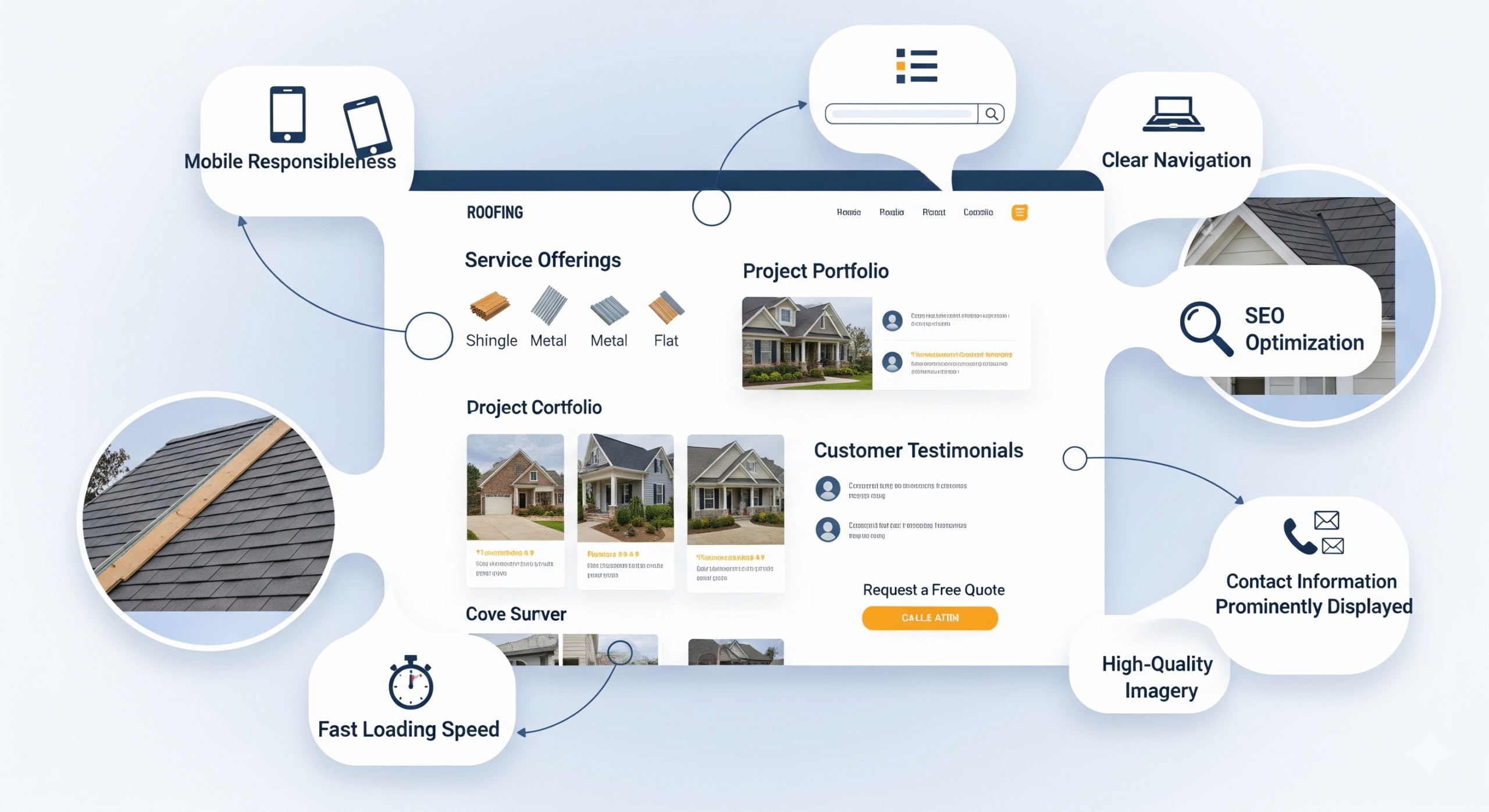
Clear Menu Structure: Use a top navigation bar with logical categories such as “Services,” “About Us,” “Projects,” “Reviews,” and “Contact.”
Sticky Navigation Bar: As users scroll, keep the menu accessible so they don’t have to scroll back up.
Mobile-Optimized Navigation: Many users search for roofers on mobile devices, so the menu should be easy to use on smartphones and tablets.
Search Functionality: Adding a search bar allows visitors to find specific content quickly.
Need Help With Your Marketing or Website?
Not getting enough leads or sales? Get a free consultation and discover how to improve your website and marketing.
- Find out what may be stopping visitors from contacting you
- Discover where your website or marketing could perform better
- Get clear recommendations to improve leads, calls, and conversions
Long-Tail Heading 2: Visual Appeal – High-Quality Images and Branding for Roofing Businesses
People are visual creatures. The look and feel of your website influence perception and trust.
Professional Roof Photos: Showcase high-resolution images of your past projects, including before-and-after shots.
Consistent Branding: Use your company colors, logos, and fonts throughout the site to build brand recognition.
Hero Banner with Call to Action: The homepage should feature a striking hero image with a strong CTA like “Request a Free Roof Inspection Today.”
Clean, Modern Design: Avoid clutter and use white space to make content easy to read.
Long-Tail Heading 3: Mobile Responsiveness – Making Your Roofing Website Work on All Devices
With more than half of web traffic coming from mobile devices, a responsive design is no longer optional.
Responsive Layouts: Your website should automatically adjust to fit screens of all sizes.
Fast Load Times: Optimize images and use efficient coding to ensure your site loads quickly on mobile networks.
Touch-Friendly Elements: Buttons and links must be large enough to tap easily on a smartphone.
Long-Tail Heading 4: Search Engine Optimization (SEO) for Roofers: Getting Found Locally
SEO is critical for driving organic traffic to your roofing website.
Local Keywords: Incorporate phrases like “roof repair in [city]” or “best roofing contractor near me” naturally throughout your content.
Google My Business Integration: Link to your GMB profile to boost local rankings.
Schema Markup for Roofing Services: Use structured data to help search engines understand your business better.
Optimized Meta Tags: Write compelling title tags and meta descriptions targeting roofing keywords.
Long-Tail Heading 5: Clear Calls to Action (CTAs) to Convert Roofing Website Visitors into Leads
Once visitors land on your site, you want to guide them toward contacting you or requesting a quote.
Strategic Placement: Place CTAs on the homepage, service pages, blog posts, and at the end of case studies.
Action-Oriented Text: Use phrases like “Get Your Free Estimate,” “Schedule a Roof Inspection,” or “Call Now for Emergency Repairs.”
Visible Contact Information: Display your phone number and email address prominently in the header and footer.
Contact Forms: Simple, easy-to-fill forms help capture visitor information without hassle.
Long-Tail Heading 6: Showcasing Customer Testimonials and Reviews for Roofing Credibility
Social proof is one of the most powerful trust signals.
Video and Written Testimonials: Include genuine reviews from satisfied customers with names and photos if possible.
Review Aggregators: Display ratings from Google, Yelp, or Angie’s List.
Case Studies: Detailed project stories highlighting the challenges and solutions you provided.
Long-Tail Heading 7: Informative Content that Educates Potential Roofing Clients
An effective roofing website educates visitors, helping them understand the value of your services.
Service Pages with Detailed Descriptions: Explain the types of roofs you work on, materials you use, and the benefits of each.
FAQ Section: Answer common questions about roofing processes, costs, and timelines.
Blog Content: Regular articles on roofing maintenance, storm damage tips, or energy-efficient roofing options build authority and improve SEO.
Video Tutorials: Short videos explaining roof inspections or repair processes can engage users more deeply.
Long-Tail Heading 8: Fast Loading Speed to Prevent Visitor Drop-Off on Roofing Websites
Slow websites frustrate users and hurt your rankings.
Image Compression: Use tools to reduce image file sizes without losing quality.
Reliable Hosting: Choose a hosting provider optimized for speed and uptime.
Minimize Scripts: Avoid unnecessary plugins and scripts that slow down load times.
Leverage Browser Caching: Enable caching to speed up repeat visits.
Long-Tail Heading 9: Security Features to Protect Your Roofing Website and Visitors
Security isn’t just about protecting your business; it’s also about protecting your customers.
SSL Certificate: Ensure your website URL starts with HTTPS, indicating data encryption.
Regular Updates and Backups: Keep your website platform and plugins updated to prevent vulnerabilities.
Privacy Policy and Terms: Be transparent about how you use visitor data.
CAPTCHA on Forms: Prevent spam through simple verification tools.
Long-Tail Heading 10: Integrating Online Scheduling and Quote Requests for Roofing Services
Convenience drives conversions.
Online Booking System: Allow clients to schedule consultations or inspections directly on your site.
Instant Quote Tools: Provide calculators or forms where visitors can estimate costs.
Follow-Up Automation: Connect forms with email marketing tools for timely follow-up.
Final Thoughts: Building a High-Performing Roofer Website That Converts
A successful roofing website is a blend of thoughtful design, functional features, and engaging content. By prioritizing user experience, SEO, visual appeal, and trust-building elements, you can turn your site into a powerful lead-generation tool.
Remember, your website isn’t just an online brochure—it’s the first step in building a relationship with your future customers. Investing in these essential design features will help your roofing business grow and thrive in a competitive marketplace.
Ready to take your roofer website to the next level? Start with a detailed site audit, then incorporate these features one step at a time. The results will be worth it.