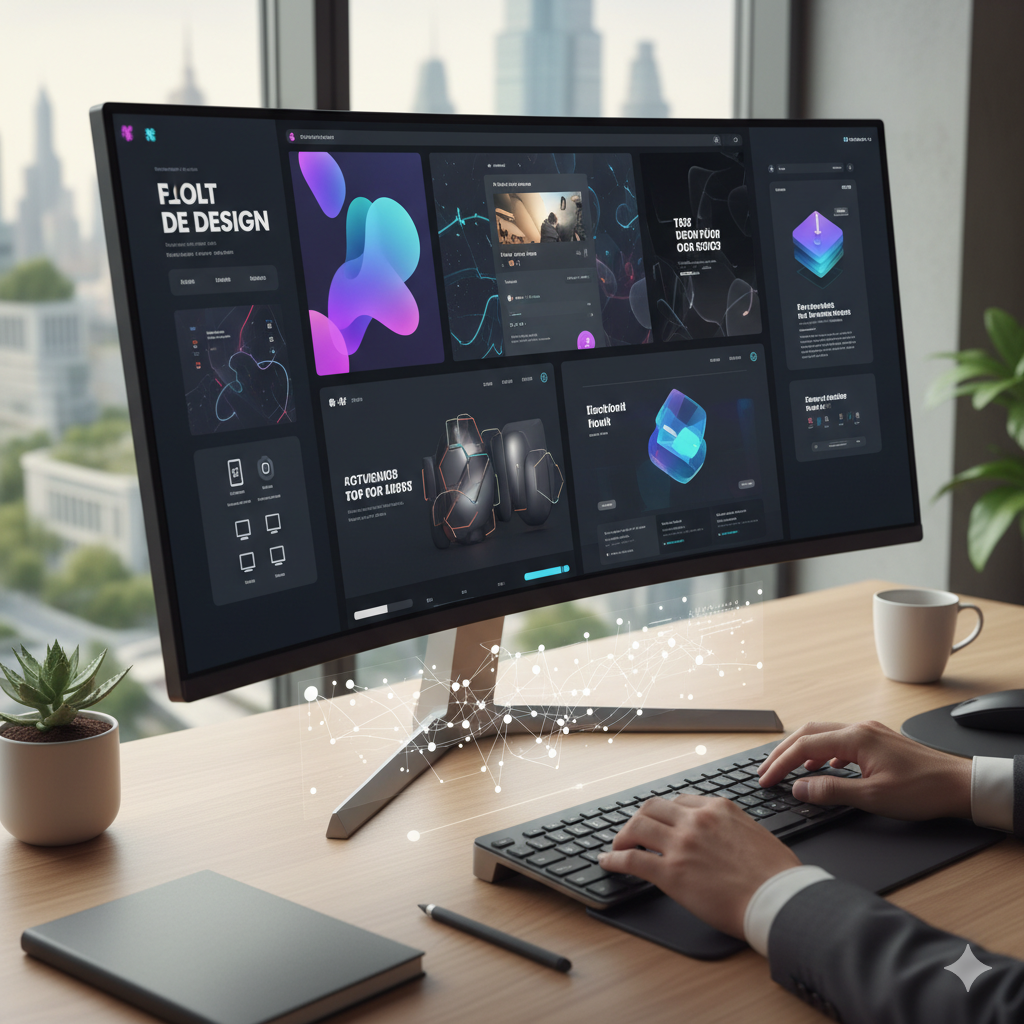

In a fast-moving digital world, businesses can no longer simply rely on a “good enough” website. Consumer expectations are evolving, browsers are more capable, and search engines are smarter. If you want your site to stand out, engage visitors, and convert them into customers in 2025, you’ll need to pay attention to the emerging design trends shaping the web.
Below, we explore ten key trends — each rooted in real-world industry insight — and show how your business website can adopt them in a strategic, practical way.
1. AI-Driven Hyper-Personalization: Tailoring the Experience at Scale
Today’s users expect websites that feel like they were made just for them. The era of “same layout for all visitors” is fading. Instead, websites are increasingly using AI to adapt content, imagery, offers, and even navigation based on behaviour, context or user profile. Wrebb+1
For business websites, this means:
- Designing modular layouts that allow content blocks to swap dynamically.
- Integrating tools that track user behaviour and adjust headlines, product displays or CTAs accordingly.
- Ensuring the personalization adds value rather than coming across as “creepy” — transparency and control matter.
When done well, personalization boosts engagement, dwell time, and conversion rates — making it a powerful trend to embrace.
2. Immersive 3D, AR and Interactive Visuals: Bringing Depth to the Web
Flat design is giving way to richer, almost cinematic web experiences. Designers are using 3D elements, augmented reality (AR) previews, interactive animations and scroll-triggered effects to make websites feel alive. Digital Agency Solutions+2Zenesys+2
For a business website:
- Consider using 3D models (e.g., product spin-around views) especially if you sell physical items.
- Explore AR “try before you buy” features (for example, furniture in a room, or wearables on a person) to reduce return rates and boost trust.
- Use scroll-based storytelling (“scrollytelling”) where as the user scrolls, the visual narrative changes — this adds engagement but must be optimized for performance.
Tip: Keep performance in mind — heavy visuals can slow page load and hurt user experience and SEO if not managed.
Need Help With Your Marketing or Website?
Not getting enough leads or sales? Get a free consultation and discover how to improve your website and marketing.
- Find out what may be stopping visitors from contacting you
- Discover where your website or marketing could perform better
- Get clear recommendations to improve leads, calls, and conversions
3. Minimalism 2.0: Clean Layouts + Micro-Interactions
Minimalism isn’t dead — rather, it has evolved. Successful websites in 2025 lean into clean, uncluttered layouts with generous white space, simple navigation, and purposeful typography — but now complemented by subtle motion, micro-interactions and dynamic feedback. Web Design+1
Key takeaways for businesses:
- Use simplified layouts that direct attention to the core message and CTA.
- Add micro-interactions (such as hover effects, button animations, loading indicators) to provide personality and feedback.
- Ensure the “minimal” feel doesn’t hamper usability: navigation still needs to be intuitive and accessible.
4. Dark Mode & Adaptive UI: Enhancing Comfort and Style
Dark mode has moved from “nice to have” to an expected option for many users. In 2025, adaptive UIs go further — switching modes based on user preferences, ambient lighting or device settings. Mockplus+1
Business website implications:
- Offer a toggle for light/dark modes and consider auto-switching based on system settings.
- Ensure contrast, readability and accessibility are maintained in both modes.
- Use dark mode as a brand-optimised statement — it conveys modernity, especially for tech, SaaS, lifestyle or creative brands.
5. Accessibility-First & Inclusive Design: Reaching Everyone
Designing to include everyone is no longer optional—it’s becoming a baseline expectation. Websites that are accessible by users of all abilities provide better UX and also widen reach. Medium+1
What to implement:
- Ensure keyboard navigation support, screen-reader compatibility, sufficient contrast, alt text on images.
- Build with accessibility guidelines (WCAG 2.2 or higher) from day one, rather than as an afterthought.
- View accessibility not just as a compliance tick-box, but as an advantage — more users can access your content, which can also improve SEO.
6. Sustainable & Ethical Design: Websites with Purpose
Consumers and stakeholders increasingly expect digital brands to act responsibly. In web design, this means efficient code, fast load times, green hosting, minimal resource usage, and avoidance of dark patterns. Default Site
Business approaches:
- Choose sustainable or carbon-neutral hosting providers.
- Optimize images, animations and code to reduce page-weight and improve speed (helps performance and image/SEO).
- Be transparent about data use, respect privacy, avoid manipulative UX tricks (e.g., forced continuations, confusing opt-outs) — ethics matter for brand trust.
7. Bold Typography & Expressive Visual Identity
In 2025, typography is front and centre. Big, bold headers, expressive typefaces, custom variable fonts, and typography-led layouts are used to create brand personality and visual impact. Reddit+1
For business websites:
- Let your typography reflect your brand voice. A tech firm may choose crisp, geometric fonts; a creative studio might go for more experimental styles.
- Use large type and striking headings to draw attention, but balance with legibility (especially on mobile).
- Combine strong typography with minimalist layouts for maximum effect.
8. Voice User Interfaces & Conversational Navigation
As voice assistants and smart devices proliferate, websites are starting to integrate voice navigation, voice search, and auditory interactions. zackerydixon.com+1
Business take-aways:
- Consider how users might interact with your site via voice (especially on mobile or smart-device contexts).
- Optimize site content for conversational queries (“how do I compare X vs Y?” rather than just keywords).
- Use structured data markup and accessible voice-friendly design to improve search visibility and usability.
9. Responsive Design Evolves: From Mobile-First to Context-Aware
While “mobile-first” remains crucial, responsive design is moving beyond screen size. 2025 sees websites adapting to device type, orientation, network speed, user context and gestures — meaning the same site behaves differently whether on a phone, tablet, foldable device or car display. zackerydixon.com
Implications for businesses:
- Ensure layouts adapt not just to width, but to device capabilities (e.g., 5G vs slow connection, touch vs hover input).
- Prioritize speed and performance on lesser devices/networks — this supports both UX and SEO.
- Think ahead: foldables, smart watches, in-car devices may require alternative layouts in future.
10. Data-Driven Design & Micro-Interactions: Engaging Through Motion and Feedback
Motion is no longer simply decorative — micro-interactions, loading transitions, cursor effects, scroll animations and subtle feedback are integral to modern design. Grover Web Design+1
Business tips:
- Add small animations that enhance usability (e.g., form field validation, button icons that move on hover) without distracting.
- Use scroll-triggered effects or parallax to guide the user journey (but always monitor performance).
- Use analytics to measure how micro-interactions affect engagement (bounce rate, time on page, conversions) and iterate accordingly.
Conclusion: Future-Proofing Your Website for 2025 and Beyond
If your website still looks like it was built five years ago, you’re at risk of falling behind. The web design trends of 2025 aren’t just about aesthetics — they’re about user expectations, performance, accessibility, authenticity and brand experience.
Here’s a strategic checklist to take away:
- Audit your website for speed, performance and accessibility today.
- Prioritise one or two of the above trends (e.g., personalization + accessibility) and build proof-of-concept implementations.
- Measure EVERYTHING: how new design elements affect user behaviour, conversions, and bounce rates.
- Keep mobile and device diversity top-of-mind.
- Avoid gimmicks: new design features should serve users, not just look cool.
- Plan for evolution: design systems should be flexible so you can adopt new trends without entirely rebuilding your site.
By embracing these ten trends, your business website will not only look modern — it will perform better, engage more deeply, and create trust and loyalty in a competitive digital landscape.