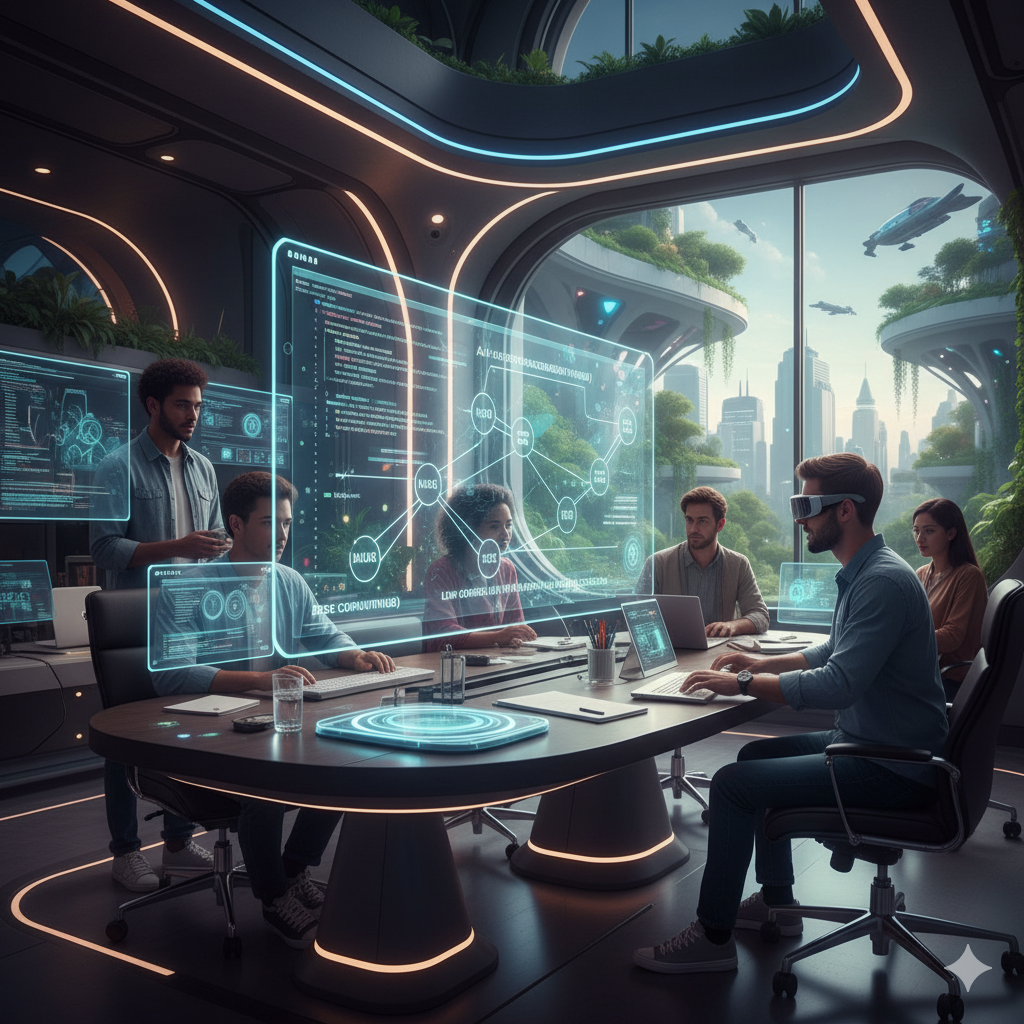

Web development is evolving at an unprecedented pace. As businesses increasingly rely on digital platforms, staying ahead of the curve has become critical for developers, designers, and digital strategists. In 2025, several emerging trends are set to redefine how websites are built, optimized, and experienced by users. From AI-powered automation to performance-focused frameworks, understanding these trends is essential for creating web solutions that are not just functional but future-proof.
In this article, we dive deep into the web development trends that will dominate 2025, exploring their potential, impact, and practical applications.
1. Artificial Intelligence and Machine Learning Integration
AI and machine learning are no longer just buzzwords—they are reshaping web development by personalizing user experiences and streamlining backend processes. In 2025, AI-driven tools will automate coding, optimize website content, and enhance cybersecurity measures. Developers can leverage AI for predictive analytics, smart search functionalities, and real-time customer support through chatbots, creating a more responsive and intelligent user experience.
Key applications include:
- AI-assisted code generation
- Personalized content recommendations
- Automated UX/UI testing
- Predictive analytics for user behavior
2. Progressive Web Apps (PWAs) Will Become Mainstream
Progressive Web Apps are bridging the gap between websites and native apps. By 2025, PWAs will dominate as businesses prioritize mobile-first experiences without the overhead of app stores. PWAs offer fast loading speeds, offline accessibility, push notifications, and seamless performance across devices, making them an ideal choice for e-commerce, social media, and content platforms.
Benefits of PWAs:
- Enhanced performance and speed
- Cross-platform compatibility
- Reduced development and maintenance costs
- Improved SEO and engagement metrics
Need Help With Your Marketing or Website?
Not getting enough leads or sales? Get a free consultation and discover how to improve your website and marketing.
- Find out what may be stopping visitors from contacting you
- Discover where your website or marketing could perform better
- Get clear recommendations to improve leads, calls, and conversions
3. Headless CMS for Flexible Content Management
The rise of headless CMS solutions is transforming content delivery. Unlike traditional CMS platforms, headless CMS separates content from presentation, allowing developers to deliver content across multiple channels, including websites, apps, and IoT devices. In 2025, headless architecture will enable dynamic, scalable, and API-driven websites, making content management more efficient than ever.
Popular headless CMS platforms include:
- Strapi
- Contentful
- Sanity
- Prismic
4. Motion UI for Engaging User Experiences
User experience is at the forefront of web development, and motion UI is gaining traction. Smooth animations, micro-interactions, and dynamic transitions enhance website interactivity, guiding users intuitively through interfaces. By 2025, incorporating motion UI into web design will not just be optional—it will be expected for engaging, modern websites.
Applications of motion UI:
- Button hover effects
- Page transition animations
- Loading indicators
- Interactive infographics
5. Serverless Architecture and Cloud Integration
Serverless computing is streamlining backend development by allowing developers to focus on code without managing servers. Cloud platforms like AWS Lambda and Google Cloud Functions enable scalable, cost-effective solutions, reducing server overhead and improving performance. By 2025, serverless architecture will dominate enterprise-level web development for its flexibility and efficiency.
Advantages of serverless architecture:
- Automatic scaling
- Lower operational costs
- Faster deployment
- Reduced server management
6. Voice Search Optimization
With the proliferation of smart devices, voice search is becoming a critical aspect of web development. By 2025, optimizing websites for voice queries will be crucial for improving accessibility, SEO rankings, and user engagement. Developers will need to integrate natural language processing (NLP) and conversational AI to meet this growing demand.
Strategies for voice search optimization:
- Implementing structured data
- Using natural language keywords
- Optimizing page speed
- Creating voice-friendly FAQs
7. Web3 and Blockchain Integration
Blockchain technology is no longer limited to cryptocurrency. In 2025, Web3 will redefine web development by providing decentralized solutions for security, transparency, and digital ownership. Smart contracts, NFT marketplaces, and decentralized apps (dApps) will increasingly become part of mainstream web solutions.
Key use cases of Web3 in web development:
- Secure authentication systems
- Transparent supply chain management
- Decentralized social platforms
- Token-based user incentives
8. Low-Code and No-Code Development
Low-code and no-code platforms are democratizing web development. In 2025, businesses will increasingly leverage these tools to quickly build and iterate web applications without heavy reliance on traditional coding. This trend empowers non-developers to contribute to digital solutions while allowing developers to focus on complex customizations.
Popular low-code/no-code platforms:
- Webflow
- Bubble
- OutSystems
- Mendix
9. Cybersecurity and Privacy-First Development
As cyber threats evolve, security will remain a top priority in web development. By 2025, privacy-first design and secure coding practices will be essential. Developers will adopt end-to-end encryption, multi-factor authentication, and GDPR/CCPA compliance to ensure data protection and build user trust.
Essential cybersecurity practices:
- Secure API integration
- Regular vulnerability testing
- Data encryption and tokenization
- Compliance with global privacy regulations
10. API-First Development for Seamless Integration
API-first development is streamlining integration and enhancing interoperability. By designing APIs before coding applications, developers can ensure that digital solutions work seamlessly with external services, apps, and platforms. In 2025, API-first architecture will be a standard approach for scalable and maintainable web development.
Benefits of API-first development:
- Faster development cycles
- Easier third-party integrations
- Consistent user experiences
- Scalability across platforms
11. Advanced Frontend Frameworks
Modern frontend frameworks will continue to dominate web development. By 2025, React, Vue.js, and Angular will evolve further, offering faster rendering, enhanced SEO, and improved developer experience. Additionally, emerging frameworks like Svelte and Solid.js will gain popularity for lightweight, high-performance web applications.
Trends in frontend frameworks:
- Component-based architecture
- Enhanced state management
- Server-side rendering
- Static site generation
12. 5G-Optimized Web Experiences
The global rollout of 5G networks will revolutionize web development by enabling faster, richer, and more immersive digital experiences. High-speed connectivity will support real-time streaming, AR/VR applications, and cloud gaming. By 2025, developers will prioritize 5G-optimized web solutions to leverage this next-generation network.
Impact of 5G on web development:
- Ultra-fast page load times
- Seamless AR/VR integration
- Enhanced mobile-first experiences
- Real-time data-driven applications
13. Augmented Reality (AR) and Virtual Reality (VR) Integration
AR and VR are expanding beyond gaming into web experiences. In 2025, immersive web solutions will become mainstream, allowing users to interact with products, services, and environments virtually. E-commerce, real estate, and education sectors are expected to lead the adoption of AR/VR-enabled websites.
AR/VR applications for web development:
- Virtual product try-ons
- Interactive 3D models
- Immersive learning environments
- Virtual events and exhibitions
14. Eco-Friendly and Sustainable Web Development
Sustainability is becoming a key consideration in web development. By 2025, eco-friendly websites—optimized for minimal energy consumption and carbon footprint—will be favored by users and search engines alike. Developers will focus on lightweight code, green hosting solutions, and efficient media usage.
Sustainable web practices:
- Optimized image and video formats
- Minimalistic design for faster load times
- Green hosting services
- Efficient caching and CDNs
15. Micro-Frontends for Scalable Web Architecture
Micro-frontends are modularizing frontend development by breaking applications into smaller, independent components. By 2025, this approach will allow teams to work simultaneously on different parts of a website, improving scalability, maintainability, and deployment efficiency.
Benefits of micro-frontends:
- Independent development and deployment
- Reduced complexity for large projects
- Easier technology upgrades
- Improved team collaboration
16. Enhanced User Privacy with Decentralized Identity
User privacy will reach new heights with decentralized identity (DID) systems. These systems give users control over their personal data while enabling secure authentication. By 2025, decentralized identity solutions will be integrated into web applications, enhancing trust and compliance.
DID applications:
- Secure login without passwords
- Verifiable credentials
- Personal data ownership
- GDPR-compliant identity management
17. Smart E-Commerce Features
E-commerce websites are evolving with AI, AR, and predictive analytics. By 2025, smart features like voice search shopping, AI-driven recommendations, and AR-based product visualization will dominate the retail web experience. Developers will need to integrate these technologies seamlessly to stay competitive.
Smart e-commerce trends:
- Personalized product recommendations
- AR product previews
- AI-powered pricing and inventory optimization
- Chatbot-assisted shopping
18. Mobile-First Design Will Be Non-Negotiable
With mobile users exceeding desktop, mobile-first design will continue to dominate in 2025. Responsive layouts, touch-friendly interfaces, and optimized mobile performance are essential for SEO, engagement, and conversion rates. Developers must prioritize mobile usability from the earliest design stages.
Mobile-first strategies:
- Simplified navigation
- Accelerated Mobile Pages (AMP)
- Optimized images and media
- Fast-loading mobile frameworks
19. Continuous Integration and Continuous Deployment (CI/CD)
CI/CD pipelines will streamline web development workflows in 2025. By automating testing, deployment, and monitoring, teams can release features faster, reduce errors, and maintain high-quality websites. Developers adopting CI/CD gain a competitive advantage in agile, fast-paced environments.
CI/CD benefits:
- Faster time-to-market
- Reduced deployment errors
- Automated testing and monitoring
- Enhanced collaboration
20. Ethical and Inclusive Web Design
Web development in 2025 will increasingly focus on accessibility and inclusivity. Ethical design practices ensure websites are usable by people with disabilities and diverse backgrounds. This approach enhances brand reputation, widens audience reach, and ensures compliance with accessibility standards.
Inclusive web design practices:
- WCAG-compliant layouts
- Keyboard-friendly navigation
- Color contrast optimization
- Multilingual support
Conclusion
The web development landscape of 2025 is poised for transformative growth. By embracing AI, progressive web apps, headless CMS, AR/VR, and sustainable practices, developers can create innovative, efficient, and user-centric web solutions. Staying ahead of these trends is no longer optional—it’s essential for success in a digital-first world.
By understanding and implementing these trends, businesses can not only meet user expectations but also future-proof their digital presence.